

Imperial County Supervisors Approve Behavioral Health Campus Expansion in Brawley
Share your love
 -Editorial
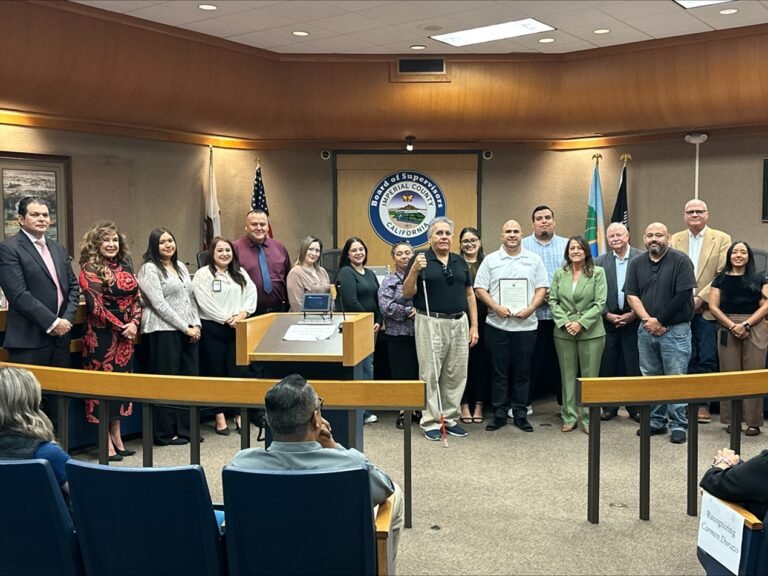
The Imperial County Board of Supervisors chambers erupted in cheers as the 5–0 vote appeared on the video screen, signaling the Imperial County Board of Supervisors’ approval of a project many believe will help save people. On Feb. 10, the board approved a proposal to accept up to $22.4 million in state grant funding to remodel and expand a behavioral health services campus in Brawley, an effort county officials say will increase access to mental health and substance use disorder treatment in the northern region of the county.
The funding would come through Round 1 of the state-administered Behavioral Health Continuum Infrastructure Program (BHCIP) Bond “Launch Ready” grant, a competitive capital funding initiative established under the voter-approved Behavioral Health Services Bond Act. The program is designed to expand, renovate, and modernize behavioral health treatment infrastructure across California and prioritizes projects that have completed preliminary planning and are prepared to begin construction.
“This grant provides an opportunity to expand critical behavioral health services to residents in Brawley and northern Imperial County,” said Leticia Plancarte-Garcia, ICBHS director. “The funding allows us to move forward with a project that has been in planning for several years and to ensure timely and effective use of public resources.”
A large group of residents supported the project saying that it will benefit and save lives.
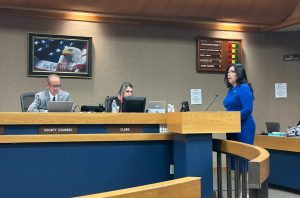
Cova McNally urged approval of expanded behavioral health services in Brawley, saying local access to treatment is critical for residents struggling with addiction.
McNally, a Brawley resident and registered addiction counselor who said she previously experienced homelessness and substance use disorder, described years of seeking services outside the county due to limited local options. She said long bus rides to El Centro were often unmanageable while raising children and living on Social Security, and that she ultimately found recovery through wraparound services at the Coachella Valley Rescue Mission.
Now an SDSU graduate and community advocate, McNally said expanded services would help residents receive care closer to home. “We need these services here so people can stay with their families, get support and rebuild their lives,” she said.
Norman Chandler, a representative of Turning Point Men’s Home, said he supports the behavioral health expansion, citing his son’s experience seeking treatment in Riverside County. Chandler said his son received counseling and medication for anxiety and depression but stopped taking the medication after his condition improved. When he was unable to obtain a refill during the holidays, Chandler said his son obtained pills on the street that were later found to be laced with fentanyl and died of an overdose on Dec. 24, 2022. “I know there are others like my son who are falling through the cracks,” Chandler said. He added that Turning Point has worked with county behavioral health services for several years and transports residents to appointments, and he expressed support for continued collaboration to expand access to care.
Under the proposal, the county will accept up to $22,405,797.58 in state funding for the period May 6, 2025, through June 30, 2030, and provide a required 10% local match of $2,240,580. The board also authorized the county executive officer to sign Program Funding Agreement ID 7690-CA BHCIP-BOND 1022 Northern Horizon-01 and approved a capital project to remodel and expand the Northern Horizons Campus at 220 E. Main St. in Brawley, including the establishment of a new capital project fund and a budget amendment of approximately $22.4 million.
County officials said the project, developed through collaboration among Behavioral Health Services, the County Executive Office, and the Public Works Department, is intended to address service gaps in northern Imperial County by expanding integrated outpatient mental health and substance use treatment capacity, improving access for residents facing transportation and geographic barriers, and supporting earlier intervention and continuity of care.
The renovation of approximately 20,951 square feet of county-owned space will include building system upgrades, accessibility improvements, and program space for treatment services and partner agencies. Officials said the project will not impact the county’s general fund, with the local match to be met through the assessed value of the property and previously awarded matching grant funds.