


Supreme Court Strikes Down Trump’s Global Tariffs in Major Blow to Economic Agenda
Share your love
 -Editorial
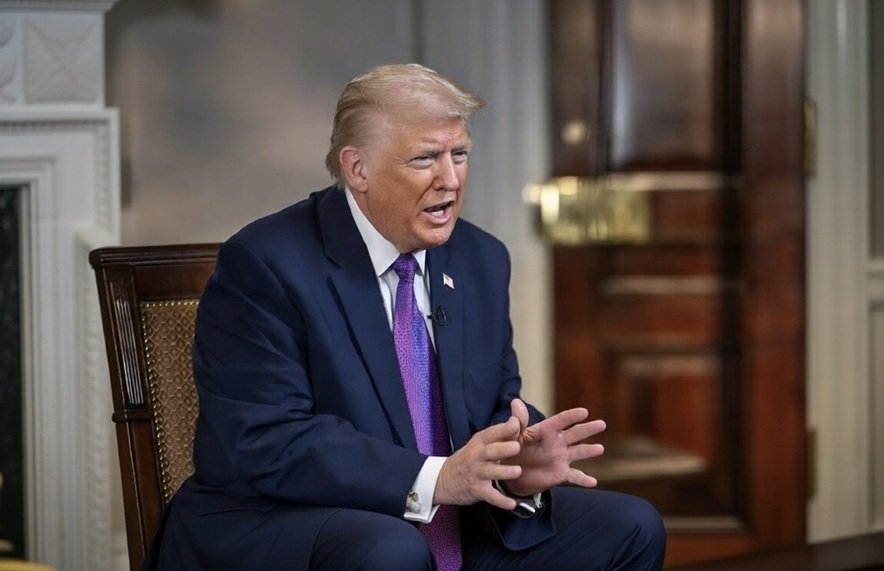
The U.S. Supreme Court struck down sweeping global tariffs imposed by President Donald Trump, ruling that a federal emergency powers law does not authorize the president to impose tariffs, marking a significant legal setback for a central element of his economic agenda.
In a 6–3 decision in Learning Resources v. Trump, the court held that the International Emergency Economic Powers Act does not grant the executive branch authority to impose tariffs. The ruling invalidates a series of tariffs announced in 2025, including broad “reciprocal” tariffs applied to imports from numerous countries.
Chief Justice John Roberts wrote the majority opinion, joined by Justices Sonia Sotomayor, Elena Kagan, Neil Gorsuch, Amy Coney Barrett, and Ketanji Brown Jackson. The majority concluded that the statute’s language does not explicitly authorize tariffs and that Congress has historically delegated tariff powers only in specific terms.
Roberts wrote that the administration’s interpretation of the statute would allow the president to impose tariffs “of unlimited amount, duration and scope” without clear authorization from Congress. The opinion emphasized that while the law permits certain economic measures during national emergencies, it contains no reference to tariffs or duties.
In dissent, Justices Brett Kavanaugh, Clarence Thomas, and Samuel Alito argued that tariffs have historically been used as a tool to regulate imports and suggested that other statutory authorities could support similar trade actions. The dissent also raised concerns about the potential fiscal impact if previously collected tariff revenue must be returned.
Trump announced tariffs in early 2025 on imports from Canada, Mexico, and China, later expanding the policy to include a broad set of global tariffs affecting a wide range of goods. The administration cited trade deficits, national security concerns, and revenue generation as key justifications, arguing that the measures would strengthen domestic manufacturing and provide leverage in international negotiations.
Under the policy, nearly all incoming goods were subject to a baseline tariff rate, with higher rates applied to certain countries. The administration also promoted “reciprocal” tariffs that would increase duties in response to foreign trade barriers.
Multiple companies and state governments challenged the policy in federal court, arguing that the emergency powers law cited by the administration did not authorize tariffs. Lower courts ruled against the government, and enforcement of the tariffs proceeded while appeals were pending.
The Supreme Court granted review after appellate courts upheld rulings that the statute did not permit the president to impose tariffs in this manner. The justices heard arguments in November 2025 and issued their decision on Friday.
The ruling addresses only tariffs imposed under the emergency powers statute and does not determine whether tariffs may be imposed under other trade laws. The court also did not resolve how previously collected tariff revenue should be handled.
Legal analysts say the decision could prompt additional litigation from companies seeking reimbursement for tariffs paid while the policy was in effect. The ultimate disposition of billions of dollars collected in duties remains uncertain.
The administration has indicated it may pursue tariffs through alternative statutory authorities that require agency review and a more limited application.
Reactions to the ruling varied among political and business leaders.
Gavin Newsom criticized the tariffs and called for refunds of collected funds, stating the policy raised costs for consumers and strained international relationships.
“Your tariffs were nothing more than an illegal cash grab that drove up prices, hurt working families, and wrecked longstanding global alliances,” Newsom stated on social media. “Every dollar your administration unlawfully took needs to be immediately refunded — with interest.”
Chris Cate, president and chief executive officer of the San Diego Regional Chamber of Commerce, said the decision provides greater certainty for cross-border trade and regional supply chains, particularly in the binational economy of Southern California and northern Mexico.
“The Supreme Court’s decision to strike down tariffs under IEEPA is a critical and long-overdue step toward restoring stability in our trade policy. For years, the Chamber has been a leading voice advocating for policies that strengthen cross-border trade and protect the integrated supply chains that power our regional economy. In the Cali-Baja region, these supply chains are not just data in a chart; they are a proven economic engine that supports jobs, drives innovation, and fuels growth on both sides of the border. We will continue to lead on this issue, forcefully and consistently advocating for trade policies that provide certainty, reinforce our binational competitiveness, and allow our businesses and communities to thrive.”
Political commentators and advocacy groups expressed a range of views on the ruling and its economic implications, reflecting ongoing debate over trade policy and executive authority.