



UPS Drivers Gain Relief From Extreme Heat With New Air-Conditioned Vehicles
Share your love
 -Editorial
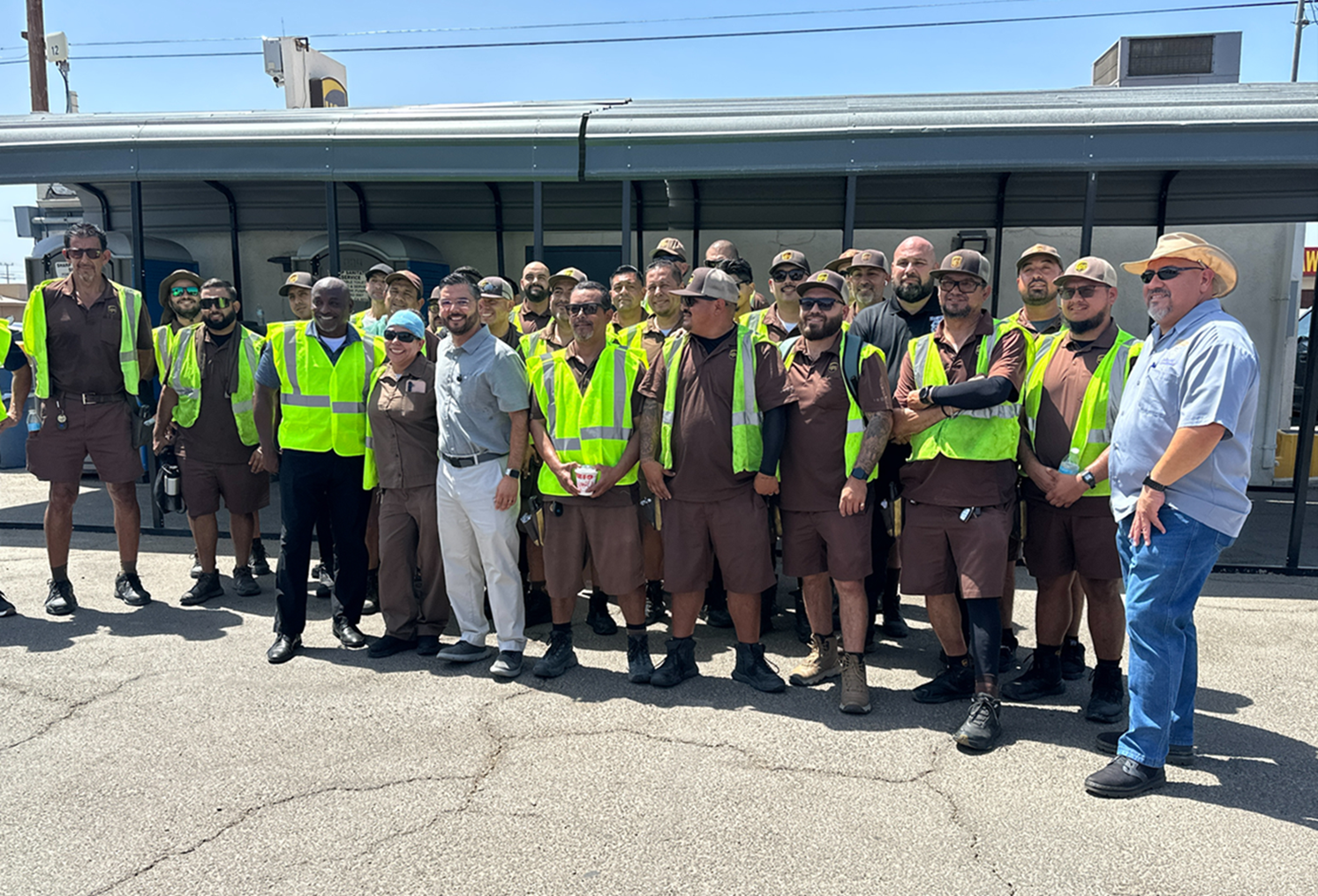
U.S. Rep. Raul Ruiz (D-Coachella) spoke about the new heat safety measures for delivery workers after UPS began deploying air-conditioned vehicles in the Imperial Valley, following concerns over extreme temperatures faced by employees working outdoors and inside delivery vehicles. This was during an early morning visit to the company’s headquarters in El Centro on July 28 as temperatures reached 104 degrees that morning.
Ruiz said workers had reported dangerous conditions during periods of extreme heat, including vehicle interior temperatures reaching as high as 140 degrees Fahrenheit. He said some employees told him they experienced nausea, dizziness, weakness and other symptoms associated with heat exposure while working without air conditioning.
“I started fighting for them immediately, writing a letter to the president of the company, Carol Tomé,” Ruiz said. “I had a meeting with her telling her that it is unfair for workers to do this job under these conditions.”
Ruiz said the Teamsters union also negotiated an agreement with UPS that included plans for the company to begin manufacturing air-conditioned delivery vehicles. He said he requested that the first vehicles be assigned to areas with the highest temperatures.
The congressman said 11 air-conditioned UPS vehicles are now operating in the region, while other vehicles have received additional ventilation improvements. He added that facilities have also added cooling equipment, including fans, to help reduce heat exposure.
“This is a great step forward because the workers organized and had meetings with me, and I give them all the credit,” Ruiz said.
Ruiz, who is also an emergency physician, said extreme heat exposure can become a life-threatening medical emergency if not addressed.
“Some told me they went to the hospital,” Ruiz said. “As an emergency physician, I know that when someone is exposed to extreme heat, it can be dangerous and can become a situation of death.”
He explained that heat exhaustion symptoms can progress into heat stroke, a condition in which the body can no longer regulate its temperature and requires immediate medical attention.
“When someone has heat stroke, their body has failed, they can no longer cool themselves through sweating,” Ruiz said. “That is an emergency.”
Ruiz said the UPS changes are part of a broader effort to establish permanent protections for workers exposed to extreme heat. He said he is working on legislative proposals that would require companies operating service vehicles in extreme climates to provide air conditioning.
“Because we know that with different company presidents or different administrations, the situation can change,” Ruiz said. “That is why I am working on proposals to codify these protections and have it required by law.”
Ruiz said he has also raised concerns with other companies whose workers face extreme heat conditions, including the U.S. Postal Service and FedEx.
“I have sent letters to the presidents of these companies advocating for workers,” Ruiz said. “I am building a proposal to protect workers in extreme heat conditions to protect and save their lives.”
The congressman said the issue is especially important in the Imperial Valley, where summer temperatures regularly exceed 100 degrees and workers, older adults and vulnerable populations face increased risks during heat waves.
UPS driver Camila Corrales, who has worked for the company for 27 years, said efforts to improve heat protections for delivery workers represent a positive step, citing the challenges employees face while working in extreme temperatures.
“It’s good what the congressman is doing for us, that he is fighting for us, because many have suffered from heat stroke,” Camila said. “It happened to me many years ago, and they did not care, but now we have air conditioning in the trucks.
Corrales said the addition of air conditioning has helped improve conditions, but she noted that vehicles can still become extremely hot inside.
“Even with AC, it’s like an oven inside,” she said.
She added that drivers must complete safety checks before starting their routes, including making sure mirrors, lights, brakes and other equipment are working properly, as well as ensuring the vehicle has fuel.