


Dolores Huerta, Labor Rights Leader and United Farm Workers Co-Founder, Dies at 96
Share your love
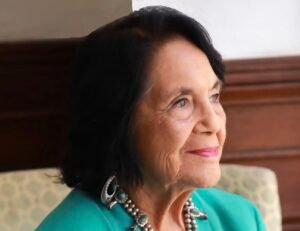 -Editorial
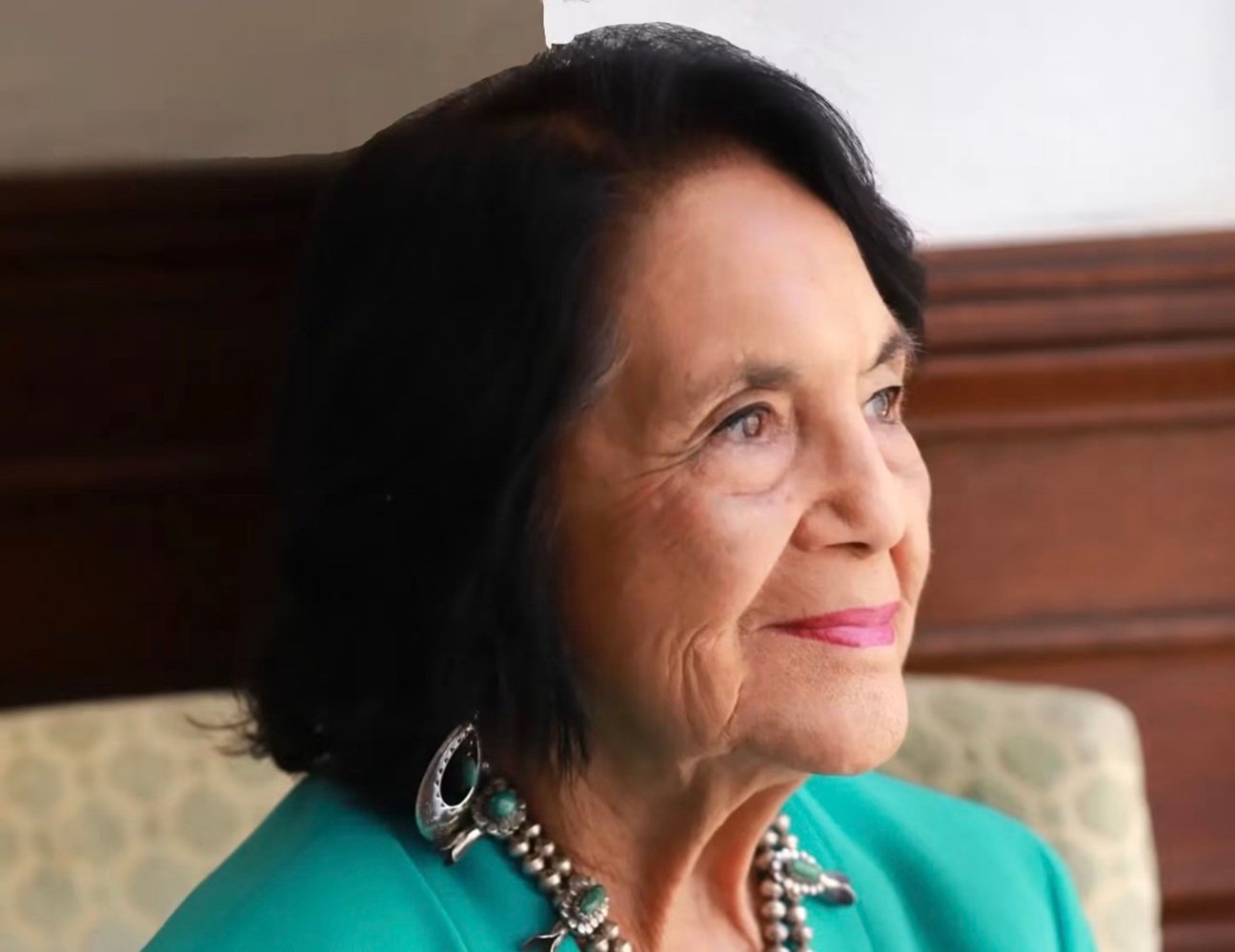
Dolores Huerta, a pioneering labor organizer, civil rights advocate, and feminist who helped establish the United Farm Workers and spent more than six decades fighting for agricultural workers, women, and marginalized communities, died Wednesday, Oct. 28, at age 96.
Her family announced her death in a statement Wednesday, describing the loss as a difficult moment for her relatives and supporters around the world.
“We are deeply saddened to announce that our beloved mother, Dolores Huerta, has passed away today at the age of 96,” the family said. “As you can imagine, this is an incredibly difficult time for us, and we ask for privacy as we grieve this incredible loss to our family.”
The family said it would announce plans to recognize and celebrate Huerta’s life and legacy later.
Born April 10, 1930, Huerta became one of the most influential figures in the American labor movement, working alongside Cesar Chavez, Gilbert Padilla and other organizers to improve wages, working conditions and collective bargaining rights for farmworkers.
Her advocacy extended beyond organized labor to women’s rights, immigration reform, LGBTQ rights, and political participation, particularly among Latino communities.
Huerta began her organizing career with the Community Service Organization, where she helped improve economic and social conditions for working-class families.
In 1958, she helped establish the Agricultural Workers Association, an early effort to organize farmworkers and address labor conditions in California.
Frustrated by what she viewed as insufficient attention to agricultural workers’ concerns, Huerta joined Chavez and Padilla in founding the National Farm Workers Association in 1962.
The organization eventually joined forces with the Agricultural Workers Organizing Committee, which included Filipino American labor leaders such as Larry Itliong, to establish what became the United Farm Workers.
Huerta played a significant role in the 1965 Delano grape strike, one of the most consequential labor actions in California agricultural history.
The strike began Sept. 8, 1965, when Filipino farmworkers organized by Itliong walked off their jobs at vineyards in Delano to demand better wages and working conditions.
The National Farm Workers Association joined the strike later that month, expanding the labor action into a broader movement that attracted national attention.
Huerta helped organize consumer boycotts of California grapes, coordinating campaigns in New York, New Jersey, and other East Coast communities.
Working with labor unions, churches, students and community organizations, she encouraged consumers and retailers to stop purchasing grapes produced by companies involved in the labor dispute.
The boycott became a central strategy of the farmworkers’ movement and helped increase pressure on agricultural employers to negotiate labor agreements.
Huerta also served as one of the union’s principal contract negotiators, helping secure agreements with major grape producers.
The Delano grape strike ended in 1970 with contracts that improved wages, established workplace protections, addressed pesticide exposure, and expanded access to health benefits for agricultural workers.
Her organizing and negotiating efforts helped establish collective bargaining as a central objective of the farm labor movement.
During the 1970s, Huerta continued organizing boycotts involving lettuce, wine, and table grapes while advocating for legislation to strengthen agricultural workers’ rights.
She played an important role in the passage of California’s Agricultural Labor Relations Act of 1975, which established a legal framework for farmworkers to organize unions and participate in collective bargaining elections.
The legislation represented a major development in California labor law and created the Agricultural Labor Relations Board to administer and enforce its provisions.
Huerta also became increasingly involved in women’s rights advocacy, helping establish the Coalition of Labor Union Women in 1974.
Although her early positions on reproductive rights differed from those she later adopted, she became an advocate for women’s political representation, reproductive freedom, and economic equality.
Her involvement with the Feminist Majority Foundation included efforts to encourage Latina women to participate in elections and seek leadership positions.
In 2017, she served as an honorary co-chair of the Women’s March in Washington, D.C.
Huerta’s activism also involved personal and professional challenges.
In September 1988, she suffered serious injuries after being struck by a San Francisco police officer during a protest related to George H.W. Bush’s presidential campaign.
The incident left her with fractured ribs and a ruptured spleen, which required surgical removal.
She subsequently received an $825,000 settlement, and the incident contributed to changes in San Francisco Police Department policies governing crowd control and officer discipline.
Huerta temporarily stepped away from union activities following the incident but returned to organizing after Chavez’s death in 1993.
She continued supporting agricultural workers and speaking publicly about labor rights before leaving her position as United Farm Workers vice president in 1999.
In 2002, she founded the Dolores Huerta Foundation, a Bakersfield-based organization focused on civic engagement, community organizing, education, and social justice.
Through the foundation, Huerta continued encouraging residents to participate in elections, advocate for public policies, and become involved in decisions affecting their communities.
She also remained active in Democratic politics, supporting presidential candidates including Robert F. Kennedy, George McGovern, Al Gore, Hillary Clinton, Joe Biden, and Kamala Harris.
Her public advocacy included support for immigration reform and protections for LGBTQ communities.
Huerta received numerous national honors recognizing her contributions to labor organizing and civil rights.
Among them were the Eleanor Roosevelt Human Rights Award, the Hispanic Heritage Award, and the Puffin/Nation Prize for Creative Citizenship.
In 2012, President Barack Obama awarded her the Presidential Medal of Freedom, the nation’s highest civilian honor.
California formally recognized her contributions in 2018 when Gov. Jerry Brown signed legislation designating April 10 as Dolores Huerta Day.
Oregon adopted a similar recognition in 2019.
Her life and organizing career also became the subject of documentary and feature films, including the 2017 documentary “Dolores” and the 2014 film “Cesar Chavez,” in which actress Rosario Dawson portrayed her.
In March 2026, Huerta publicly alleged that Chavez had sexually assaulted her in 1960 and 1966, following a New York Times investigation into allegations of sexual abuse involving the late labor leader.
Huerta said both assaults resulted in pregnancies and that the two children were raised by other families. She said she had maintained relationships with the children but had kept the circumstances of their births private for decades.
She attributed her silence to concerns about the potential consequences for the farmworkers’ movement, the political environment of the time, and the unequal power dynamics within the organization.
Huerta also accused Chavez of emotional abuse and humiliation during their years working together.
Her disclosures added a new dimension to public discussions about the history of the farm labor movement and the experiences of women involved in its leadership.
Despite the allegations and difficulties she described, Huerta continued to emphasize the importance of protecting the rights and achievements of agricultural workers.
Throughout her career, she became closely associated with the phrase “Sí se puede,” meaning “Yes, it can be done,” which became a widely recognized slogan of the United Farm Workers and later influenced political and social movements.