


Supreme Court Reaffirms Birthright Citizenship in 6-3 Ruling
Share your love
-Editorial
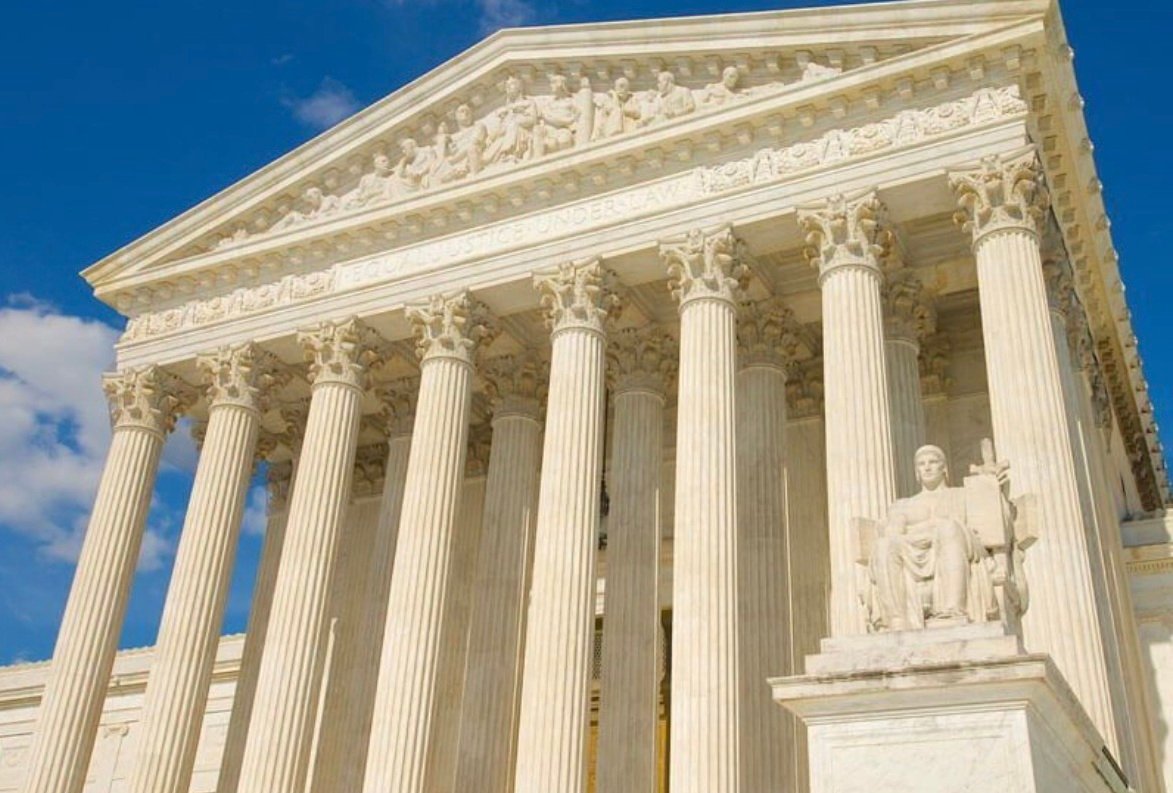
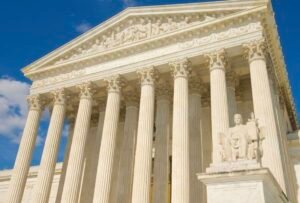
The U.S. Supreme Court on June 30 issued a 6-3 ruling in Trump v. Barbara, striking down an executive order signed by President Donald Trump that sought to limit automatic birthright citizenship for children born in the United States to parents who are in the country unlawfully or temporarily.
In the majority opinion, Chief Justice John Roberts wrote that the Constitution’s Citizenship Clause guarantees citizenship at birth to individuals born in the United States and subject to its jurisdiction, regardless of their parents’ immigration status. The ruling reaffirmed the court’s long-standing interpretation of the Fourteenth Amendment, which states that all persons born or naturalized in the United States and subject to its jurisdiction are citizens of the United States.
“Citizenship, then and now, was the right to have rights — to freely participate in our political community,” Roberts wrote. “The Framers of the Fourteenth Amendment extended that promise to ‘every free-born person in this land.’ We keep that promise today.”
The court held that children born in the United States to parents who are present unlawfully or temporarily are “born in the United States,” “subject to the jurisdiction thereof,” and are citizens at birth under the Constitution.
Justice Ketanji Brown Jackson filed a concurring opinion, joined in part by Justice Sonia Sotomayor. Justice Brett Kavanaugh concurred in the judgment but dissented in part. Justice Clarence Thomas authored a dissent joined by Justice Neil Gorsuch, while Gorsuch and Justice Samuel Alito also filed separate dissents.
In his dissent, Thomas argued that some applications of Trump’s executive order were consistent with what he described as the original public meaning of the Citizenship Clause. Jackson responded in her concurrence that the dissent overlooked the broader purpose of the Reconstruction Amendments, describing them as a fundamental constitutional reset intended to expand equality and citizenship rights following the Civil War.
Alito, in a separate dissent, called the case one of the most significant in the court’s history and said he believed the majority had reached the wrong conclusion.
A central issue in the case involved whether birthright citizenship requires a parent to have a permanent domicile in the United States. The majority rejected that interpretation, citing the court’s reasoning in the 1898 decision United States v. Wong Kim Ark, which established that birth on U.S. soil generally confers citizenship under the principle of jus soli, or “right of the soil.” The majority concluded that the historical record did not support imposing a domicile requirement under the Fourteenth Amendment.
Thomas and Gorsuch argued that at least one parent should have a permanent U.S. domicile for a child to acquire citizenship at birth, although Gorsuch indicated that the executive order could still face constitutional challenges under a narrower legal framework.
Birthright citizenship in the United States is rooted in the Citizenship Clause of the Fourteenth Amendment, ratified in 1868. The provision was adopted in part to overturn the Supreme Court’s 1857 decision in Dred Scott v. Sandford, which denied citizenship to African Americans. Since the court’s ruling in United States v. Wong Kim Ark, the Citizenship Clause has generally been understood to grant citizenship to nearly all individuals born in the United States, with limited exceptions such as children of foreign diplomats and occupying military forces.
Trump made ending birthright citizenship for children of undocumented immigrants a key immigration policy proposal during his 2024 presidential campaign. On Jan. 20, 2025, he signed Executive Order 14160, titled “Protecting the Meaning and Value of American Citizenship,” directing federal agencies not to recognize citizenship for certain children born in the United States to noncitizen parents.
The order was quickly challenged in federal courts, and several judges blocked its implementation through nationwide injunctions. The legal disputes eventually reached the Supreme Court. In a separate 2025 decision, the court limited the ability of federal district courts to issue nationwide injunctions but did not address the constitutionality of the executive order itself. The June 30 ruling resolved the underlying constitutional question, concluding that the order violated the Citizenship Clause of the Fourteenth Amendment.