



California Warns of Invasive Fruit Fly Threat to Agriculture and Home Gardens
Share your love
-Editorial
Invasive fruit flies and other non-native pests pose a significant threat to California agriculture and backyard gardens, as state agencies and local authorities continue efforts to detect and eradicate infestations.
The California Department of Food and Agriculture said the state experienced its most widespread invasive fruit fly outbreak in the agency’s more than 100-year history in 2023. The outbreak resulted in seven simultaneous quarantines and restricted residents in affected areas from moving or sharing certain homegrown fruits and vegetables.
Three quarantined infestations have been eradicated this year, while two Mexican fruit fly quarantines remain in San Diego County, covering more than 100 square miles. State and local authorities continue to respond to detections throughout California as summer travel increases the risk of pests being unintentionally transported into the state.
“No, they are not winning,” said Victoria Hornbaker, director of CDFA’s Plant Health and Pest Prevention Services. “They continue to come at us, but between the CDFA, the USDA and the counties, we continue to eradicate those fruit flies.”
Hornbaker said California regularly detects Mediterranean, Mexican and Oriental fruit flies, which are non-native and can damage a wide variety of fruits and vegetables.
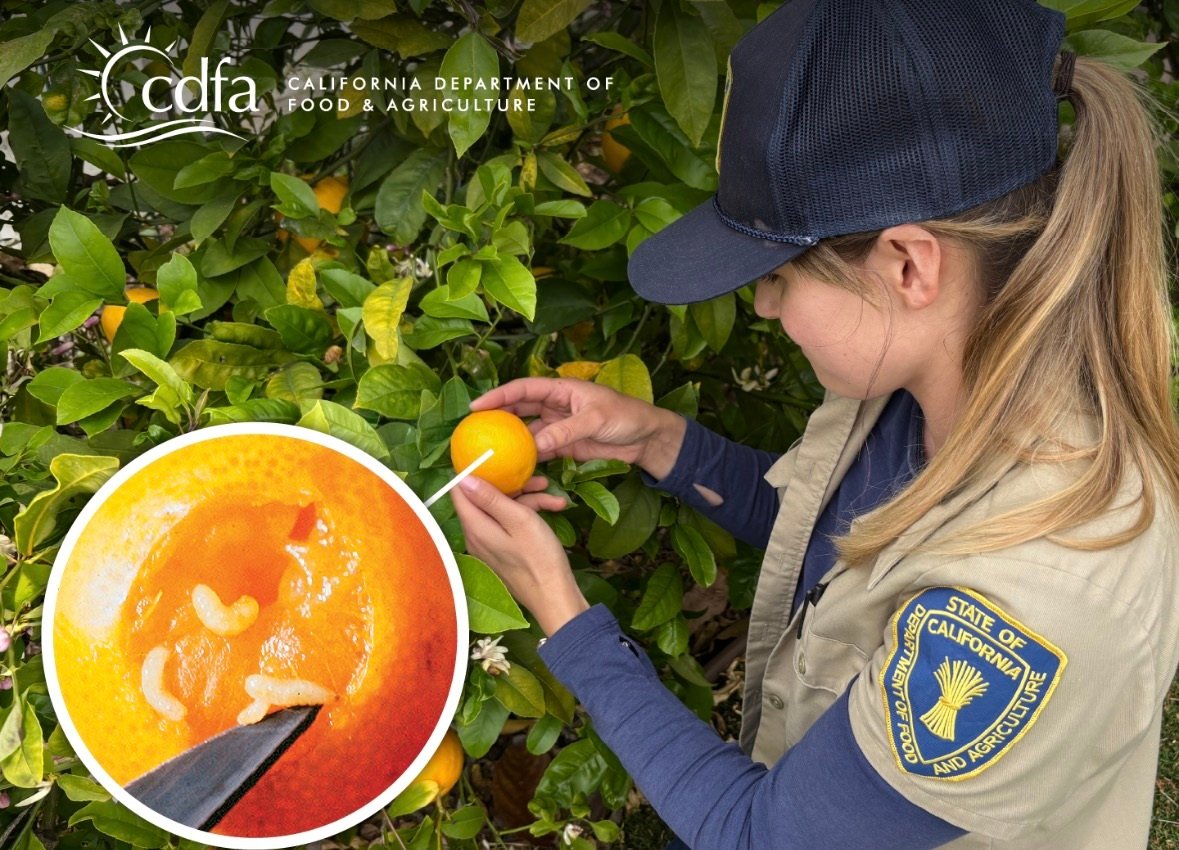
The flies lay eggs inside produce, where larvae feed on the fruit from the inside. Produce can remain outwardly healthy while being damaged internally, Hornbaker said.
“If fruit flies become established in California, it’s going to be devastating to California’s agriculture and can have irreversible impacts on our home gardens,” she said.
The pests can damage more than 250 types of produce. California grows more than 400 types of specialty crops, many of which could be affected by invasive fruit flies.
Hornbaker said the potential consequences extend beyond commercial agriculture to community and backyard gardens, including reduced access to fresh produce, higher food costs, and losses for farmers and residents who grow their own fruits and vegetables.
The 2023 outbreak was believed to have resulted from the movement of infested produce into California. Hornbaker said most invasive fruit fly detections occur in urban and suburban areas, where infestations can affect residents, businesses and nearby agricultural operations.
Several pathways can allow invasive pests to enter the state, including travelers bringing fruits and vegetables in luggage, purchases from online marketplaces or unverified sources, and shipments of agricultural products.
U.S. Customs and Border Protection uses trained dogs, known as the Beagle Brigade, to detect agricultural products in luggage at airports. Similar canine inspections are conducted at international land ports of entry along the California-Mexico border.
Hornbaker said travelers also should be aware that natural-material souvenirs, including wooden handicrafts, can carry other invasive pests.
“We want people to enjoy their vacations, enjoy the vibrant offerings of the destination, but just bring back the memories,” she said.
CDFA uses several levels of response when a fruit fly is detected. A single detection may prompt additional trapping and visual inspections to determine whether the fly was an isolated occurrence. Multiple detections can lead to eradication efforts and, when specific thresholds are met, a quarantine.
Quarantines generally remain in place through three life cycles of the fruit fly. Because the insects’ life cycles are affected by temperature, quarantines can be shorter during warmer months and longer during colder periods.
Abraham Lopez-Zuniga, a CDFA emergency response team lead, said residents play an important role in helping crews identify and eliminate infestations.
“These things can grow and can be at a point that is very difficult for California agriculture,” Lopez-Zuniga said. “That’s why it’s so important for us to participate and raise this awareness to the public.
During eradication operations, inspectors may place additional traps around a detection area and collect fruit samples from nearby properties to determine whether flies have reproduced.
Crews can also use treatments designed to attract and kill male flies. If a mated female is detected, crews may remove fruit from trees and other plants in the surrounding area to help interrupt the insects’ life cycle.
Lopez-Zuniga said residents living within a quarantine should not give away fresh fruit from their properties to neighbors, friends, or family. Instead, fruit can be processed into products such as juice or baked goods before being shared.
Residents who need to dispose of potentially infested fruit should place it in a sealed plastic bag, preferably double-bagged, and put it in the regular trash rather than green waste, he said.
The CDFA urged Californians to avoid transporting fruits, vegetables, plants and other agricultural products that could harbor invasive pests.
“Don’t pack a pest,” Lopez-Zuniga said, emphasizing that even a small piece of fruit brought into California can potentially carry insect eggs or larvae.