


Past Enforcement Controversies Resurface as Bovino Rejoins El Centro Border Patrol Leadership
Share your love
 -Editorial
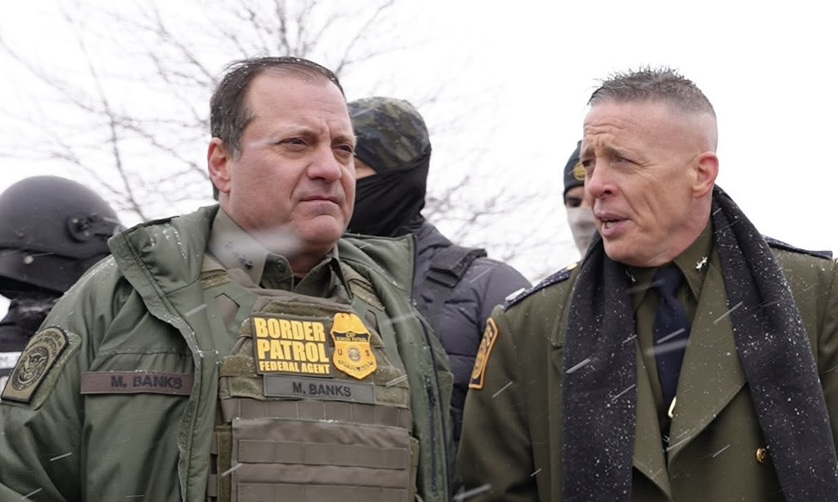
The return of Gregory Bovino to leadership within the U.S. Border Patrol’s El Centro Sector has prompted strong reactions from elected officials and labor organizations in Imperial and San Diego counties, reigniting long-standing concerns about immigration enforcement practices, civil rights, and community trust along the California-Mexico border.
Bovino’s reassignment comes after he previously served in leadership roles outside California. Details regarding the scope of his authority or the duration of his assignment in El Centro have not been publicly released by U.S. Customs and Border Protection.
U.S. Rep. Raul Ruiz, M.D., D-Indio, issued a statement Tuesday criticizing Bovino’s return and calling for accountability related to enforcement actions carried out under his leadership in other regions. Ruiz cited incidents in Minnesota involving Border Patrol operations that resulted in the deaths of Alex Pretti and Renée Nicole Good, which he said warrant independent investigation.
“These incidents demand a full, independent investigation, and the American people deserve clear answers and accountability,” Ruiz said in his statement.
Ruiz also said his office has received reports from Imperial Valley residents alleging racial profiling and improper enforcement practices. According to Ruiz, constituents have reported being stopped, questioned, and pressured to prove their citizenship, even though they are U.S. citizens.
“That kind of conduct erodes trust, violates due process, and makes communities feel less safe,” Ruiz said.
The congressman further criticized large-scale immigration raids that target non-criminal immigrants, saying such operations separate families, disrupt local economies, and divert federal resources away from combating violent crime, drug trafficking, and human trafficking. Ruiz said enforcement strategies relying on fear and broad sweeps undermine public safety rather than enhance it.
Ruiz emphasized that Imperial County should not be treated as a testing ground for what he described as extreme enforcement tactics, adding that border security is most effective when carried out transparently, with accountability, and in coordination with local leaders.
Brawley resident Eric Reyes criticized a recent immigration enforcement operation and raised concerns about its impact on local families. “We’ve already seen an example this Saturday in Seeley. There was a raid, and they took in about 20 people they supposedly targeted, and we were told they’re not criminals. They’re not people they said they were targeting, supposedly violent criminals and sex offenders. It’s not true. These were just undocumented people, that is true. One of them was an American citizen, a person who was taken, leaving their children behind. They had four children, including minors and young adults not able to fend for themselves, and the community rallied together to support them. The thing is, this is an example. We fear it’s going to escalate here in Imperial County. We’ve kind of understood that they’re here — we’re on the border, we know Border Patrol has to do their job — but we haven’t had this type of escalation. I’m hoping it doesn’t get any worse. And Bovino is a failure. He failed as commander at large and was demoted back here. Hopefully, he gets the fuck out,” Reyes said.
El Centro resident Tony Gallegos expressed concern about federal immigration enforcement leadership and its potential impact on Imperial Valley. “Looking at what happened in other states where he served, I think he overreacted and let agents do whatever they wanted instead of having better control over them,” Gallegos said. “Now that he’s back in Imperial Valley, I hope he doesn’t do the same thing here that he did over there. I think Congress is going to have to step in and try to get them to slow down what they’re doing. It makes people feel like we’re moving toward a Gestapo-type government instead of one where everyone is treated equally.”
Labor organizations have also voiced opposition to Bovino’s reassignment. The San Diego & Imperial Counties Labor Council, AFL-CIO, representing approximately 135 unions and more than 200,000 workers and their families, released a statement condemning the decision to return Bovino to the El Centro Sector.
In its statement, the labor council said border communities should not be subjected to enforcement leadership it characterized as reckless or unconstitutional. The organization argued that workers and families in the region have previously borne the consequences of aggressive immigration operations tied to Bovino’s leadership.
The labor council pointed to past immigration raids in Kern County and other parts of California, which it said resulted in family separations and heightened fear in working-class neighborhoods. It also referenced protests and demonstrations in Minnesota, where Bovino previously held a leadership role, describing those actions as community responses to federal enforcement practices viewed as excessive.
In a background section of its statement, the labor council cited findings from the nonprofit Project on Government Oversight. According to the organization, data from Bovino’s prior tenure as chief patrol agent of the El Centro Sector showed the highest ratio of use-of-force incidents to assaults on agents among all 20 Border Patrol sectors nationwide.
The labor council urged California’s congressional delegation and state leaders to oppose Bovino’s reassignment and called for increased oversight of the Department of Homeland Security and U.S. Customs and Border Protection. The statement included broader demands related to federal immigration policy and agency leadership, which were attributed solely to the organization.
U.S. Customs and Border Protection has not publicly responded to the criticism surrounding Bovino’s return, and no official comment was immediately available regarding the allegations raised by Ruiz or the labor council.
The El Centro Sector is responsible for border enforcement across Imperial County and portions of eastern San Diego County, covering a region that includes agricultural communities, international ports of entry, and remote desert terrain. The sector has long been central to debates over border security, immigration enforcement, and civil liberties in California’s borderlands.
As Bovino resumes duties in the region, local officials, labor leaders, and advocacy groups say they plan to closely monitor Border Patrol operations, while federal authorities continue to emphasize the agency’s mission to enforce immigration law and protect national security.