

Michel Sánchez Elected President of Baja California Congress in Unanimous Vote
Share your love
 -Editorial
In a demonstration of political consensus rarely seen in state legislatures, the XXV Legislature of Baja California unanimously elected Deputy Liliana Michel Sánchez Allende as President of the Congress for the upcoming Second Ordinary Session Period. Her term will span from December 1, 2025, through March 31, 2026, a crucial stretch in which lawmakers are expected to address key legislative priorities and oversee ongoing governmental transitions.
The decision came during a preparatory session held Sunday, where the Junta de Coordinación Política (JUCOPO) presented its proposal for the new leadership of the Mesa Directiva (Board of Directors). The full chamber endorsed the slate without opposition, signaling broad support for Sánchez Allende’s leadership and the operational structure that will guide Congress over the next four months.
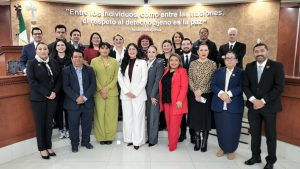
Sánchez Allende, who has built a legislative profile focused on institutional strengthening, civic engagement, and transparency, will lead a Mesa Directiva composed of representatives from multiple political parties—a configuration lawmakers said ensures balance and continuity. Joining her are Deputy Alejandra María Ang Hernández as Vice President and Deputy Dunnia Montserrat Murillo López as Secretary. Rounding out the leadership team are Deputy Adrián Humberto Valle Ballesteros as Prosecretary and Deputy Michelle Alejandra Tejeda Medina as Secretary-Scrutineer.
The composition reflects an intentional effort by the Legislature to maintain a pluralistic governing body. Each member of the board carries responsibilities that impact daily legislative operations, including managing debates, ensuring procedural compliance, and maintaining institutional order during sessions.
Following the vote, deputies proceeded to the formal closing session of the current legislative period, where the JUCOPO’s agreement designating its new leadership team was also read into the record. This second internal restructuring sets the operational tone for the Legislature’s political coordination body, which oversees agreements between party factions and promotes consensus-building on major legislative initiatives.
For this next period, the JUCOPO will be chaired by Deputy Juan Manuel Molina García, a lawmaker known for his experience in parliamentary procedures and negotiation. His leadership will be supported by a multi-party group representing every political force in the state Congress: Diego Echevarría Ibarra (PAN), Jorge Ramos Hernández (PV), Yohana Sarahí Hinojosa Gilvaja (PT), Daylín García Ruvalcaba (MC), Teresita del Niño Jesús Ruiz Mendoza (PES), Diego Alejandro Lara Arregui (FXM) and Adrián Humberto Valle Ballesteros (PRI).
The inclusion of all parties in both the Mesa Directiva and the JUCOPO is notable in a political environment often marked by partisan tension. Lawmakers from across the spectrum highlighted that this approach strengthens democratic representation and ensures that legislative negotiations reflect a broad range of citizen voices.
As the Second Ordinary Period prepares to open on December 1, expectations are high. The coming months will likely bring debates on budget allocations, reforms aimed at improving state institutions, and oversight of strategic programs affecting public security, economic development, and social welfare.
For Sánchez Allende, the unanimous vote represents both political trust and institutional responsibility. In remarks following her designation, she emphasized her commitment to leading a transparent, efficient, and inclusive Congress. Her leadership, backed by a fully represented legislative body, sets the stage for a period in which the Legislature aims to demonstrate unity, productivity, and accountability to the people of Baja California.