



U.S.-China Trade Tensions Raise Questions for Mexican Manufacturers
Share your love
 -Editorial
The United States’ efforts to raise concerns about trade imbalances with China at the Group of 20 could affect Mexican manufacturers that rely on Asian components while exporting finished products to the U.S. market.
U.S. Treasury Secretary Scott Bessent has called for countries to reassess their trade relationships with China, raising concerns that Chinese exports could increasingly be redirected toward Europe and Latin America as U.S. trade measures limit access to the American market.
The issue could be particularly significant for Mexico because of its integration with U.S. supply chains and its reliance on China for industrial inputs.
Daniella Martínez, CEO of TLC Asociados and vice president of foreign trade for Mexico’s Confederation of National Chambers of Commerce, Services and Tourism, or Concanaco Servytur, said Mexico’s position requires manufacturers to demonstrate that imported components undergo legitimate production and transformation in the country.
“Mexico is in a very particular position: China has significant weight as a supplier of inputs for our industry, while the United States accounts for the vast majority of our exports,” Martínez said. “The challenge is not to stop using foreign inputs, but to demonstrate that real production, transformation and added value exist in Mexico.”
According to figures cited by TLC Asociados, China accounted for 17.3% of Mexico’s accumulated imports in 2026, while the United States received 83.3% of Mexican exports.
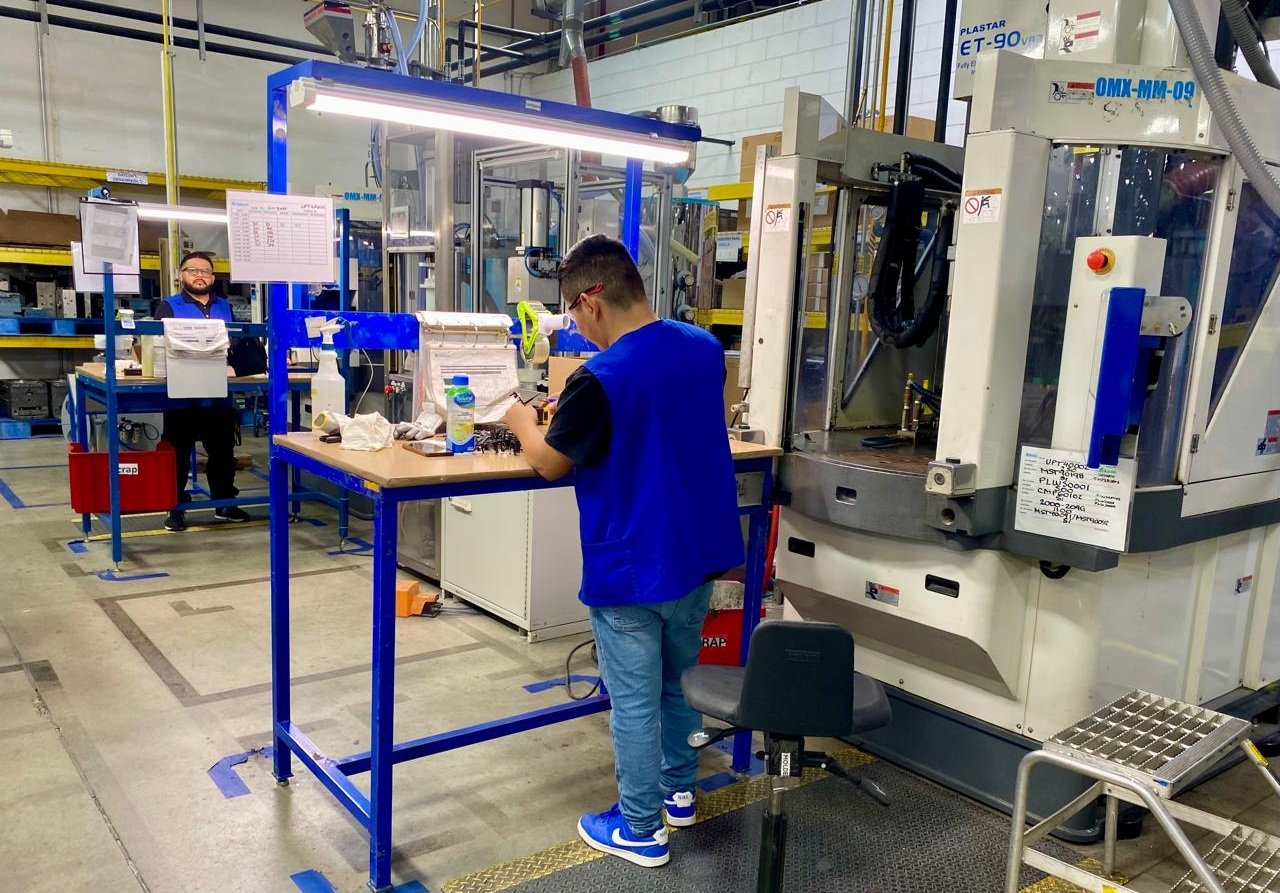
The trade relationship is particularly relevant for companies operating under Mexico’s IMMEX manufacturing program and other manufacturers that import Asian components, incorporate them into production processes in Mexico and subsequently export finished products to the United States.
Martínez said the use of Chinese components does not itself constitute an irregular trade practice. However, increased international scrutiny of product origin, transshipment and manufacturing capacity could require companies to provide stronger documentation supporting their production processes.
TLC Asociados recommended that manufacturers review compliance with rules of origin, supply chain traceability, production processes and consistency between imported materials, manufacturing activity and exported products.
Those issues could receive additional attention as Mexico, the United States and Canada prepare for the review of the U.S.-Mexico-Canada Agreement.
Martínez said Mexico could seek to distinguish legitimate manufacturing operations involving foreign components from transactions that authorities could consider transshipment or limited processing.
As trade tensions between the United States and China continue, Mexican manufacturers that depend on international supply chains could face increased attention over where products originate and how much manufacturing and value-added activity occurs in Mexico.