



Trapped by the Paycheck: The Road to Financial Independence in an Expensive Economy
Share your love
 By: Ellie Burgueño, Journalist and Writer.
Financial independence can sometimes sound like a modern utopia: a life in which money is no longer the force dictating where we work, how many hours we work, or what choices we can make. But in an economy shaped by inflation, rising living costs, debt and economic uncertainty, is financial independence really achievable?
The answer is yes—but probably not in the way social media often portrays it.
Financial independence is not necessarily becoming a millionaire, retiring at 40 or generating thousands of dollars in passive income overnight. At its core, it is gaining enough control over your finances that money becomes a tool rather than a permanent source of fear.
That distinction matters.
The New “Modern Slavery”
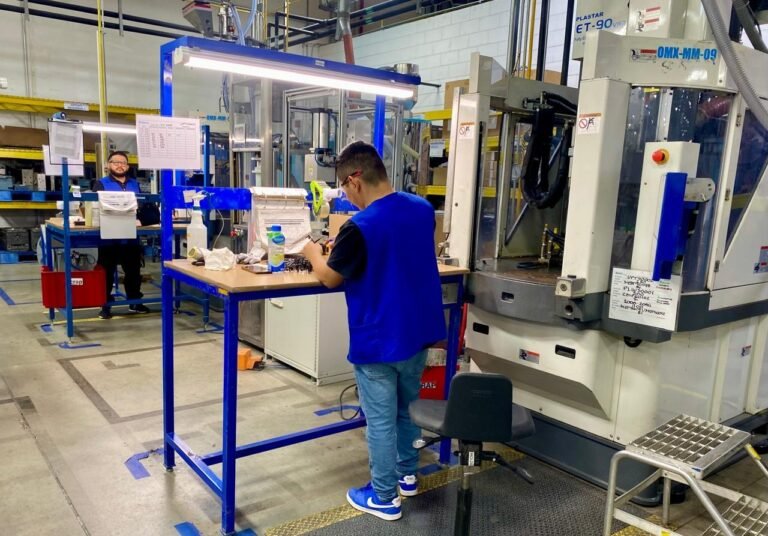
There is a form of modern financial dependence that rarely looks like oppression. It looks like working longer hours simply to maintain a lifestyle, carrying credit-card balances from month to month, upgrading a car because everyone else did, or being unable to leave an unhealthy job because there is no financial cushion.
Inflation makes that cycle harder to escape. In July 2026, U.S. consumer prices were 3.4% higher than a year earlier, according to the Bureau of Labor Statistics. Food prices were up 3.0%, while shelter continued to be a significant contributor to monthly inflation.
The Federal Reserve’s latest household survey found that price increases remained the most common financial concern among Americans in 2025.
This is why the first step toward independence is not investing. It is understanding your own financial reality.
Take an Honest Financial Inventory
Before building wealth, know where you stand.
Calculate your monthly income, fixed expenses, variable expenses, debts, interest rates, savings and investments. Determine how much it actually costs to maintain your life.
 Then ask an uncomfortable question: If my income stopped tomorrow, how long could I survive?
Debt should become a priority, particularly high-interest credit-card debt. The Federal Reserve reported that aggregate U.S. credit-card balances reached approximately $1.2 trillion in the third quarter of 2025.
The Securities and Exchange Commission’s Investor.gov similarly recommends controlling high-interest debt, establishing an emergency fund and consistently investing for long-term goals.
Increase Income—Not Just Sacrifice
There is a limit to how much one person can cut from a budget. There is potentially no limit to how much that person can learn.
One of the most powerful strategies for financial independence is developing additional skills that can generate income: writing, digital marketing, graphic design, photography, video production, coding, consulting, sales, teaching, translation, bookkeeping, artificial intelligence tools or specialized professional services.
The objective is not simply to work more. It is to increase the value of your time.
One salary can disappear. Multiple legitimate income sources can provide resilience.
Save, Invest and Let Time Work
Once expensive debt is under control and an emergency reserve is established, saving should become automatic and investing should become intentional.
Investing involves risk, but diversification can reduce the damage associated with relying on a single asset or investment. Investor.gov emphasizes asset allocation, diversification, long-term investing and compound growth as fundamental concepts for building wealth.
Compound growth is particularly powerful because your returns can begin generating additional returns. Even relatively small, consistent contributions can become meaningful over decades.
But there is another investment we often ignore: time.
The 24-Hour Economy
Every person receives the same 24 hours in a day.
The difference is how those hours are allocated.
The commonly cited 8-8-8 principle divides the day into approximately eight hours for work, eight for sleep and eight for everything else—family, exercise, learning, relationships, recreation and personal responsibilities.
Of course, real life is rarely that neat. Parents, entrepreneurs, caregivers and shift workers may have very different schedules. The lesson, however, remains powerful: productivity without balance eventually becomes another form of exhaustion.
The wealthiest person is not necessarily the one who works the most hours. It may be the person who learns to use time deliberately—building skills, relationships, health, businesses and investments instead of simply exchanging every available hour for money.
Escaping the Rat Race
Robert Kiyosaki popularized the concept of the “rat race” in Rich Dad Poor Dad: earning money, increasing consumption, accumulating obligations and then needing to earn even more to maintain the lifestyle.
The trap is simple: income rises, but expenses rise with it.
A promotion becomes a larger house. A raise becomes a newer vehicle. More income becomes more subscriptions, vacations, payments and possessions.
Financial independence requires breaking that pattern.
Live below your means. Save the difference. Invest the difference.
Not forever—but long enough to build assets and options.
Your Environment Matters
Jim Rohn famously argued that we are influenced by the five people closest to us. The precise saying is often paraphrased as: “You are the average of the five people you spend the most time with.”
Whether taken literally or philosophically, the idea deserves attention.
If your environment constantly normalizes debt, excessive consumption and financial pessimism, escaping that mindset becomes harder. If you surround yourself with people who discuss learning, entrepreneurship, investing, discipline and long-term goals, different possibilities become visible.
Your environment does not determine your destiny—but it can influence your standards.
Progress, Not Perfection
Financial independence is not an utopia. Life will continue to bring emergencies, recessions, illness, unexpected expenses and difficult seasons.
The goal is not to create a life without problems.
The goal is to create a life in which problems do not automatically destroy your financial stability.
One disciplined decision may appear insignificant today. Saving $20 does not feel transformational. Learning one new skill does not immediately change your life. Paying off one credit card may not feel like wealth.
But compound progress works in finances just as it does in investing.
Slow and steady progress can take you very far.
The difference may be invisible from one day to the next. Look back after one year, however, and you may see something extraordinary: less debt, more savings, greater skills, additional income and more control over your time.
That is perhaps the most realistic definition of financial freedom—not escaping work, but reaching a point where your financial decisions are increasingly determined by choice rather than necessity.
And that is a form of freedom worth pursuing.
Ellie Burgueño is an award-winning binational journalist, editor, author, speaker, and media entrepreneur with more than 18 years of experience in journalism, public relations, and strategic communications; Founder and Editor-in-Chief of Beyond Borders Gazette and Imperial Valley Insight, publications focused on business, politics, culture, and regional development across the U.S.-Mexico border; a member of FAPERMEX (Federación de Asociaciones de Periodistas Mexicanos), the National Association of Hispanic Publications (NAHP), where she has served on its National Board of Directors, and the National Press Club in Washington, D.C., where she is a member of its PR and Communications Team; named Woman of the Year by the California State Senate in 2020 and Woman of Distinction by the California State Assembly in 2026; recipient of the Ricardo Flores Magón First Place National Journalism Award in Mexico as a columnist, two First Place Excellence in Journalism Awards from the San Diego Press Club, and multiple additional national journalism honors, including being recognized twice with Mexico’s “Formadores de México” National Award; an accomplished author and conference speaker and a strong advocate for economic empowerment, leadership, entrepreneurship, and binational collaboration, with more than 25 years of experience in translation and interpretation and advanced professional training in strategic business management, public relations, strategic branding, political communications, creative writing, and event planning; learn more about Ellie Burgueño, her work, and professional initiatives at www.ellieburgueno.com and subscribe to her page for updates, insights, and new content.