


Spain Defeats Argentina in Extra Time to Capture Second FIFA World Cup Title
Share your love
 -Editorial
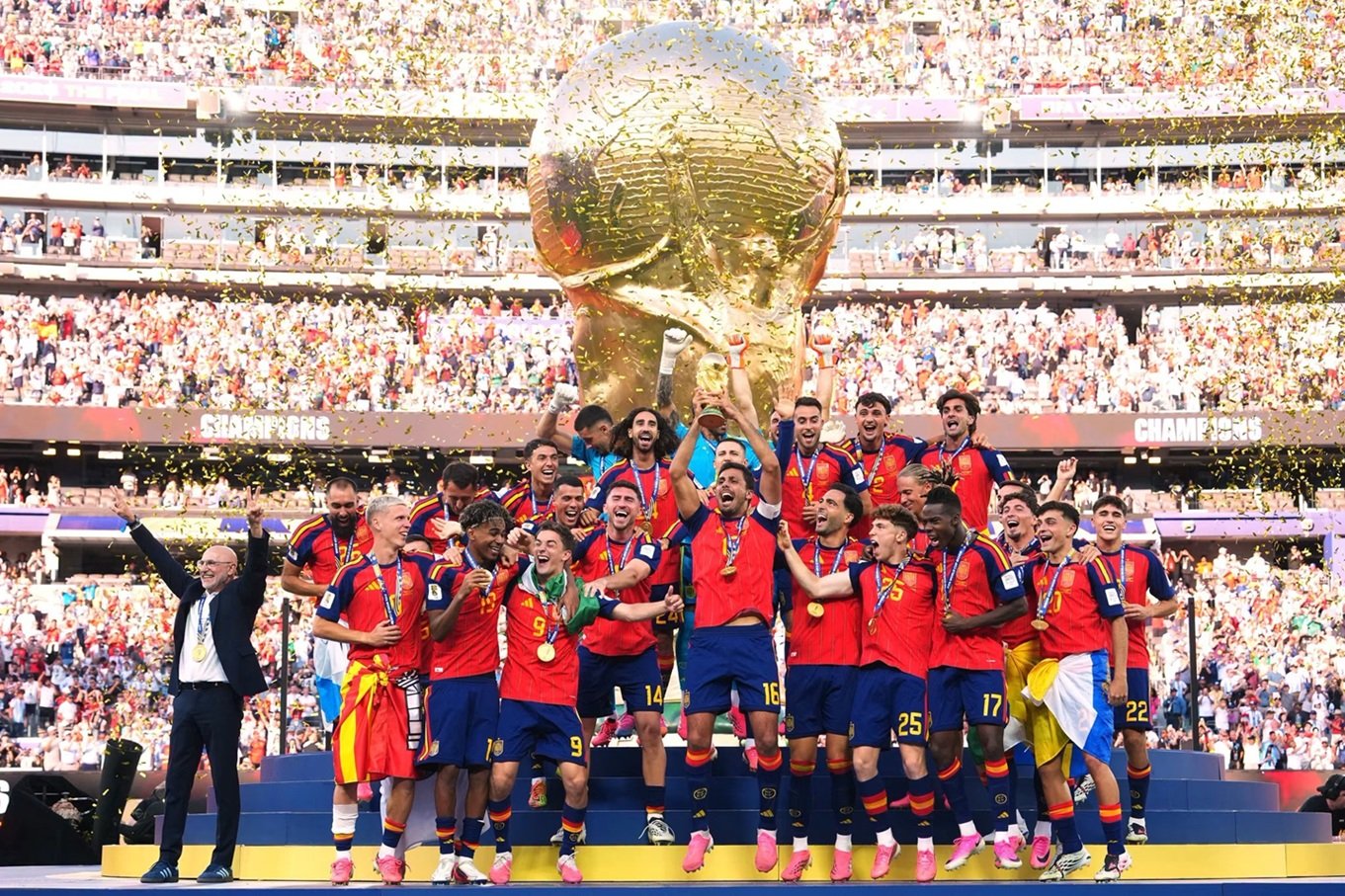
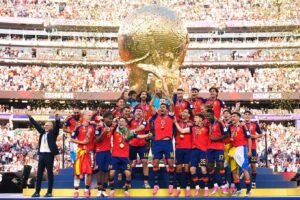
Spain reclaimed soccer’s highest honor Sunday, defeating defending champion Argentina 1-0 after extra time in a dramatic FIFA World Cup final before a sold-out crowd at MetLife Stadium in New Jersey. Substitute Ferran Torres scored the championship-winning goal in the 106th minute, ending a tense battle that showcased Spain’s dominance and secured the nation’s second World Cup title, its first since lifting the trophy in South Africa in 2010.
For much of the evening, Spain controlled possession, dictated the tempo and repeatedly threatened Argentina’s goal, only to be denied by an extraordinary performance from goalkeeper Emiliano “Dibu” Martínez. The Argentine star produced 10 saves, tying a World Cup final record, and single-handedly kept his team alive despite relentless Spanish pressure. Spain finished with 20 shot attempts while Argentina failed to register a shot on target throughout the match.
Spain thought it had broken the deadlock earlier in extra time when Nico Williams found the back of the net, but the goal was ruled out after a VAR review determined the play was offside. Rather than becoming frustrated, Luis de la Fuente’s squad remained patient and continued to attack, a testament to the disciplined, possession-based style that has become Spain’s trademark over the past two decades.
Argentina’s task became significantly more difficult late in regulation when midfielder Enzo Fernández received a second yellow card in stoppage time and was sent off, forcing La Albiceleste to play the entire extra-time period with 10 men. The defending champions also suffered defensive setbacks after center backs Lisandro Martínez and Cristian Romero exited with injuries, leaving the back line depleted during the decisive stages of the match.
The breakthrough finally arrived just 37 seconds into the second period of extra time. Pedro Porro delivered a cross into the penalty area, Nico Williams redirected the ball with a header, and Torres reacted first, smashing a left-footed shot into the roof of the net. The goal sparked jubilant celebrations among Spain’s players and supporters while ending Argentina’s hopes of successfully defending the title won four years earlier.
The final is also expected to be remembered as Lionel Messi’s last appearance on football’s biggest stage. At 39, the Argentine legend concluded an extraordinary World Cup career that included the 2022 championship and another remarkable tournament in 2026. Following the final whistle, an emotional Messi embraced Spain’s teenage sensation Lamine Yamal in a symbolic passing of the torch from one generation of football greatness to the next.
Beyond the action on the field, the championship match reflected FIFA’s vision of turning the World Cup final into a global entertainment spectacle. For the first time, the tournament featured a Super Bowl-style halftime show with performances by international music stars, including Shakira and Madonna, along with appearances by other globally recognized entertainers. The production generated millions of social media interactions while also sparking debate among traditional football supporters over whether such entertainment belongs at the sport’s premier event.
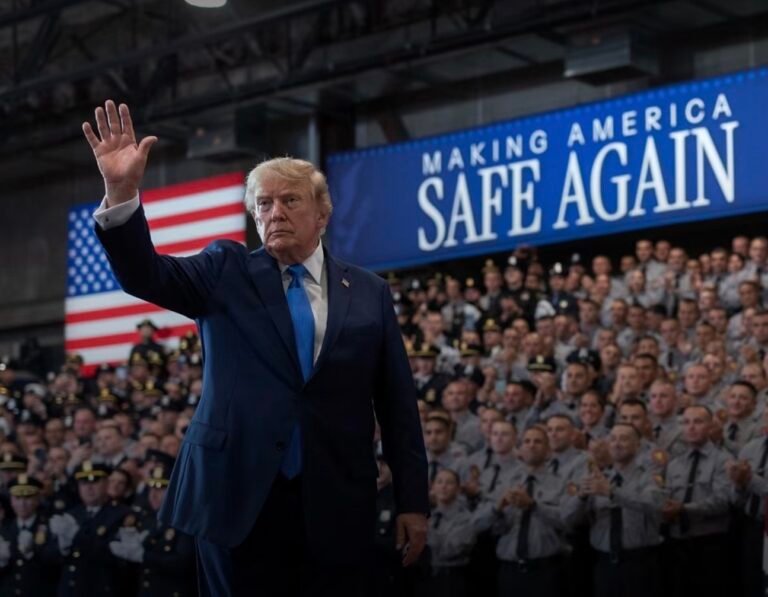
The trophy presentation drew world leaders from the three host nations. U.S. President Donald Trump, Mexican President Claudia Sheinbaum and Canadian Prime Minister Mark Carney joined FIFA President Gianni Infantino on the podium to present medals and the World Cup trophy. Trump and Infantino received a mixed reaction from the crowd, with audible boos echoing through the stadium during the ceremony.
Following the match, Infantino hailed the tournament as “the greatest FIFA World Cup ever,” praising the expanded 48-team format and the unprecedented collaboration among the United States, Mexico and Canada in staging the event. President Sheinbaum congratulated Spain on its victory while highlighting Mexico’s successful role as a co-host and the tournament’s ability to unite millions of fans across borders. President Trump also congratulated both finalists, calling the event a historic success for international sport and for the United States as a host nation.
Spain’s triumph further cements the country’s return to football supremacy. After capturing UEFA Euro 2024 and now the 2026 FIFA World Cup, Luis de la Fuente’s squad has established itself as the sport’s dominant force, blending experienced leaders such as Rodri with emerging stars including Lamine Yamal, Nico Williams and Pau Cubarsí.
Attention now turns to the 2030 FIFA World Cup, which will celebrate the tournament’s centennial with an unprecedented six-country, three-continent format. Spain, Portugal and Morocco will serve as the primary hosts, while Uruguay, Argentina and Paraguay will stage the opening matches in tribute to the inaugural 1930 World Cup. The historic tournament will become the first FIFA World Cup played across Europe, Africa and South America, ushering in a new era for the world’s most celebrated sporting event.