


Major Networks Halt Trump’s White House Pool Coverage in Solidarity With CNN, MS NOW and Politico
Share your love
 -Editorial
Journalists from CNN, MS NOW and Politico were denied access to the White House, a day after President Donald Trump announced that the three news organizations were banned from the grounds over coverage he described as false and unfair.
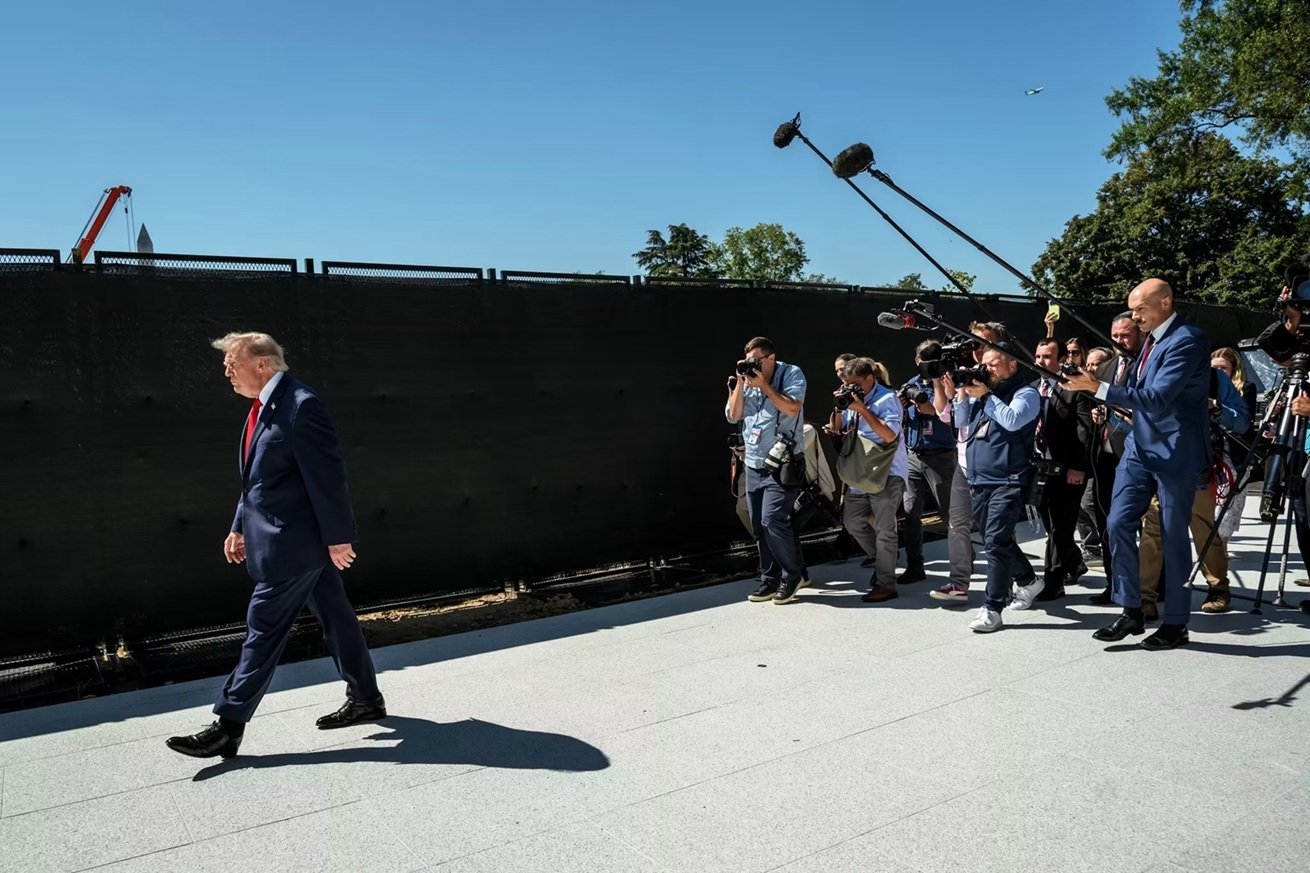
The dispute escalated Monday, Sept. 21, when the White House television press pool suspended coverage of President Trump in solidarity with the barred news organizations. Major television networks participating in the shared pool declined to replace CNN in its scheduled coverage, creating an unusual interruption in the traditional system used to provide independent television coverage of the president.
At the same time, a legal complaint challenging the administration’s action was filed in the U.S. District Court for the District of Columbia and assigned to U.S. District Judge Timothy Kelly.
The decision by other television news organizations to suspend the pool coverage represents a broader response from the press corps to the White House restrictions. Rather than allowing another organization to assume CNN’s scheduled position, participating networks chose to withhold the shared pool coverage as a show of solidarity with the journalists and organizations whose White House access had been revoked.
Reporters from all three organizations said their White House credentials were disabled or confiscated when they tried to enter the complex Sept. 19, after Trump announced a restriction a day earlier on Truth Social.
“I am proud to announce that, effective immediately, I am banning Fake News CNN, MSNOW … and Politico … from the White House as a result of their constant ‘reporting’ FAKE NEWS!” Trump wrote.
Trump said news organizations should not be able to “constantly write or report FICTION and LIES” while covering the president, his administration or the United States. He also warned that other news organizations could face similar restrictions.
Trump did not identify a particular report that prompted the decision. Speaking later Friday, he said the action resulted from what he described as cumulative coverage over the past several years.
“I don’t want them in my office. I don’t want them here,” Trump said, according to The Associated Press. He acknowledged that the restriction could face a legal challenge, saying “we’ll see” when asked whether it would withstand court scrutiny.
MS NOW White House reporter Akayla Gardner said her credential had been disabled when she attempted to enter the grounds and that an officer took her badge. CNN senior White House reporter Betsy Klein similarly reported that a Secret Service agent took her credential after she was denied entry. Politico White House reporter Cheyenne Haslett was also turned away.
The three organizations said they would continue covering the administration and indicated they would defend their press-access rights.
CNN said its journalists have a constitutional right to report on the government without government interference and that the network would continue its coverage. Politico said it would “vigorously defend our First Amendment rights.” MS NOW said it intended to take “any steps to defend its First Amendment rights and the role of independent journalism.”
The White House Correspondents’ Association also criticized the restrictions.
“The Constitution protects the freedom of the press from government interference,” WHCA President Jacqui Heinrich said in a statement. She said those protections do not depend on whether a president approves of a news organization’s coverage or the questions its journalists ask. Heinrich called on the administration to restore the journalists’ access.
The dispute raises legal questions that federal courts have considered in previous conflicts over White House press access. Courts have recognized that the government retains authority to protect White House security and control access to certain presidential spaces, while also placing constitutional limits on how established press access can be denied or withdrawn.
In the 1977 case Sherrill v. Knight, the U.S. Court of Appeals for the District of Columbia Circuit held that once White House press facilities are made available to journalists, decisions involving press credentials are subject to First Amendment protections and procedural safeguards. The ruling required the government to use articulated standards and provide reporters with notice and an opportunity to respond when credentials are denied.
Those principles resurfaced during Trump’s first administration. In 2018, the White House revoked CNN correspondent Jim Acosta’s press credential following a contentious news conference. U.S. District Judge Timothy Kelly ordered the credential temporarily restored, finding that CNN and Acosta had shown a likelihood of success on their due-process claim.
Another dispute reached the D.C. Circuit in 2020 after the White House suspended the credential of journalist Brian Karem following a confrontation in the Rose Garden. The appeals court upheld an injunction in Karem’s favor, concluding that the government could not suspend access based on behavioral expectations that had not been sufficiently communicated beforehand.
More recently, the Trump administration restricted The Associated Press’ access to certain presidential events in 2025 after the news organization continued using “Gulf of Mexico” in its style guidance while also acknowledging Trump’s executive order renaming it the “Gulf of America.” A federal district judge ruled that the government could not retaliate against the AP for its editorial choices.
The D.C. Circuit subsequently allowed the administration greater discretion over access to limited presidential spaces such as the Oval Office and Air Force One while the litigation continued, creating a distinction between access to restricted presidential areas and broader White House press facilities.
The latest developments add a new dimension to the dispute. The decision by other major television news organizations to suspend shared White House pool coverage demonstrates that the conflict is no longer limited to the three outlets whose credentials were revoked. It has become a broader dispute over the standards governing presidential press access and the role of independent news organizations in covering the executive branch.
The legal challenge will now place those questions before the federal courts, while the temporary suspension of television pool coverage underscores the wider impact of the confrontation between the administration and the White House press corps.
As the case moves forward, the courts will be asked to weigh the administration’s authority to control access to presidential facilities against constitutional protections for the press and established procedures governing White House credentials.