


Experts Warn Bundibugyo Ebola Outbreak Presents Major Public Health Challenge in Central Africa
Share your love
 -Editorial
Health experts are warning that the ongoing Ebola outbreak in the Democratic Republic of the Congo and neighboring Uganda has become a significant public health emergency, fueled by the rapid spread of the rare Bundibugyo strain of the virus, ongoing regional instability, and the lack of an approved vaccine.
During a media briefing by America Community Media, infectious disease specialists and regional analysts discussed the challenges facing health authorities as they work to contain the outbreak, which has spread across multiple provinces and crossed international borders.
According to figures cited during the briefing, the World Health Organization has reported nearly 700 confirmed cases and more than 130 deaths as of mid-June 2026. Experts cautioned that the actual number of infections could be higher because of underreporting in rural and conflict-affected areas where access to healthcare and disease surveillance remains limited.
Dr. William Schaffner, professor of preventive medicine and infectious diseases at Vanderbilt University School of Medicine, provided an overview of Ebola and the factors contributing to the current outbreak.
Schaffner explained that Ebola belongs to a group of viruses known as viral hemorrhagic fevers and is believed to be maintained in nature primarily through fruit bats. Human infections can occur when people come into contact with infected animals or contaminated materials. Once introduced into the human body, the virus undergoes an incubation period that can last from several days to several weeks before symptoms develop.
Initial symptoms often include fever, fatigue, headache, body aches, and loss of appetite. As the disease progresses, patients may develop nausea, vomiting, diarrhea, and, in some cases, bleeding complications. Severe infections can lead to organ failure, coma, and death.
“The body fluids of infected individuals become highly contagious as the illness advances,” Schaffner said, noting that caregiving and traditional burial practices have historically contributed to transmission during Ebola outbreaks.
He emphasized that supportive medical care remains the primary treatment option. While no direct antiviral therapy is available for the Bundibugyo strain, intensive supportive care can improve survival rates when patients receive timely medical attention.
A major challenge facing health officials is the absence of a vaccine specifically designed for the Bundibugyo strain. Although vaccines have been developed for other forms of Ebola, Schaffner said the virus exists in several distinct species, requiring separate vaccine development efforts.
“We have vaccines against some Ebola species, but not against Bundibugyo,” Schaffner said. “Researchers are working to develop one, but there is no immediate expectation that a vaccine will be available in the near term.”
As a result, public health authorities must rely on traditional outbreak-control measures, including identifying infected individuals, isolating patients, tracing contacts, and monitoring exposed individuals for symptoms.
Schaffner said health officials also face logistical challenges in reaching affected communities. Many cases have occurred in remote regions where healthcare infrastructure is limited and where ongoing violence and political instability complicate response efforts.
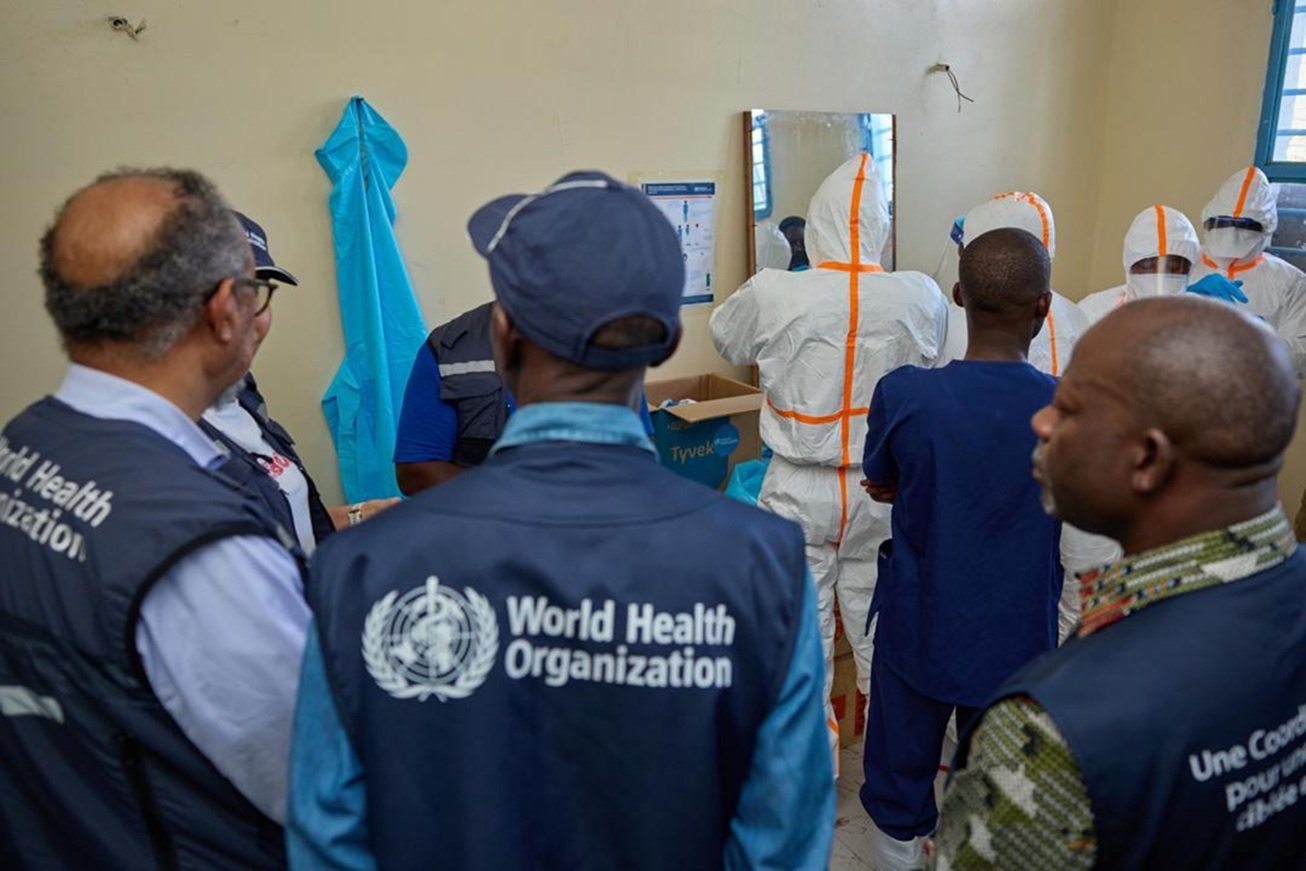
He noted that reductions in international aid resources and delays in mobilizing personnel and equipment may have affected the speed of the early response. However, he said the World Health Organization and international partners are now coordinating efforts to provide additional medical personnel, laboratory support, and testing equipment.
Despite concerns about the outbreak’s growth, Schaffner said the risk of widespread international transmission remains low.
“This is primarily a regional outbreak,” he said. “Countries with advanced healthcare systems have surveillance and infection-control procedures that can quickly identify and isolate suspected cases.”
Questions during the briefing focused on whether major international events, including the 2026 FIFA World Cup, could increase the risk of Ebola spreading beyond Central Africa. Schaffner said the likelihood remains low, citing the remote location of many affected communities and the ability of health systems in developed countries to rapidly identify potential cases.
Hospitals throughout the United States and other countries continue to monitor travelers with symptoms consistent with Ebola, particularly those who have recently visited affected regions, he said.
Schaffner also acknowledged that official case counts likely underestimate the true scale of the outbreak.
“There is always underreporting in situations like this,” he said. “Some cases may be misdiagnosed, some individuals may not seek care, and some communities may be reluctant to interact with government authorities.”
The briefing also addressed the broader social and political conditions affecting the response.
Dr. Rachel Sweet of Frontline Observatory, who has spent several years working in the Democratic Republic of the Congo and studying conflict in the region, said international audiences often have an incomplete understanding of the realities facing local communities.
According to Sweet, mistrust toward government institutions and public authorities can influence how residents respond to health interventions. She argued that skepticism toward official messaging should be understood within the context of long-standing security concerns and political instability rather than simply being viewed as resistance to science or medicine.
Sweet said some communities associate government-backed initiatives with broader political dynamics and security concerns, making it essential for public health organizations to build trust through local partnerships and transparent communication.
“The challenge is not simply the virus itself,” she said. “It is also ensuring that communities feel confident that the response is designed to help them and not serve other political interests.”
She emphasized the importance of working closely with local leaders, healthcare providers, and community organizations when implementing public health measures.
Sweet also highlighted the work already being carried out by local doctors, nurses, religious leaders, and community organizations in affected areas. Many healthcare workers, she said, have begun preparing treatment centers, educating residents, and coordinating local response efforts despite limited resources.
She noted that many frontline workers continue to serve in difficult conditions, often with inadequate supplies and funding.