


Binational University Fair Highlights Higher Education Opportunities Across The Border
Share your love
 -Editorial
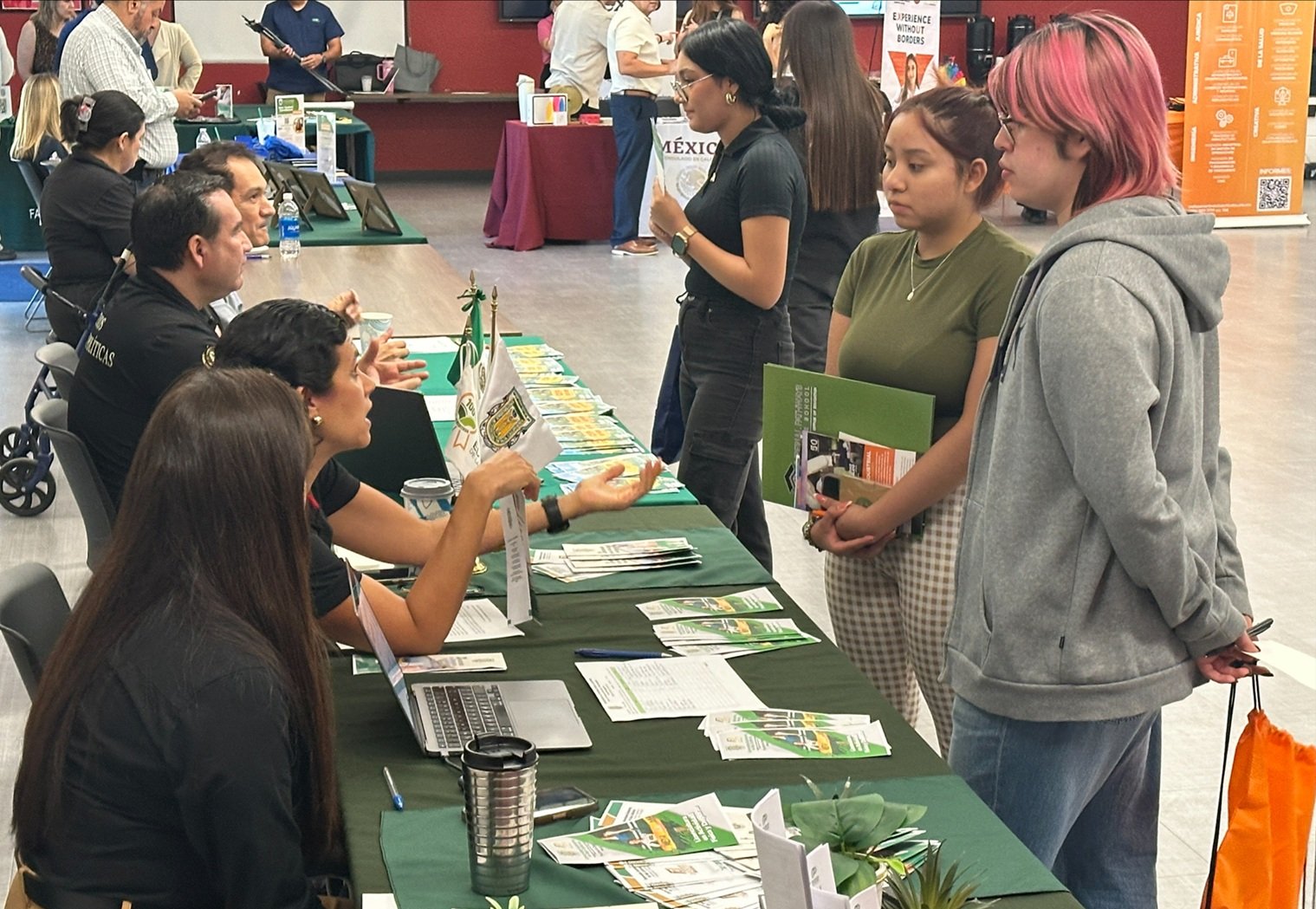
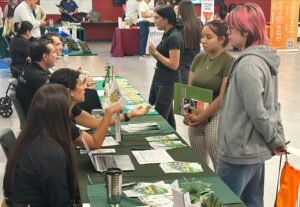
Students and higher education institution representatives gathered at Imperial Valley College for a binational university fair aimed at connecting residents with higher education and scholarship opportunities on both sides of the U.S.-Mexico border.
The Sept. 3 event, organized as part of the ninth Binational Education Week by the Mexican Consulate in Calexico and Imperial Valley College, brought together representatives from higher education institutions in the United States and Mexico.
The fair provided information about university and graduate programs, scholarships and pathways for students interested in continuing their education.
Dr. James Limbaugh, interim superintendent/president of Imperial Valley College, said the event demonstrated the range of educational opportunities available to students in the border region.
“What I’ve learned is that education is a universal language,” Limbaugh said. “No matter where you’re going to school, what country you’re in, what college you’re at, we’re all tied together into the common desire to educate students so they can help make our world a better place.”
Limbaugh said Imperial Valley students have opportunities to pursue higher education in Mexicali in addition to programs available in California and elsewhere in the United States.
“Our students here at Imperial Valley have so many opportunities in Mexicali,” Limbaugh said. “In addition to the opportunities here in our country, to be able to go across the border and study there, these students are fortunate.”
The fair also provided Limbaugh, who recently assumed leadership of the college, an opportunity to learn more about higher education institutions in neighboring Mexicali.
Limbaugh said he plans to visit universities across the border in the coming months as he continues learning about the Imperial Valley and the region’s binational educational connections.
“What this fair has told me is there’s such a vibrant educational culture in Mexicali, and I would really like to understand more of it,” he said.
Imperial Valley College serves as an educational partner of the Mexican Consulate in Calexico through the Ventanilla de Orientación Educativa, or Educational Guidance Window, according to Efrain Silva, the college’s dean of economic and workforce development.
Silva said the program helps connect residents with educational institutions and resources in both countries.
“We’re the linkage between educational institutions on this side and on the Mexico side,” Silva said.
Silva said one of the goals of the university fair is to make students aware that bachelor’s, master’s and doctoral degree programs are available just across the border.
For some students, attending a four-year university elsewhere in California or another part of the country may not be feasible because of financial circumstances, employment, family obligations, or other factors, Silva said.
Studying in Mexicali could provide another option for those students, he said, particularly because of the region’s proximity to the border and potentially lower educational costs.
Silva said increasing access to higher education is particularly important in the Imperial Valley, where the percentage of residents with bachelor’s degrees or higher remains below the statewide level.
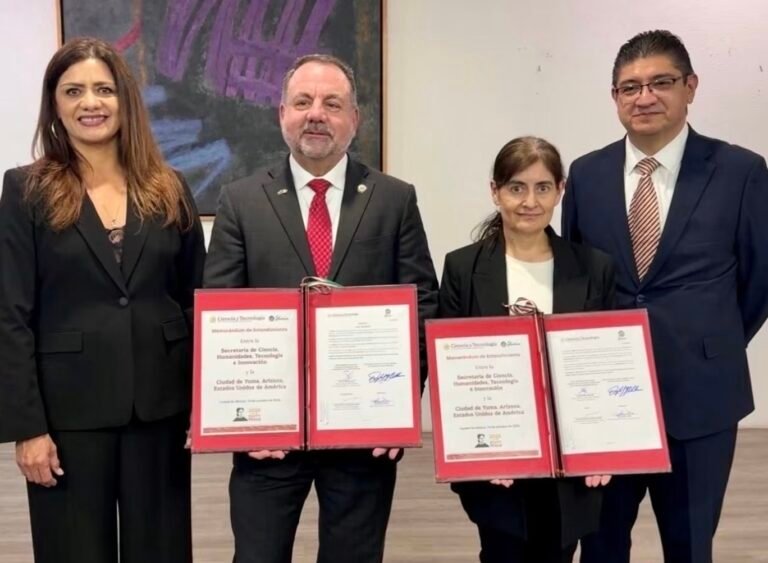
Imperial Valley College already has agreements with higher education institutions in Mexicali, Silva said. The college has a memorandum of understanding with CETYS Universidad primarily related to engineering programs and another agreement with the Autonomous University of Baja California, or UABC, primarily involving agriculture.
Silva said the college is also working to expand its relationships with other institutions.
Rocio Vazquez, head consul at the Mexican Consulate in Calexico, said the Educational Guidance Window is part of a broader Mexican consular strategy designed to connect people with educational resources.
The program is intended to serve people at different stages of their education, including those seeking to better understand the U.S. educational system, adults who did not complete their primary education, and students interested in pursuing higher education.
Vazquez said online education has also expanded the range of programs available to residents because students are no longer necessarily limited to institutions located near their communities.
The university fair marked one of the concluding activities associated with Binational Education Week, which began with activities in August.