


Application of Mesenchymal Stem Cells in the Treatment of Shoulder and Knee Osteoarthritis: A Regenerative Approach in Clinical Evolution
Share your love
 By: Dr. Elton Gómez, Specialist in Regenerative Medicine
Shoulder and knee osteoarthritis represent two of the leading causes of chronic pain and functional disability among adult and aging populations. Traditionally, their pathophysiology has been associated with the progressive loss of articular cartilage, synovial inflammation, subchondral deterioration, and biomechanical limitation. For decades, management focused on symptom control through analgesics, anti-inflammatory drugs, corticosteroid or hyaluronic acid injections, and, in advanced stages, prosthetic replacement. However, the rise of regenerative medicine has shifted the paradigm from symptomatic treatment toward the structural and functional restoration of damaged tissue, highlighting mesenchymal stem cells (MSCs) as one of the most promising therapeutic alternatives.
MSCs, primarily obtained from bone marrow, adipose tissue, or umbilical cord, possess the ability to modulate inflammation, secrete trophic factors, and stimulate cartilage regeneration through chondrogenic differentiation. Their therapeutic effect lies not only in their potential for cellular replacement but also in their paracrine activity: they regulate the joint microenvironment, reduce proinflammatory cytokines, activate tissue repair factors, and promote extracellular matrix homeostasis. Clinical studies on knee osteoarthritis have demonstrated significant improvements in pain (VAS scale), mobility, quality of life, and decreased analgesic use—even in moderate to severe stages.
Regardless of their biological source—umbilical cord, bone marrow, or adipose tissue—these cells can be cultured in specialized laboratories and subjected to expansion, purification, and certified quality control processes. These protocols ensure cell viability, absence of pathogens, and minimal—or complete elimination of—immunologic rejection risk. This has enabled the safe use of allogeneic cell lines in thousands of patients without the need for strict genetic compatibility or pharmacologic immunosuppression.
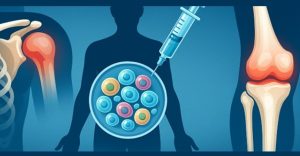 In the shoulder joint, where osteoarthritis often coexists with tendon injuries or rotator cuff degeneration, MSCs have shown positive outcomes in combined functional restoration: pain reduction, increased range of motion, and improved tendon integrity as assessed by MRI. Preliminary trials suggest that ultrasound-guided intra-articular injections, combined with progressive rehabilitation, can generate measurable structural changes within 6–12 months, offering a therapeutic window prior to prosthetic surgery.
Although clinical evidence continues to expand, the safety profile of this procedure is well established: adverse event rates are minimal and typically limited to the application site. No significant reports of rejection, mutagenesis, or tumor transformation have been documented when the product is properly processed and applied under regulatory standards. The combination of MSC therapy with complementary treatments—such as platelet-rich plasma, growth factors, shockwave therapy, or functional physiotherapy—is emerging as a synergistic strategy to accelerate tissue repair and prolong therapeutic benefits.
The immediate future of MSC therapy for osteoarthritis will depend on standardization—including optimal dosage, route of administration, cell source, patient selection criteria, and objective response markers. What was once viewed as an inevitably degenerative condition is now considered modifiable. Regenerative medicine not only aims to halt osteoarthritis progression but also to restore joint function, delay or avoid surgery, and improve quality of life. The current challenge is no longer whether stem cells work, but how to implement evidence-based, safe, ethical, and clinically responsible protocols to make this therapy accessible to all.