


Humane Society Expands Services to Meet Imperial County’s Growing Animal Welfare Needs
Share your love
 -Editorial
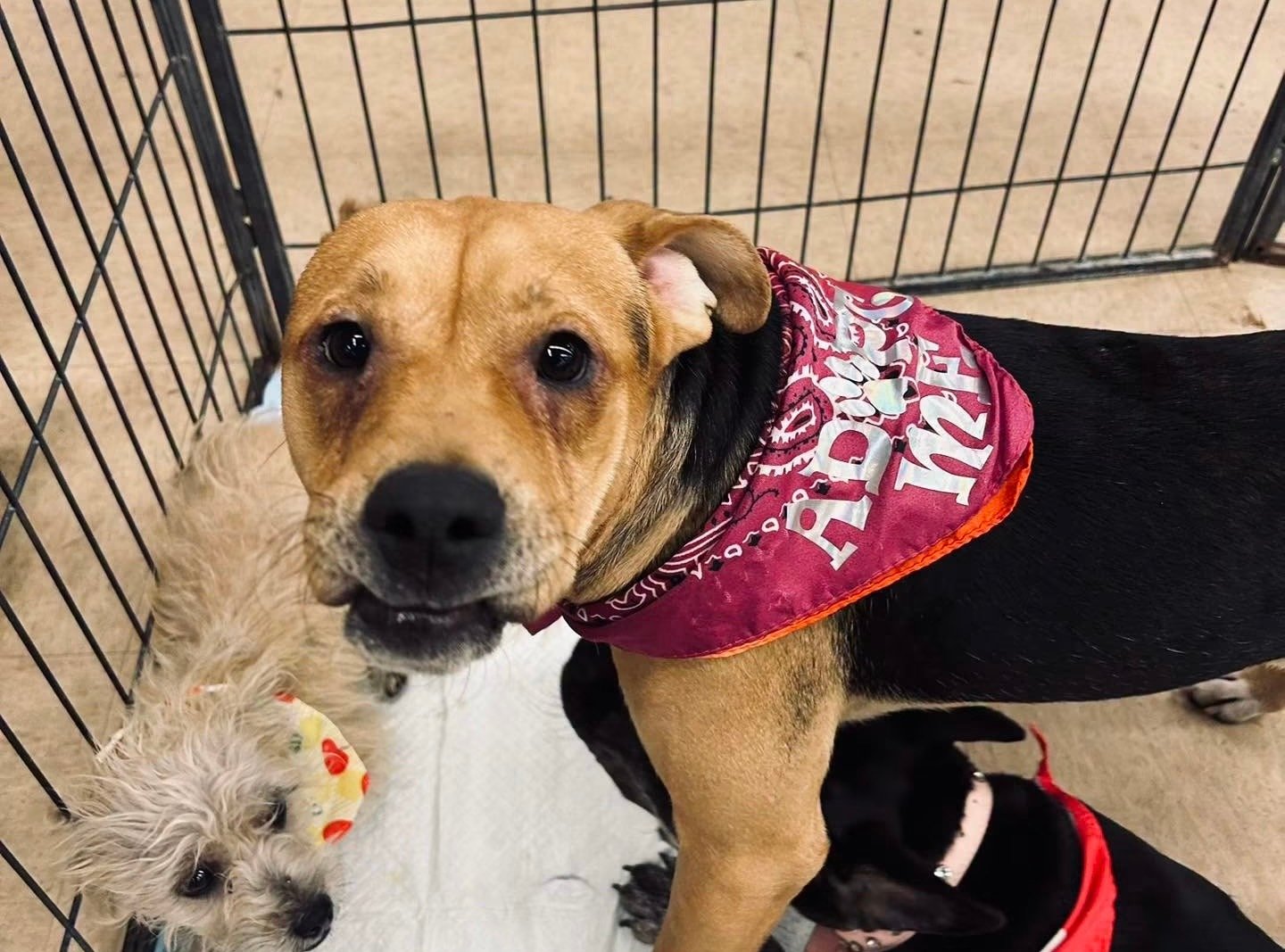
The Humane Society of Imperial County is expanding efforts to help keep pets with their families as the organization responds to growing demand for animal services and prepares for a new shelter and mobile spay-and-neuter clinic.
The nonprofit is focused on providing affordable resources, humane education, and adoption services while addressing the challenges of serving a rural community with limited animal welfare resources and funding.
Despite those challenges, staff and volunteers continue working to provide care and find homes for thousands of homeless pets each year, with plans to expand services and strengthen support for animals and their families across Imperial County.
Executive Director Devon Apodaca, an Imperial County native, has led the organization since Jan. 1, 2014. He first worked for the Humane Society in 2006 before leaving the county to attend veterinary school. After returning, he was appointed interim director in 2014 following the retirement of the previous director and later accepted the permanent position.
Apodaca said one of the organization’s biggest changes has been its approach to animal placement and adoption.
Before he became director, he said, the shelter had limited outreach to outside rescue organizations and fewer efforts to find live outcomes for animals.
A 2016 conference hosted by Best Friends Animal Society helped change his perspective, Apodaca said.
“It made me realize that there’s a different way to do things,” he said. “There are other organizations that are doing other things, so we decided to adopt those practices.”
The Humane Society subsequently expanded its network of rescue organizations, increased adoption opportunities, and began holding off-site adoption events on a regular basis.
Apodaca said the shelter has maintained a live-release rate of more than 90% for more than a decade, meeting the commonly used threshold for a no-kill shelter.
He said the organization still euthanizes some animals when they are suffering from severe medical conditions or when animals have a documented history of serious aggression that presents a danger to people or other animals.
“We have to make a tough decision,” Apodaca said. “Those animals are suffering too, so we have to help them not suffer anymore.”
The shelter is also dealing with broader challenges affecting animal shelters across California and the country, including overcrowding, fewer adoptions and reduced capacity among rescue organizations.
“Rescues, shelters, everybody’s inundated, and the system is bottlenecked,” Apodaca said. “Animals are not getting adopted; they’re not going to rescues.”
To help prevent pet owners from having to surrender animals, the Humane Society operates several community programs.
The organization provides low-cost spay and neuter services for owned pets, performing the procedures on more than 2,000 animals annually, according to Apodaca. It also operates a pet food pantry, offers low-cost vaccinations and microchipping, and provides end-of-life services for pet owners whose animals are suffering and have been evaluated by a veterinarian.
The Humane Society also partners with Imperial County Behavioral Health Services on a program that trains shelter dogs to work with behavioral health consumers and others in the community. Four dogs are currently participating in the program, Apodaca said.
The organization is also developing a program with Calipatria State Prison that would train incarcerated people as dog handlers. Shelter dogs would participate in the program for about six months before being made available for adoption.
“We have a lot of confidence that it’s going to be good for not only the animals, but for the people that are there as well,” Apodaca said.
The Humane Society is also planning a new shelter in El Centro, California.
In addition, the Humane Society received a grant through the Imperial County Community Benefit Program to purchase and develop a mobile spay-and-neuter clinic.
Apodaca said construction plans have been finalized, with the organization expecting to make a down payment soon. The goal is to have the mobile clinic operating by about this time next year.
The mobile operation is expected to travel throughout Imperial County, providing services such as spay and neuter procedures and vaccinations in different communities.
“We’re able to help everybody in the community and reach them and provide necessary services,” Apodaca said.
The organization is also seeking community support as it manages its current shelter population.
Apodaca said the Humane Society is in desperate need of fosters, particularly for senior pets that have difficulty adjusting to the shelter environment.
The organization also maintains a wish list of frequently needed supplies. Donations can be made through checks, cash, the Humane Society’s website, PayPal, and Venmo, Apodaca said. Gift cards to stores where the shelter purchases supplies are also accepted.
Volunteers are needed for adoption events and other activities. The organization plans to resume its Dogs Day Out program during cooler months, allowing community members to take shelter dogs on walks, to parks or to pet-friendly businesses.
Apodaca said the program gives dogs time outside the shelter and can help increase adoptions.
For people interested in adopting, the Humane Society currently charges a $50 adoption fee. Apodaca said the fee includes spay or neuter surgery, vaccinations, a microchip, and a free veterinary visit through Desert Vet Group in Imperial. Adopters also receive 50% off their first grooming appointment with Mendy’s Groom Room in El Centro.
Cats and kittens are also available through adoption centers at Petco and PetSmart in El Centro.
Information about available animals, adoption requirements, services and ways to donate is available through the Humane Society of Imperial County’s website.
Apodaca said prospective pet owners should understand the responsibility that comes with adoption.
“Animals are individuals; they’re sentient beings,” he said. “They’re not stuffed animals. They’re not inanimate objects.”
He said pets require food, care, attention, and companionship throughout their lives.
“Having a pet is a lifetime commitment for the lifetime of that pet,” Apodaca said.
For Veronica Henderson, the Humane Society’s mission is both a community cause and a personal one. Henderson, who has lived in Imperial County for about 20 years, has supported the organization for years, served as president of its board, and adopted several of her pets through the Humane Society. Her connection to the organization grew further when her Rotary Club participated in a volunteer project to bathe and walk dogs at the shelter.
During that event, Henderson met Tessa, a Chihuahua-Jack Russell Terrier mix who had been found on the streets and brought into the Humane Society’s care. Tessa was repeatedly selected for the volunteer activity because of her calm and friendly temperament. Henderson said she had recently lost one of her dogs and was looking for a companion, so she decided to take Tessa home to see whether she would get along with her other dog. The two bonded, and Tessa has remained with Henderson for nearly three years.
Henderson also has two cats adopted through the Humane Society, both of which are blind, and said the animals have become cherished members of her household. Her boyfriend also has a Chihuahua named Peanut, whom he adopted after the dog was found wandering the streets of Yuma. The family jokingly calls Peanut “Houdini” because he tends to escape.
Beyond her own pets, Henderson said the growing number of animals entering the Humane Society has made the need for additional resources increasingly apparent. She praised Apodaca and the organization’s staff and volunteers for continuing to care for animals despite limited space and aging infrastructure.
“Devon is the face of that place,” Henderson said, describing Apodaca as someone who “gives and gives” while trying to meet the organization’s needs. She said the Humane Society urgently needs additional financial support and a new facility, pointing to inadequate air conditioning and limited space at the current shelter.
She said her own experience with the Humane Society has shown her how shelter pets can become lifelong companions.
“They say we rescue them, but I think they rescue us,” Henderson said.