


California Challenges Trump Administration’s Public Charge Policy as Legal Battle Continues
Share your love
 -Editorial
California and a coalition of other states are challenging the Trump administration’s new public charge rule, arguing that expanded federal discretion over the use of public benefits could discourage immigrant families from accessing health care, food assistance and other services for which they are eligible.
California Attorney General Rob Bonta, along with attorneys general from New York and Illinois, is leading the multistate lawsuit filed Sept. 14 in the U.S. District Court for the Southern District of New York. The coalition includes 22 states, the District of Columbia and Pennsylvania Gov. Josh Shapiro, who joined the lawsuit in his official capacity.
The lawsuit challenges a Department of Homeland Security (DHS) rule that rescinds regulations adopted in 2022 governing how immigration officials determine whether someone is likely to become a “public charge.” The new rule gives immigration officers broader discretion to consider public benefit use and other relevant information when evaluating certain applications for admission to the United States or lawful permanent residency.
DHS maintains that the change is intended to better reflect congressional intent, promote self-sufficiency and allow immigration officers to consider all pertinent circumstances when making public charge determinations. The department argued that the 2022 regulations were too restrictive and limited officers’ ability to make individualized assessments.
California and the other plaintiffs argue that the administration exceeded its authority under the Immigration and Nationality Act and violated the Administrative Procedure Act. They are asking the court to invalidate the rule and related federal guidance.
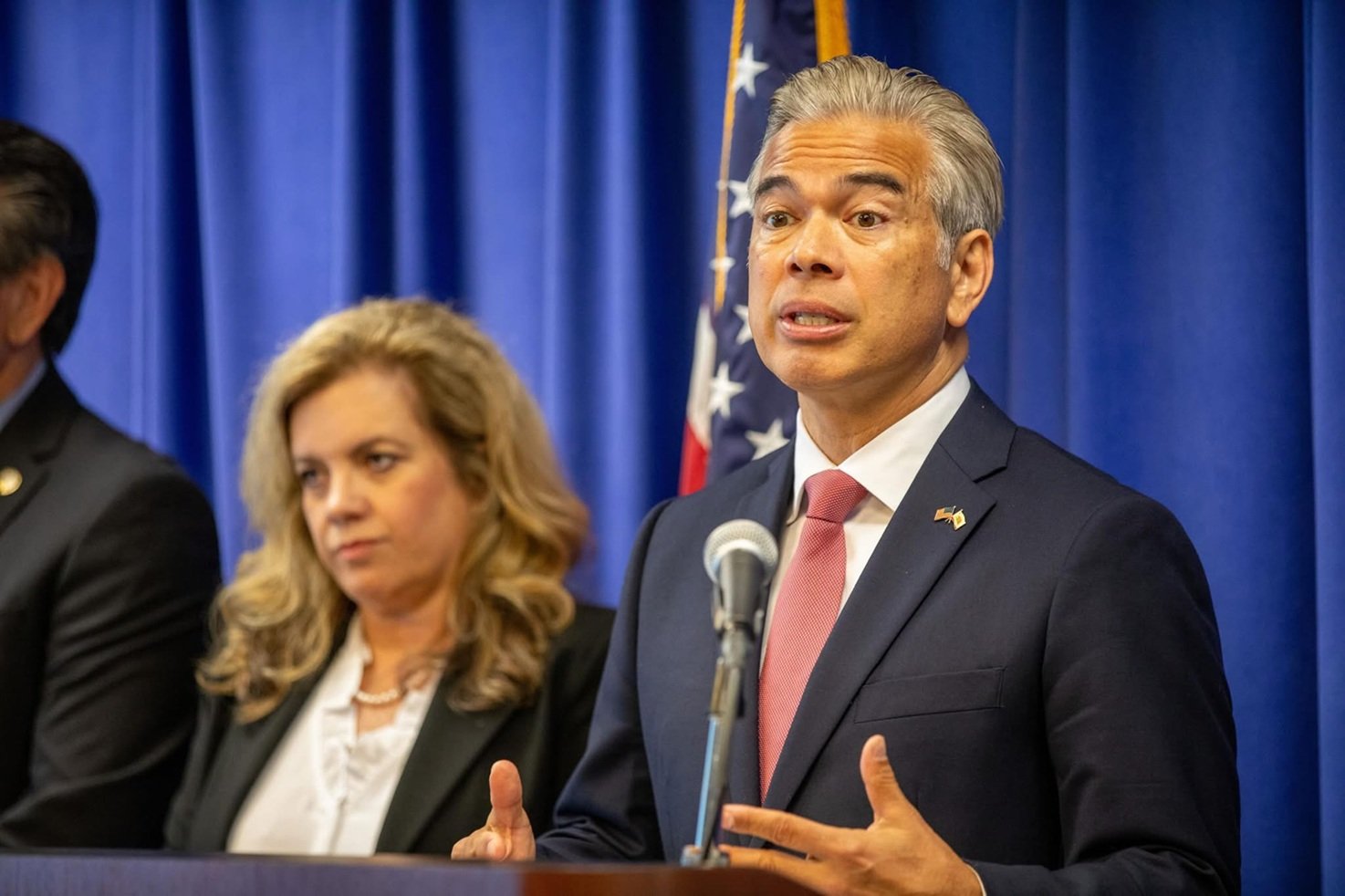
Bonta discussed the lawsuit during a media briefing Thursday focused on the rule and its potential effects on immigrant communities.
“For more than a century, public charge has meant someone who is primarily dependent on the government,” Bonta said.
He argued that short-term use of assistance for food, housing or health care should not be treated the same as primary dependence on government support.
Under federal immigration law, a noncitizen determined likely to become a public charge can generally be deemed inadmissible to the United States or ineligible for lawful permanent residency in circumstances covered by the statute. The new rule broadens the information immigration officers may consider in making that determination.
Bonta said the coalition is particularly concerned that the rule could discourage families from using benefits they are legally entitled to receive.
“When you tell families that getting help with groceries, healthcare, rent could be used against them in an immigration decision, people stop getting the help they need,” Bonta said.
The attorney general also expressed concern about mixed-status households, in which some family members are U.S. citizens and others are not. According to concerns raised by California officials, uncertainty about how immigration officers may evaluate household circumstances could lead parents to avoid enrolling eligible children in public assistance programs.
California Health and Human Services Secretary Kim Johnson said state officials are also concerned about what is known as a “chilling effect,” in which people who remain eligible for benefits decide not to apply or withdraw because they fear consequences for themselves or family members.
Johnson said California has observed declines in enrollment and disenrollment from programs including Medi-Cal and CalFresh, although she cautioned that those changes cannot be attributed solely to the public charge rule because other federal policy changes are also affecting eligibility and public perceptions.
“We have seen a decline, and we’ve seen disenrollment,” Johnson said. “And again, it’s out of fear.”
Johnson emphasized that public charge rules do not apply equally to all immigrants. Certain immigration categories are exempt under federal law, and the determination primarily affects people seeking admission or adjustment to lawful permanent resident status in circumstances covered by the statute.
She urged Californians not to withdraw from health care, nutrition or other assistance solely because of concerns about the new rule without first obtaining advice about their individual circumstances.
“Before an individual makes the terribly hard decision to disenroll from resources like healthcare access and food, we highly encourage them to access and consult with a trusted expert,” Johnson said.
California has invested in immigration legal services, community health workers, navigators and promotoras to help residents understand changes in federal policy, Johnson said. She added that some health and human services programs are funded solely by the state and may operate under different eligibility rules.
Johnson said children could be particularly affected by confusion surrounding public charge policies, based on California’s experience with previous changes to the rule. Parents in mixed-status families may avoid enrolling eligible children in programs because of concerns about potential immigration consequences.
Concerns were also raised about privacy and the sharing of public-benefit recipients’ information with federal agencies. Johnson said California agencies have updated information explaining how data associated with Medi-Cal, CalFresh and other programs may be used or shared. She added that the state has separately challenged federal actions involving the use of public-benefit information for immigration enforcement.
The Rule Takes Effect as Litigation Continues
An important development since the lawsuit was announced is that the new federal rule officially took effect on September 18, 2026.
The rule, published in the Federal Register on July 20, rescinds the 2022 regulations and restores broader discretion to immigration officers when evaluating public charge determinations. Under updated U.S. Citizenship and Immigration Services guidance, officers may consider an applicant’s receipt of means-tested public benefits, including food assistance, housing assistance, certain health care benefits and financial aid for college, among other relevant circumstances.
The policy applies to covered applications for admission and adjustment of status submitted on or after September 18. Benefits received before that date remain subject to the previous framework.
Importantly, the new rule does not automatically disqualify every immigrant who receives public assistance. Immigration officers are directed to consider the totality of an applicant’s circumstances, including age, health, family status, financial resources, education and skills. The receipt of a particular benefit is not, by itself, an automatic determination that someone is a public charge.
Meanwhile, the multistate lawsuit remains active before U.S. District Judge Ronnie Abrams in the Southern District of New York.
In October, the court established a schedule for the parties to present their arguments through summary judgment proceedings. The federal government was required to submit the administrative record by October 23. The states’ motion for summary judgment is scheduled for December 11, 2026, followed by the federal government’s response and cross-motion on January 29, 2027. The briefing schedule extends through March 12, 2027.
As of November 3, no final ruling has been issued on the states’ challenge, and the court has not suspended or blocked implementation of the new rule. Consequently, the policy remains in effect while the litigation proceeds.
The states maintain that the administration’s actions exceed federal authority and could undermine access to essential public services, creating additional challenges for immigrant communities and state-funded health and social assistance programs.
The public charge lawsuit follows previous legal disputes between California and the federal government over public benefits and immigration policy. The California Department of Justice has pursued several cases involving federal immigration policies, including challenges related to access to public programs and the use of government data.
Bonta has expressed confidence in the coalition’s legal arguments, although the ultimate outcome and duration of the litigation remain uncertain.
For California residents, particularly those in mixed-status households, the distinction between the rule’s expanded scope and its actual application is important. Johnson has encouraged individuals with questions about their eligibility or potential immigration consequences to consult qualified immigration legal professionals rather than making decisions based on general information or fear.
As the legal challenge moves toward its next phase, the central question remains whether the federal government has the authority to expand public charge considerations in the manner established by the new rule—and what consequences that policy may have for immigrant families who depend on essential public services.