


Baja California Water Project Takes Center Stage as Sheinbaum Outlines Federal Infrastructure Agenda
Share your love
 TIJUANA, Baja California — Water infrastructure emerged as one of the central issues during President Claudia Sheinbaum Pardo’s visit to Tijuana Saturday, as federal and state officials outlined a broad portfolio of planned investments spanning water, transportation, energy, housing, health care and education.
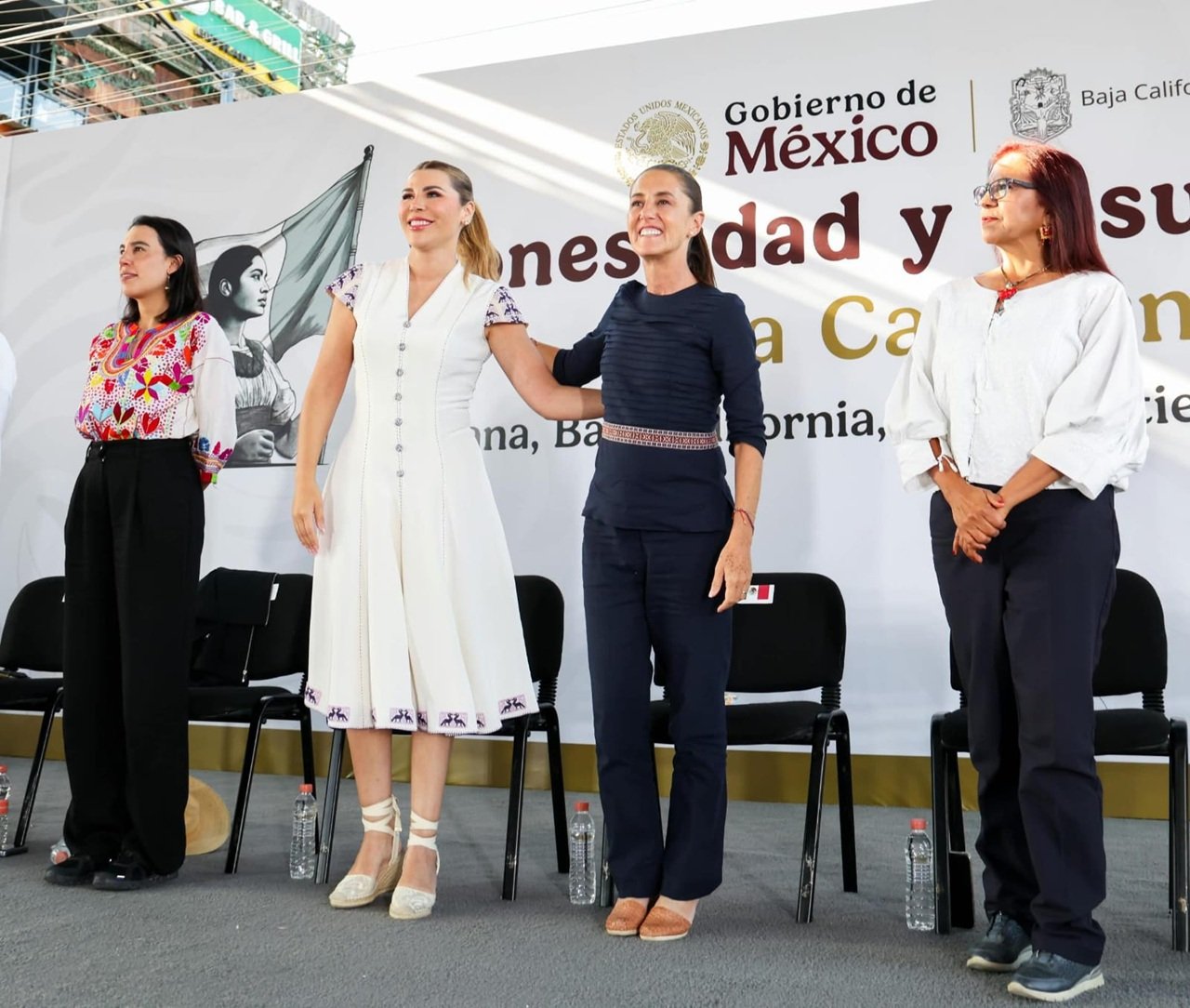
Speaking at an event held as part of her national “Honestidad y Resultados” tour, Sheinbaum announced that construction of the long-discussed Playas de Rosarito desalination plant is expected to move forward, with Gov. Marina del Pilar Ávila Olmeda scheduled to participate in a groundbreaking ceremony next week.
The project is designed to strengthen water supplies for Tijuana and Playas de Rosarito. The Baja California government has placed the total investment at 12.5 billion pesos. Federal officials previously described the desalination project as part of a larger water-infrastructure strategy for the state.
Sheinbaum said the need for additional water infrastructure had been repeatedly raised by Ávila Olmeda since she took office in 2021.
“Every time we met, she told me: The most urgent issue in Baja California is water for Tijuana, for Rosarito,” Sheinbaum said during the event, according to the official transcript and local reports.
The announcement comes after delays surrounding the desalination project. In June, Sheinbaum said two previous bidding processes had been declared unsuccessful and that the federal government was considering an alternative procurement process. At that time, she described the investment as approximately 6 billion pesos, underscoring that project figures have varied depending on what components or stages of the broader water program are included.
Water-related initiatives presented in Tijuana also include sanitation work on the Tijuana River and modernization of Irrigation District 014 Río Colorado, reflecting the state’s broader challenges involving supply, agricultural water use and cross-border environmental infrastructure.
Beyond water, the federal agenda includes transportation projects intended to improve mobility within the region. Among them is the 11.4-kilometer Elevated Viaduct in Tijuana, along with road-conservation work, six community road projects, improvements at the Port of Ensenada and modernization of San Felipe International Airport. The federal government previously announced a broader Baja California infrastructure package totaling 37 billion pesos.
Energy investment is another component of the agenda. Government figures presented during the Tijuana event included the González Ortega combined-cycle power plant in Mexicali, with an announced investment of $646 million and projected generating capacity of 641 megawatts. The government also cited the planned installation of 5,134 photovoltaic systems through the Techos Solares para el Bienestar program, with a reported budget of 2.33 billion pesos.
Housing represents another significant portion of the announced agenda. Government figures cited a target of 80,880 homes and the restructuring of loans involving 238,317 families. The federal administration also highlighted social programs involving pensions, scholarships, Jóvenes Construyendo el Futuro and La Escuela es Nuestra.
In education, officials pointed to the Universidad Nacional Rosario Castellanos campus in Tijuana, which the government says currently has 2,150 students enrolled, as well as additional high-school construction and expansion projects.
Health-care infrastructure and services were also included in the presentation, with projects or improvements identified in Tijuana, Ensenada, San Quintín, San Felipe, Playas de Rosarito and Mexicali.
The event drew an estimated 50,000 people, according to the Baja California government. Ávila Olmeda thanked the federal administration for its involvement in projects she described as addressing longstanding needs in the state.
For Baja California, however, the desalination plant remains one of the most closely watched projects. Its progress is particularly significant for the rapidly growing Tijuana-Rosarito corridor, where water availability has remained a persistent infrastructure concern.
The projects presented in Tijuana represent a mix of investments already underway, projects in development and initiatives still awaiting construction or implementation. Their eventual impact will depend not only on federal and state funding, but also on procurement, construction timelines, execution and the delivery of the promised infrastructure.
For residents and businesses across Baja California, the next phase will therefore be measured less by the number of announcements and more by how quickly these projects move from government plans to completed infrastructure.