


Grammys 2026: CBS Farewell Marked by Music, Migration, and Bad Bunny’s Rallying Cry for Humanity
Share your love
 –Editorial
The 68th Annual Grammy Awards honored the year’s top recordings, compositions, and artists on Feb. 1, 2026, recognizing work released between Aug. 31, 2024, and Aug. 30, 2025, as selected by members of the Recording Academy.
The ceremony, held for the 23rd consecutive year at Crypto.com Arena in Los Angeles, was broadcast on CBS and streamed on Paramount+. It marked the final time the Grammy Awards aired on CBS. South African comedian Trevor Noah hosted the show for the sixth consecutive and final time. Starting in 2027, the Grammy Awards will move to ABC, Hulu, and Disney+ under a new 10-year deal through 2036, ending a 54-year run on CBS.
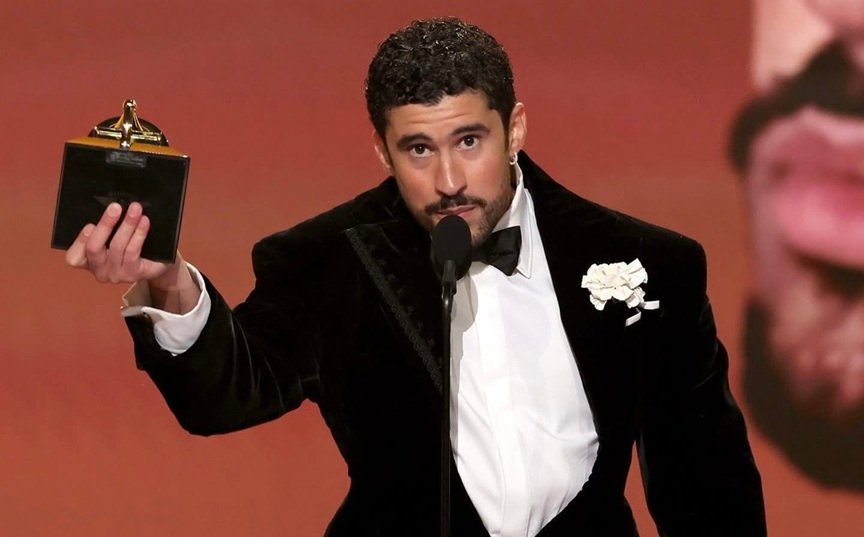
Bad Bunny won Album of the Year for “Debí Tirar Más Fotos,” which also earned Best Latin Urban Album. Kendrick Lamar received Record of the Year for “luther,” featuring SZA, and won Best Rap Album for “GNX.” Olivia Dean was named Best New Artist.
After accepting his Grammy, Bad Bunny used his remarks to deliver a message about identity, migration, and Puerto Rico. “Before I say thanks to God, I’m going to say, ‘ICE out,’” he said from the stage, adding, “We’re not savage. We’re not animals. We’re not aliens. We are humans, and we are Americans.”
He also reflected on his homeland, saying Puerto Rico is “much bigger than 100 by 35 miles, and there’s nothing we can’t achieve,” and dedicated the award to migrants and those who have endured loss while pursuing their dreams. “Thank you, Mom, for giving birth to me in Puerto Rico. I love you,” he said. “To all the Latinos in the world and all the artists who came before and deserved to be on this stage, this award is for you.”
In addition to celebrating musical excellence, the 68th Grammy Awards became a visible stage for immigration advocacy, as numerous artists wore “ICE OUT” pins to protest U.S. Immigration and Customs Enforcement policies and recent immigration crackdowns. Artists across genres—including Billie Eilish, Kehlani, Justin and Hailey Bieber, Joni Mitchell, Brandi Carlile, and others—used the red carpet and acceptance speeches to express solidarity with immigrant communities and denounce what they described as harmful enforcement practices. The protest extended beyond symbolism, with several winners incorporating direct messages into their remarks, most notably Bad Bunny, who explicitly referenced “ICE out” while affirming the humanity and contributions of migrants. The coordinated gesture marked one of the most politically charged moments of the ceremony, underscoring how artists are increasingly using major cultural platforms to amplify calls for immigration justice and human rights.
In pop categories, Lady Gaga won Best Pop Vocal Album for “Mayhem,” while Lola Young earned Best Pop Solo Performance for “Messy.” Song of the Year, the Grammy’s songwriter’s award, went to “Wildflower,” written by Billie Eilish O’Connell and Finneas O’Connell. Cynthia Erivo and Ariana Grande won Best Pop Duo/Group Performance for “Defying Gravity.”
Other major winners included Turnstile for Best Rock Album (“Never Enough”), Jelly Roll for Best Contemporary Country Album (“Beautifully Broken”), Leon Thomas for Best R&B Album (“Mutt”), and Laufey for Best Traditional Pop Vocal Album (“A Matter of Time”). Natalia Lafourcade won Best Latin Pop Album for “Cancionera,” while Carín León took Best Música Mexicana Album for “Palabra De To’s (Seca).”
In additional categories, FKA twigs won Best Dance/Electronic Album for “EUSEXUA,” Samara Joy received Best Jazz Vocal Album for “Portrait,” and Tyla won Best African Music Performance for “Push 2 Start.” Doechii earned Best Music Video for “Anxiety,” and “Music by John Williams” won Best Music Film.
Pharrell Williams received the Dr. Dre Global Impact Award. Amy Allen was named Songwriter of the Year, while Cirkut won Producer of the Year, Non-Classical. Comedian Nate Bargatze won Best Comedy Album for “Your Friend, Nate Bargatze.”
The Recording Academy announced several rule and category changes for the 2026 ceremony in June 2025. Two new categories were added — Best Traditional Country Album and Best Album Cover — bringing the total number of Grammy categories to 95. Best Country Album was renamed Best Contemporary Country Album, and Best Boxed or Special Limited Edition Package was merged back into Best Recording Package.
Eligibility rules were also updated. Artists featured on an Album of the Year nominee may now qualify for Best New Artist if their contribution was 20% or less. Composers and lyricists became eligible for recognition in select classical categories, and the maximum number of principal vocalists for Best Musical Theater Album was increased from four to six. Physical product eligibility for several packaging-related categories was expanded to include albums sold directly to fans online.
The Academy also announced membership and process changes. About 3,800 new members were invited to join, with 50% age 39 or younger, 58% people of color, and 35% identifying as women. For the first time, Latin Grammy voters were invited to join the Recording Academy, resulting in 28% of new members in 2025 identifying as Hispanic or Latino. Grammy ballots were randomized for the first time to promote fairness in voting.
The premiere ceremony featured performances by artists including Israel Houghton, Grace Potter, Zara Larsson, Spiritbox, and Tasha Cobbs Leonard. The main telecast included performances by Sabrina Carpenter, Bruno Mars, Lady Gaga, Justin Bieber, Rosé, Olivia Dean, and other Best New Artist nominees. A Mastercard-sponsored music video by Noah Kahan, “The Great Divide,” premiered during a commercial break.