


U.S. and Mexico to Hold Third USMCA Negotiating Round in Mexico City
Share your love
 -Editorial
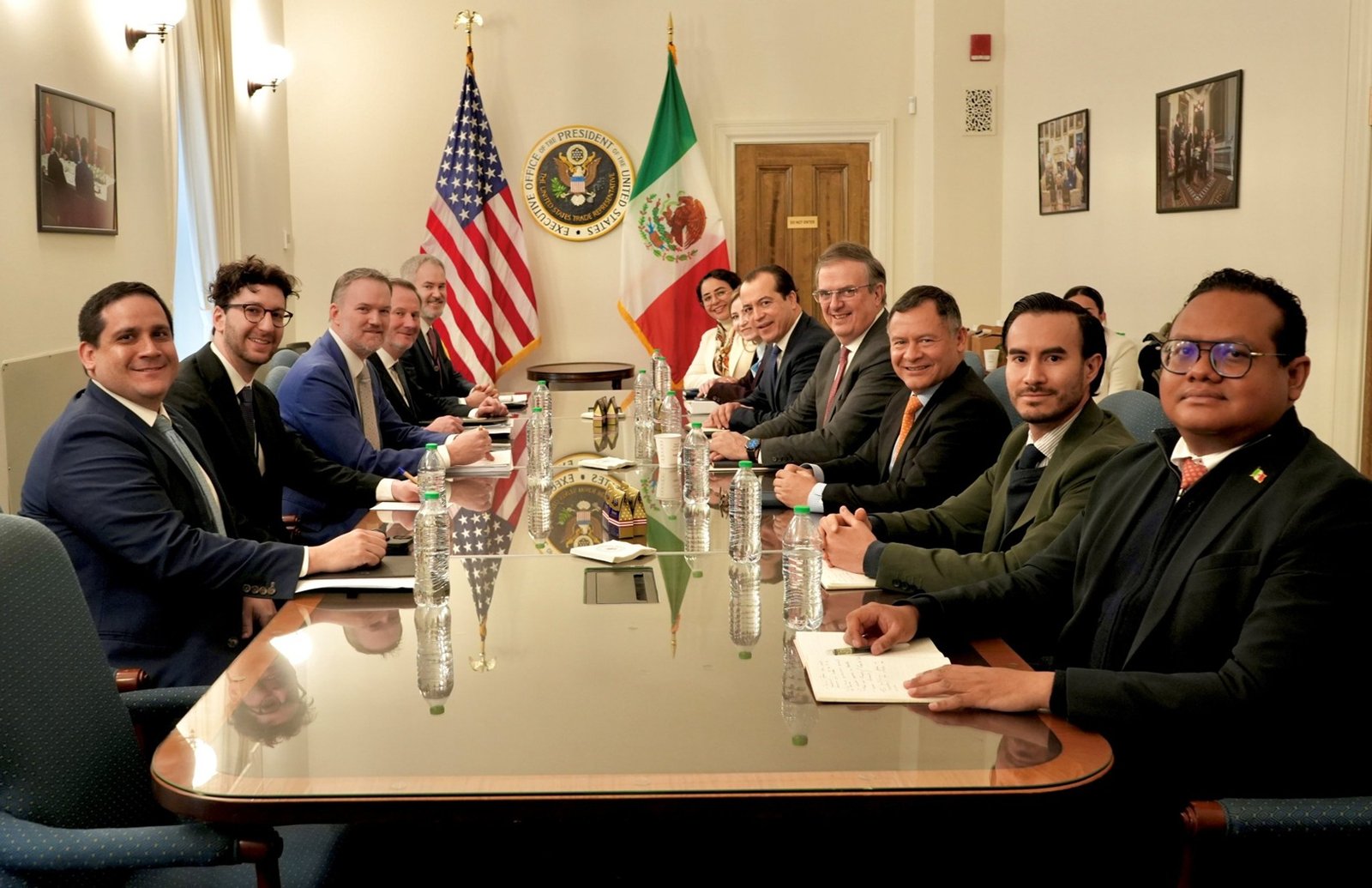
The United States and Mexico will meet in Mexico City beginning July 21 for the third bilateral negotiating round as part of the joint review of the United States-Mexico-Canada Agreement, with talks expected to focus on a range of trade and economic issues.
Negotiating teams from both countries are scheduled to meet for three days to discuss trade in steel and aluminum and derivative products, automobiles, economic security, labor, agriculture, and electronic payment services.
U.S. Trade Representative Jamieson Greer said the negotiations build on months of collaboration between the Office of the U.S. Trade Representative and Mexico’s Secretariat of Economy.
“I thank Secretary Ebrard and his team at the Secretariat of Economy for their collaboration over several months to reinforce the U.S.-Mexico bilateral trade and economic relationship,” Greer said in a statement. “This work has yielded many successes, including recent progress on issues identified in the 2026 National Trade Estimate Report on Foreign Trade Barriers.”
Greer said he expects the discussions to continue strengthening bilateral trade ties and address remaining trade concerns.
According to the Office of the U.S. Trade Representative, Mexico has made progress in several areas identified in recent U.S. trade reports.
On economic security, Mexico updated regulations governing exports of dual-use items in July 2026 to more closely align its export controls with those of the United States
The USTR also cited improvements in intellectual property protections. The agency said Mexico has taken actions addressing concerns related to pharmaceutical intellectual property, criminal and administrative enforcement, border enforcement and online piracy, as outlined in the 2026 Special 301 Report.
In customs and trade facilitation, Mexico upgraded its single window system in May 2026 and introduced a new framework intended to streamline cross-border trade operations. The USTR said Mexico also expanded its customs broker agency program to all Mexican ports in July.
The agency also noted environmental measures by Mexico, including steps to address exports of avocados grown on illegally deforested land and efforts to improve controls on industrial wastewater discharges affecting the southwestern United States.
In addition, the USTR said Mexico simplified testing requirements for telecommunications equipment, a change the agency said is expected to facilitate U.S. exports of telecommunications products.
The United States-Mexico-Canada Agreement (USMCA) is in a high-stakes transition period following its first mandatory joint review on July 1, 2026. During the review, the United States officially declined to renew the agreement in its current form, while Mexico and Canada both pushed for a clean 16-year extension. Because the U.S. withheld its consensus, the deal did not collapse, but it has now triggered a sunset clause, shifting the trade pact into a cycle of mandatory annual reviews through July 1, 2036.
As the new negotiations get underway, the focus is shifting away from a trilateral agreement and toward a more fragmented, bilateral approach. The U.S. has been leading parallel bilateral tracks, advancing faster in talks with Mexico regarding automotive rules of origin, steel and aluminum trade, and limiting Chinese inputs in North American supply chains. Meanwhile, negotiations with Canada have progressed more slowly due to ongoing friction over dairy market access and tariffs.