



Trump Signs Order Expanding Psychedelic Research for Mental Health Treatment
Share your love
 -Editorial
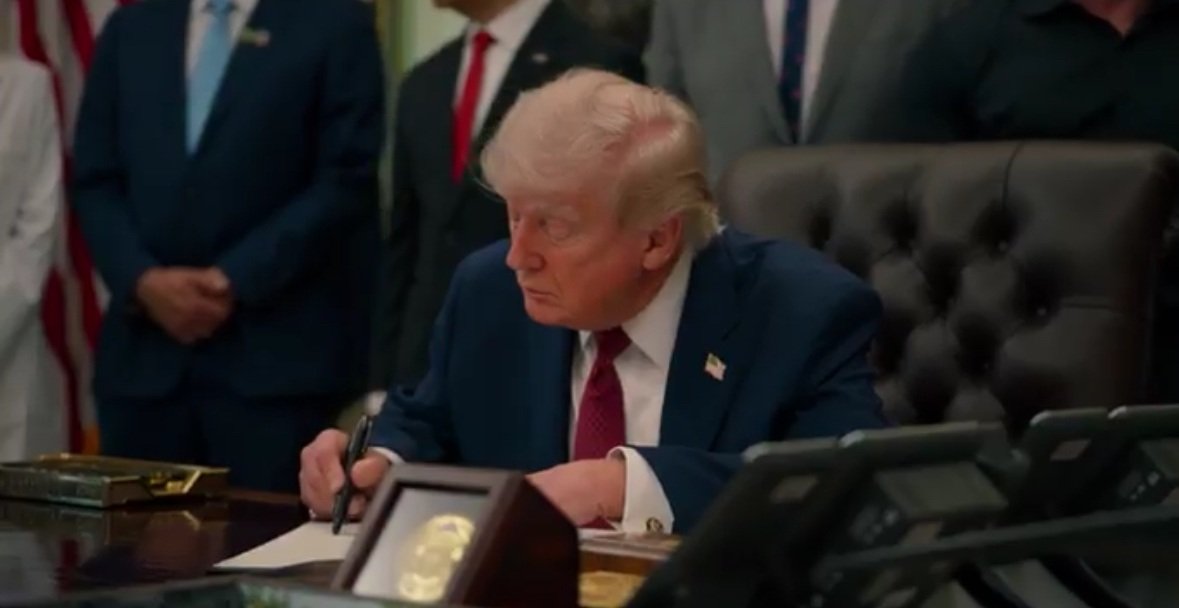
President Donald Trump, on April 18, signed an executive order directing federal agencies to accelerate research, regulatory review, and potential patient access to psychedelic drugs as experimental treatments for serious mental illness, including conditions that have not responded to conventional therapies.
The order outlines a broad policy shift aimed at expanding scientific investigation into psychedelic compounds, such as ibogaine-based drugs, while streamlining regulatory pathways at the Food and Drug Administration (FDA) and coordinating with other federal agencies, including the Department of Veterans Affairs (VA) and the Drug Enforcement Administration (DEA).
The order frames the initiative within a broader national mental health and suicide prevention context. It cites federal estimates that more than 14 million American adults live with serious mental illness, defined as a diagnosable mental, behavioral, or emotional disorder that substantially interferes with daily functioning. It also states that approximately 8 million individuals are prescribed medication for such conditions.
The document highlights long-term trends in suicide rates, noting a reported 37% increase between 2000 and 2018, followed by a temporary decline during the first Trump administration. It asserts that suicide rates rose again in subsequent years, reaching a peak in 2022.
The order also emphasizes the disproportionate impact on military veterans, stating that more than 6,000 veteran suicides have occurred annually for over two decades and that the veteran suicide rate is more than twice that of the non-veteran adult population.
The administration argues that despite significant federal investment in mental health research, many patients with severe or treatment-resistant conditions do not experience sustained improvement under existing therapies.
The order states that psychedelic substances have shown early promise in clinical research for certain mental health conditions, including major depressive disorder and substance use disorders, particularly among patients who have not responded to standard treatment protocols. It notes that the Food and Drug Administration has already granted “Breakthrough Therapy” designation to some psychedelic compounds, a classification that allows for expedited development and review.
Federal health officials are directed to prioritize review of qualifying psychedelic treatments through existing expedited mechanisms, including the FDA’s Commissioner’s National Priority Voucher program. The intent, according to the order, is to reduce regulatory delays for therapies deemed potentially significant to public health.
The order also instructs the FDA and DEA to establish a framework for eligible patients to access investigational psychedelic treatments under the federal Right to Try Act. The law allows terminally ill or severely ill patients to seek access to experimental treatments that have completed early safety testing but have not yet received full FDA approval.
The directive includes instructions to facilitate regulatory pathways for Schedule I substances, which are tightly restricted under federal law due to concerns about abuse potential and lack of accepted medical use. Psychedelic compounds typically fall under this classification, meaning they are subject to strict federal controls unless rescheduled.
The Department of Health and Human Services (HHS) is instructed to allocate at least $50 million in existing funding through the Advanced Research Projects Agency for Health (ARPA-H). The funding is intended to support state-level programs and public-private partnerships focused on psychedelic research for serious mental illness.
A significant portion of the order focuses on expanding clinical research, particularly through coordination with the Department of Veterans Affairs. Federal agencies are directed to increase participation in clinical trials and expand the use of real-world evidence to evaluate the safety and effectiveness of psychedelic treatments.
The order also calls for formal data-sharing agreements between HHS, the FDA, and the VA to ensure that research findings from federal and external studies are accessible for regulatory review. Officials are instructed to prioritize substances that have already received Breakthrough Therapy designation.
The White House said the goal is to accelerate evidence generation and improve the speed at which promising treatments can be evaluated for potential approval under the Federal Food, Drug, and Cosmetic Act.
The executive order directs the attorney general, in coordination with HHS, to begin reviewing psychedelic substances that complete Phase 3 clinical trials for serious mental health conditions. The purpose of the review would be to determine whether such substances should be rescheduled under the Controlled Substances Act.
Currently, Schedule I classification indicates that a substance is considered to have no accepted medical use and a high potential for abuse. The order suggests that successful completion of late-stage clinical trials and eventual FDA approval could justify reclassification, allowing broader medical use under federal law.
The order specifies that implementation must comply with existing federal law and is subject to the availability of appropriations. It also states that it does not create enforceable legal rights for individuals or organizations.
Federal agencies are granted discretion in how they implement the directive, provided they remain within statutory limits and existing regulatory frameworks.