


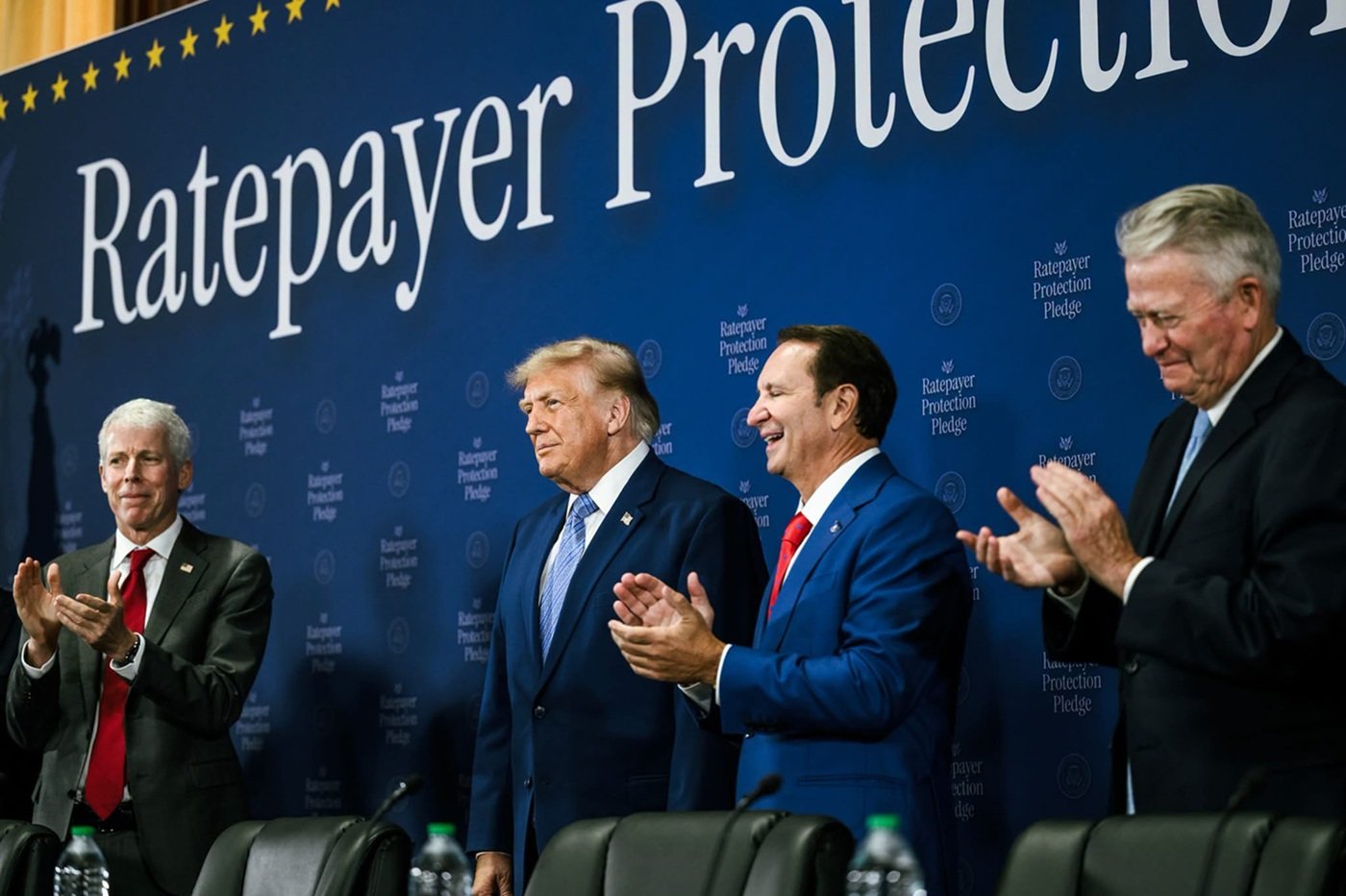

Trump Promotes Ratepayer Pledge as Data Center Boom Raises Electricity Concerns
Share your love
 -Editorial
President Donald Trump announced an expansion of the Ratepayer Protection Pledge, adding more than 200 utilities, data center developers, cooperatives and states to a national initiative aimed at preventing households and businesses from paying higher electricity costs associated with the growth of artificial intelligence and data centers.
The pledge calls for large data center operators to fund the electricity generation and infrastructure needed for their facilities rather than passing those costs on to utility customers. The administration said the initiative now covers about 80% of electricity delivered to U.S. homes and businesses and protects an estimated 263 million Americans.
The White House said the effort is designed to support continued growth of artificial intelligence and advanced computing infrastructure while ensuring consumers are not responsible for costs tied to private-sector projects.
Under the pledge, participating companies agree to build, bring or purchase additional power supplies needed for their operations, pay for required grid and infrastructure upgrades, and establish separate rate structures with utilities and state governments. Companies also commit to investing in local workforce development and supporting electric grid reliability.
The administration highlighted several agreements it said demonstrate the pledge’s impact. In Michigan, DTE Energy agreements with Google and Oracle are projected to generate billions of dollars in customer savings by having the companies cover energy and capacity costs. In Indiana, NiSource agreements with Amazon and Alphabet are expected to provide at least $1.4 billion in customer benefits over 15 years.
Other examples cited include Southern Company’s rate freeze in Georgia through 2029, which the administration said will provide more than $1.7 billion in savings; Entergy agreements in Mississippi and Louisiana requiring companies to cover infrastructure costs; and Alliant Energy partnerships in Wisconsin that include coverage of energy and infrastructure expenses for data centers.
In Texas, the administration pointed to Crusoe’s 900-megawatt Abilene data center campus, which is powered by on-site natural gas generation and battery storage.
The White House said data centers are critical to the nation’s internet infrastructure, cloud computing capabilities, artificial intelligence development and national security. It said the pledge is intended to encourage private investment while protecting utility customers from potential increases in electricity rates.
The Ratepayer Protection Pledge includes commitments from more than 200 organizations across the U.S. power sector, according to the White House. The administration said the initiative represents an effort to expand data center development while maintaining affordability and reliability for American consumers.