



The Trillionaire Threshold: Musk’s SpaceX Boom and the Power of Public Money Behind Private Wealth
Share your love
 -Editorial
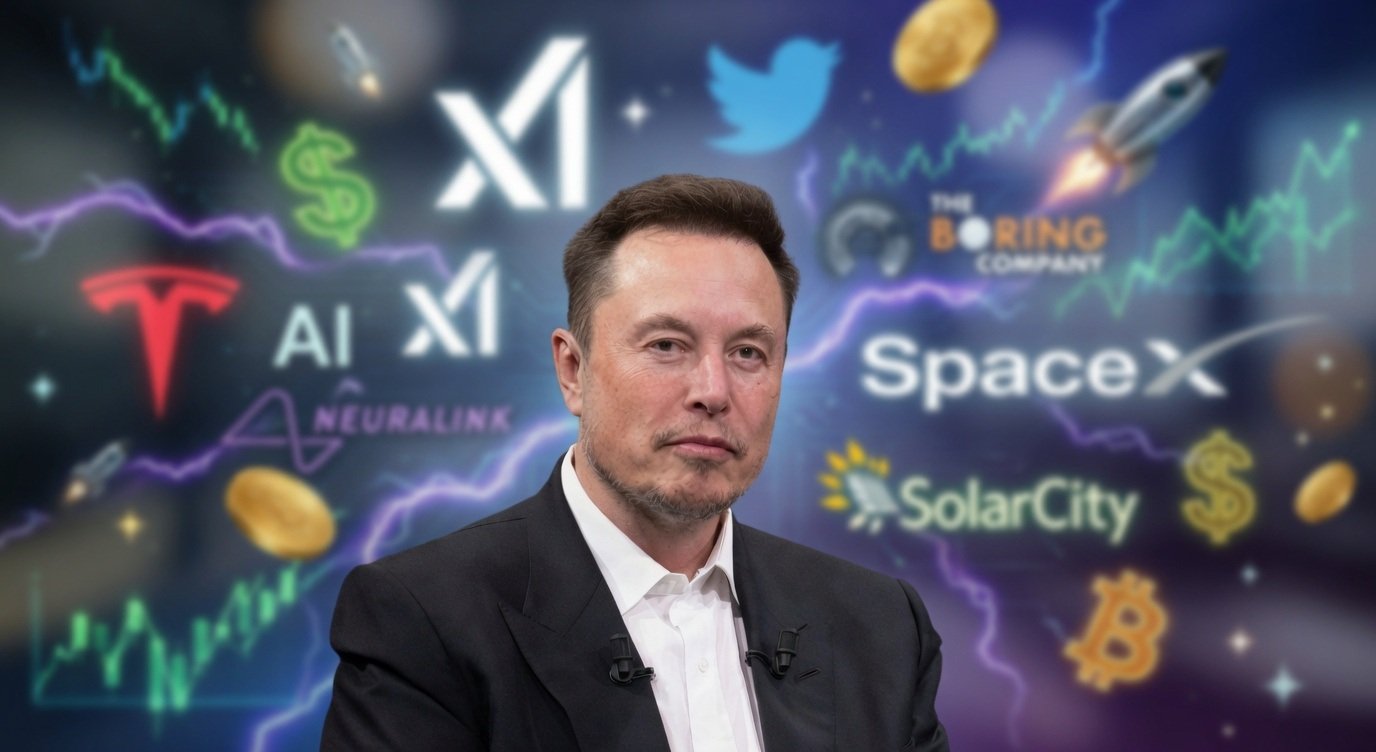
Elon Musk has reportedly crossed the symbolic threshold of becoming the world’s first trillionaire following the public market debut of SpaceX, according to a widely circulated but still debated market scenario that has drawn intense scrutiny from financial analysts, policy experts, and media commentators. The development—if taken at face value—would mark an unprecedented moment in modern economic history, reshaping discussions around wealth concentration, public markets, and the role of government-supported innovation in private fortunes.
However, it is important to note that SpaceX remains a privately held company as of recent verified filings, and no official public listing on Nasdaq under the ticker “SPCX” has been confirmed by regulatory authorities. The scenario described reflects speculative reporting and hypothetical valuation modeling often used in financial discourse around private “decacorn” companies, rather than a confirmed initial public offering.
Still, the underlying dynamics driving Musk’s estimated wealth are grounded in real and well-documented financial structures: high-value government contracts, dominant positions in strategic industries, and rapidly appreciating private valuations tied to future expectations rather than current liquidity.
A Hypothetical IPO and a Surge in Valuation
In the scenario described, SpaceX would have debuted on Nasdaq at an initial share price of $135, opening at $150 and pushing its market capitalization above $2.2 trillion in early trading. If such a valuation were realized, it would place SpaceX among the most valuable companies in global history, rivaling and surpassing many long-established multinational corporations.
Based on an estimated 42% ownership stake, Elon Musk’s share of SpaceX alone would be valued at approximately $884 billion. Combined with his roughly 12% stake in Tesla, valued at around $183 billion depending on market conditions, Musk’s total wealth would exceed the trillion-dollar mark when including additional holdings in companies such as xAI, Neuralink, and The Boring Company.
Wealth tracking models from financial media and research firms frequently emphasize that such figures are highly sensitive to valuation assumptions, especially for privately held firms whose pricing is determined by limited secondary market transactions rather than public trading.
Government Contracts as the Structural Foundation
A critical but often underemphasized component of SpaceX’s rise is its long-standing relationship with government agencies. The company’s financial backbone is not solely private-sector demand but a significant portfolio of public contracts, particularly from the United States government.
Through NASA’s Commercial Crew Program, SpaceX has been responsible for transporting astronauts to the International Space Station aboard its Crew Dragon spacecraft. The company has also secured multi-billion-dollar launch contracts under NASA’s Commercial Resupply Services program, which funds cargo deliveries to orbiting stations.
Beyond NASA, SpaceX has increasingly become a key contractor for the U.S. Department of Defense, particularly through the deployment of national security satellites. Its Starlink satellite internet division has also received defense-related funding for providing communications support in remote or conflict-affected regions.
These government relationships have played a crucial role in stabilizing revenue streams, reducing investment risk, and enabling long-term capital expenditure in rocket development and satellite infrastructure. Analysts frequently note that SpaceX’s valuation is closely tied to expectations of continued government reliance on private aerospace providers.
Starlink and the Expansion of Strategic Infrastructure
One of the most influential drivers of SpaceX’s valuation is Starlink, its low-Earth orbit satellite constellation designed to provide global broadband coverage. Starlink has rapidly expanded to serve millions of users worldwide and has also entered contracts with governments and military organizations.
The dual-use nature of Starlink—serving both civilian and defense applications—has made it strategically significant. This positioning has further strengthened investor confidence in SpaceX’s long-term revenue potential, particularly as global demand for satellite-based internet infrastructure continues to grow.
This convergence of commercial subscription revenue and government-backed contracts has created a hybrid financial model that is uncommon among private aerospace firms and central to Musk’s wealth accumulation.
Wealth Concentration and Market Distortion Debates
If Musk’s net worth were to exceed $1 trillion, economists say it would intensify longstanding debates about wealth concentration in the technology sector. Analysts point out that such extreme valuations are increasingly tied to a small number of firms whose growth is driven by network effects, government partnerships, and speculative future earnings rather than traditional asset-based accounting.
Critics argue that the concentration of wealth in a single individual raises concerns about market distortion, governance influence, and economic inequality. Supporters, however, contend that Musk’s companies have delivered significant technological advancements in electric vehicles, space exploration, and renewable energy infrastructure.
Comparisons have also been drawn between Musk’s estimated wealth and national economies. In this scenario, his net worth would exceed the annual GDP of several mid-sized countries, underscoring the unprecedented scale of private capital accumulation.
Corporate Control and Market Restrictions
Regulatory filings associated with large-scale public offerings typically include lock-up provisions restricting insiders from selling shares for a defined period, often one year. In the hypothetical SpaceX IPO scenario, Musk would be subject to similar restrictions, limiting liquidity despite the dramatic paper increase in wealth.
Additionally, SpaceX is assumed to adopt a dual-class share structure, granting Musk significantly greater voting power through Class B shares. Such governance structures are common among founder-led technology firms and allow founders to retain control even as public investors acquire economic stakes.
This arrangement has long been a point of debate among corporate governance experts, who argue that it can reduce accountability to shareholders while preserving long-term strategic direction.
Philanthropy: Scale, Structure, and Criticism
Musk’s philanthropic activity is primarily conducted through the Musk Foundation. Public records and tax filings show significant donations over time, including contributions to St. Jude Children’s Research Hospital, funding for STEM education initiatives, and pledges supporting carbon removal technologies and scientific research.
However, nonprofit watchdog analyses have repeatedly noted that the foundation’s payout rate has fluctuated and is often lower than what is typically observed in major philanthropic organizations relative to total assets. Critics also point out that some funding has gone to organizations with indirect ties to Musk’s broader business ecosystem.
Supporters counter that Musk’s companies themselves function as vehicles for large-scale societal impact, particularly in climate technology, space exploration, and transportation electrification. This has led to an ongoing debate about whether impact should be measured through traditional charitable channels or through industrial innovation.
The Broader Implications of a Trillion-Dollar Fortune
The idea of a trillion-dollar personal fortune raises broader questions about the role of private wealth in addressing global challenges. Economic researchers have long argued that even a fraction of such capital, if deployed through transparent and independent mechanisms, could significantly impact global priorities such as disease prevention, climate adaptation, clean water access, and education infrastructure.
At the same time, policy experts emphasize that the effectiveness of large-scale wealth depends heavily on governance structures. Without independent oversight, even vast financial resources can become narrowly directed or aligned with specific corporate or political interests rather than broad public benefit.
This distinction lies at the heart of contemporary debates on philanthropy, taxation, and global development financing.
Media Power and Institutional Influence
Observers also note Musk’s complex relationship with traditional media institutions, often characterized by public criticism and direct engagement through social media platforms. Some journalism scholars argue that figures of such economic scale have the capacity to reshape not only industries but also information ecosystems.
This has led to renewed discussions about whether ultra-high-net-worth individuals should play a more active role in supporting independent journalism, investigative reporting, and public-interest media infrastructure. Proponents suggest that such investments could strengthen democratic accountability, while critics warn of potential influence over editorial independence.
The SpaceX valuation surge and the resulting increase in Elon Musk’s estimated net worth—reported by multiple wealth-tracking models to exceed $1 trillion based on aggregate asset valuations—reflect deeper structural realities in the global economy. These include the expanding role of government contracts in accelerating private-sector aerospace growth, the concentration of capital in technology-driven industries, and the increasing overlap between public investment and privately controlled infrastructure.
It also highlights the evolving relationship between innovation, state-backed programs, and large-scale private enterprise, where long-term technological development is frequently enabled through a combination of public funding mechanisms and commercial market expansion.
In this context, the SpaceX valuation milestone functions less as a final endpoint and more as a reference point for understanding how modern economic power is being reorganized across public and private spheres.