



Sheinbaum Proposes Moving Mexico Judicial Elections to 2028 With Ballot Reforms
Share your love
 -Editorial
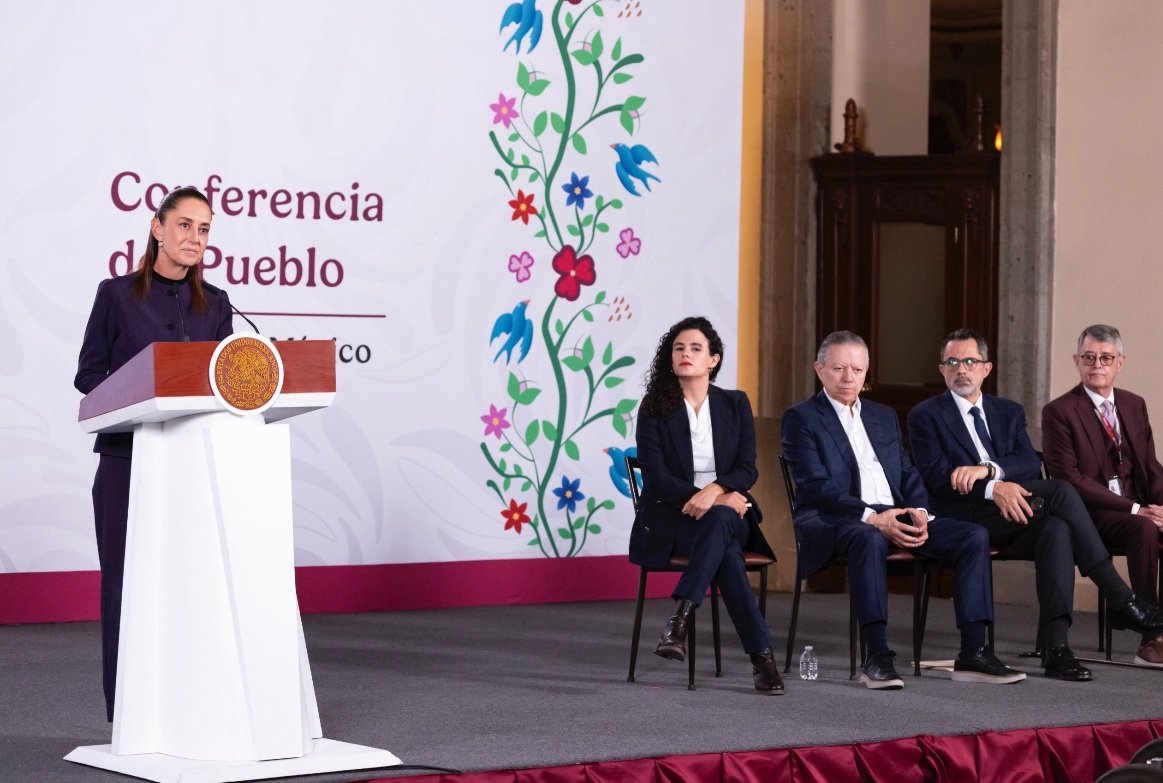
Mexican President Claudia Sheinbaum announced that her administration will send a constitutional reform proposal to Congress seeking to move the country’s next judicial elections from 2027 to June 4, 2028, while also introducing a series of changes intended to simplify the voting process and expand public participation.
The announcement was made during Sheinbaum’s daily morning press conference in Mexico City, where federal representatives outlined the government’s proposed changes to the judicial election system approved as part of Mexico’s broader judicial reform.
According to Sheinbaum, the proposed date change would allow judicial elections to coincide with other federal and local elections, including a potential presidential recall vote if one is requested under Mexico’s Constitution.
“This proposal moves the judicial election from 2027 to 2028,” Sheinbaum said during the press conference. “If there is a recall vote in 2028, it would occur on the same day and at the same polling place.”
She said the reforms are also intended to simplify judicial ballots following challenges identified during the 2025 election process, making it easier for voters to identify candidates and understand which branch of government nominated them.
Under the proposal, voters would cast ballots for judicial offices at the same polling stations used for gubernatorial, municipal, and legislative races, avoiding the need for separate voting locations.
Sheinbaum said holding separate judicial elections in 2027 would require voters to travel between polling sites to participate in multiple elections on the same day.
“If the election were held in 2027, voters would have to vote in one location for governors, mayors, and legislators, and then go to another polling place to vote for the judiciary,” she said.
Federal Legal Counsel Luisa María Alcalde said the proposed schedule would keep future judicial elections aligned with regular electoral cycles in 2030, 2033, and 2036, allowing future judicial vacancies to be filled during ordinary election years.
According to the federal government, the 2028 elections would include races for four magistrates of the Superior Chamber of Mexico’s Electoral Tribunal, 463 federal circuit magistrates, and 385 district judges.
At the state level, voters in 25 Mexican states would elect 424 magistrates and 2,831 judges as part of local judicial reforms aligned with the federal system.
The proposal also includes the creation of a coordinating commission that would standardize evaluation methods and eligibility criteria used by the executive, legislative, and judicial branches when reviewing judicial candidates.
The commission would verify candidate qualifications and oversee a public lottery system designed to reduce the number of candidates appearing on ballots.
Under the proposed structure, the commission would select the four highest-rated candidates for each judicial position before reducing the field through a public drawing process while maintaining gender parity requirements.
The administration also proposed simplifying ballots by allowing voters to select one judge and one magistrate per specialty from slates submitted by each branch of government.
Ballots would clearly identify which branch nominated each candidate, including sitting judges and magistrates seeking reelection.
The proposal would also require the National Electoral Institute to divide the country into judicial districts as necessary to ensure equal participation in judicial races.
Additional reforms would mandate ongoing training and evaluations for judges and magistrates through programs coordinated by judicial disciplinary bodies and judicial education institutions.
According to the proposal, local judicial systems would also be required to adopt standardized evaluation procedures, mandatory candidate lotteries, reduced ballot sizes, and performance reviews during the first year of service.
The initiative further proposes that vote counting take place at the same polling locations where ballots are cast, rather than at centralized counting facilities.
The administration also wants to move up the Senate’s deadline for issuing judicial election calls from September to April of the year before the election, giving evaluation committees additional time to review candidates.
Other proposed changes include leaving judicial vacancies open until the next election in cases involving resignations, deaths, or removals from office, rather than automatically awarding positions to second-place candidates.
The proposal would also create two additional sections within Mexico’s Supreme Court to handle lower-level matters and allow the full court to focus on major constitutional cases.
The reform package is expected to be submitted to Congress in the coming weeks for legislative debate.