



Public Opposition Prompts Supervisors to Postpone Vote on CEQA Amendments
Share your love
 -Editorial
The Imperial County Board of Supervisors voted to continue consideration of proposed amendments to the county’s regulations implementing the California Environmental Quality Act (CEQA) until its July 28 meeting, following public testimony raising concerns about how the changes could affect environmental appeals and public participation.
The board delayed action to allow additional time to clarify questions raised by members of the public and discuss the proposed revisions before taking a final vote.
The amendments, recommended by the Planning and Development Services Department, represent the 11th update to the county’s local CEQA regulations since they were first adopted in 1979. County officials have said the revisions are intended to align local procedures with current state CEQA guidelines, court decisions and administrative practices, while clarifying environmental review, notice and appeal procedures.
The California Environmental Quality Act, a landmark 1970 state law, requires public agencies to study and disclose the environmental impacts of proposed developments before approving them. For new real estate, commercial, and infrastructure projects, the law mandates that developers find ways to reduce or eliminate potential environmental harm. While environmental advocates consider the statute a critical protection for local communities, developers and critics often blame CEQA compliance for lengthy project delays and surging construction costs.
The recent data center controversy has put CEQA front and center as the project wanted to bypass it.
Planning and Development Services Director Jim Minnick stated in the staff report that the revisions are procedural and are designed to keep the county’s regulations consistent with state law.
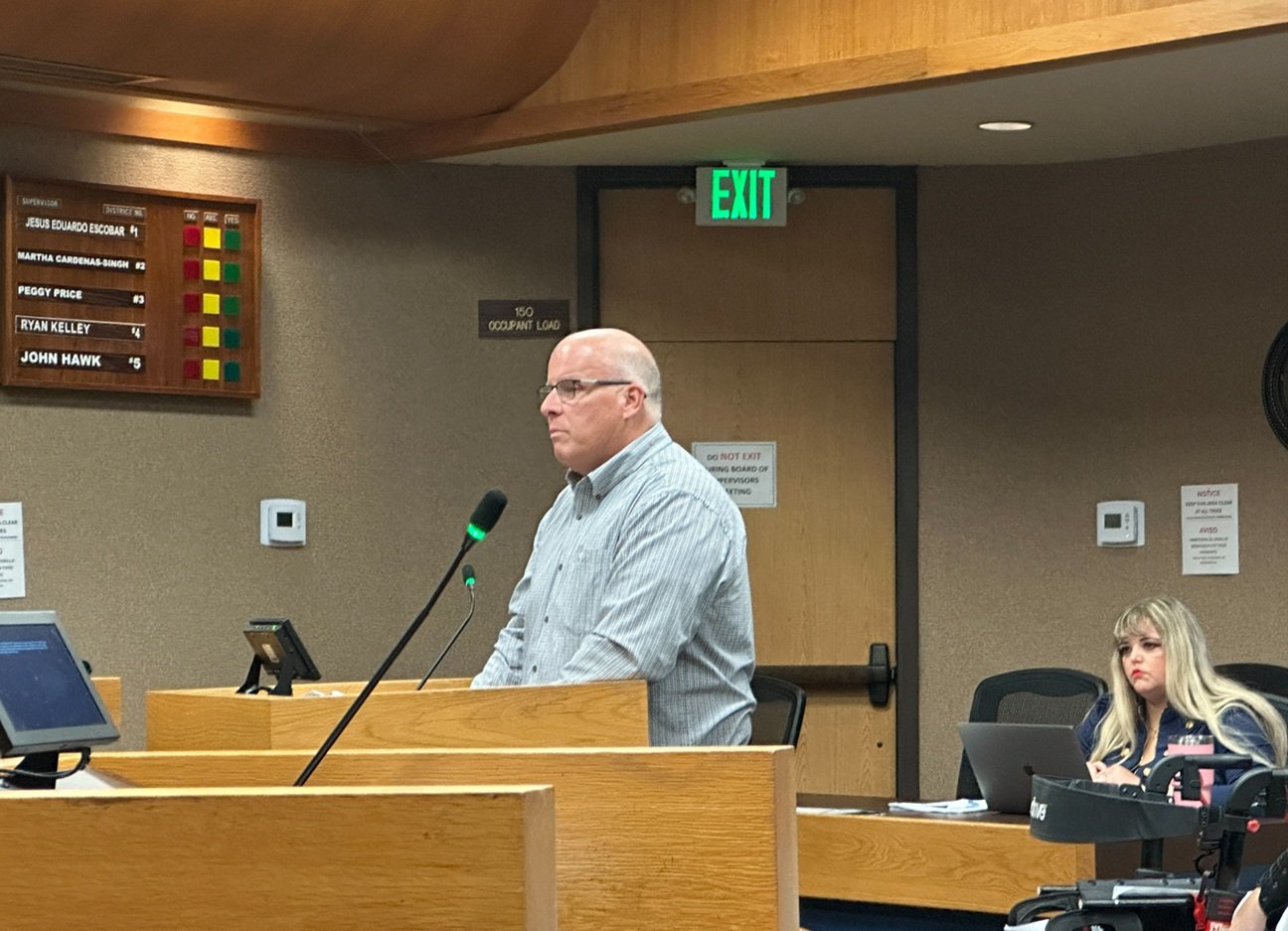
During the public hearing, several speakers questioned whether the proposed changes could make it more difficult for residents to challenge environmental decisions or participate in the CEQA process.
Michelle Hollinger of Victoria Homes said she supported efforts to reduce litigation but questioned giving additional procedural authority to county staff.
“I understand what you guys are trying to do, and I support your efforts to protect Imperial County. I understand you’re trying to eliminate by-right exemptions, streamline approvals, and add protections against lawsuits by creating a formal appeals process,” Hollinger said. “I get that part, and I’m in favor of that. What I’m not in favor of is putting staff in charge of that process. Why would you give the power of approval or denial to the CEO when a GIS risk assessment on the proposed hyperscale AI data center was kept for five months?”
Peter Rodriguez criticized the proposed CEQA ordinance changes, saying the timing created the appearance that the county was changing the rules in the middle of ongoing disputes over major development projects. He said he had lost confidence in the Planning and Development Services Department, Planning Director Jim Minnick and the Board of Supervisors, arguing that inconsistent decision-making and poor communication had undermined public trust and exposed the county to litigation. Rodriguez urged the board to work together more effectively, warning that uncertainty over how projects are classified and reviewed could discourage future investment. He opposed adopting the ordinance amendments, contending the county should first restore transparency and public confidence in its planning process.
Centro resident Jake Tison urged the Imperial County Board of Supervisors to delay action on the proposed CEQA ordinance amendments, arguing that the county had not adequately addressed legal concerns he raised in writing. Tison contended the changes could restrict public appeal rights, limit environmental challenges, encourage segmentation of projects, and undermine public participation. He also criticized the Planning and Development Services Department, saying it had lost public trust amid ongoing disputes over CEQA exemptions and environmental review for major projects, including data centers. Tison called for Planning Director Minnick to step down, requested an independent environmental review, and asked the board to postpone any vote until it received a legal memorandum and answers to questions about the ordinance’s potential impacts.
Outside counsel Tyson Sohagi told the Imperial County Board of Supervisors that the proposed CEQA ordinance amendments are primarily procedural updates and do not change the county’s authority or environmental review standards. He said the amendments are not retroactive, do not alter how CEQA exemptions are determined, and do not give the county CEO authority to approve environmental documents. Instead, the CEO’s role is limited to deciding which decision-making body first considers a CEQA document when multiple approvals are involved. Sohagi added that California law requires the county, not an outside entity, to certify the adequacy of CEQA documents, and noted the proposed procedures are supported by state law and court decisions. He also recommended updating the ordinance’s approval date to July 7, 2026.
Supervisor Martha Cardenas-Singh said she is not a CEQA expert but wanted to share what she had learned during the review of the proposed amendments. She said residents remain concerned about large industrial projects, including data centers, and emphasized that the changes should be understood as updates to align county procedures with state law rather than an effort to alter or protect previous board decisions.
Cardenas-Singh stressed that the amendments do not apply retroactively and said they are intended to establish clearer procedures moving forward. She highlighted changes to CEQA appeal procedures, including provisions that pause project approvals until appeals are considered, while also requiring appellants to identify specific objections and submit supporting documents before hearings.
She cautioned that the updated requirements could create challenges for residents unfamiliar with the CEQA process and urged the Planning Department to provide clear, accessible guidance so community members without legal representation can participate effectively. Cardenas-Singh also emphasized the importance of preventing projects from being divided into smaller actions to avoid full environmental review, saying staff must evaluate projects as a whole and ensure compliance with CEQA guidelines. She asked county counsel how the department would help residents understand the new appeal requirements and avoid unintentionally waiving their rights.
Minnick responded that the county follows state law and county ordinances when determining whether projects qualify for statutory or categorical CEQA exemptions.
“We follow state law, and we follow the county ordinance, and we decide whether a project is exempt from CEQA based on those two criteria,” Minnick said. “If it is not exempt from CEQA, then we proceed with the preparation of an environmental checklist, also called an initial study, which goes before the county’s Environmental Commission and then proceeds through the process, including any appeals, to ultimately reach your decision-making body.”
Board Chair Peggy Price said the discussion surrounding a proposed data center prompted the county to review its local CEQA procedures.
“The data center allowed us to review our policies, and that’s why we’re here today. The purpose of these revisions is to better align the county’s CEQA regulations with state guidelines, correct inconsistencies and clarify procedures. Based on what I’ve reviewed, the intent is not to reduce public participation but to improve the process.”
Rather than taking final action, supervisors voted to continue the matter until July 28 to allow additional clarification of issues raised during the public hearing. County officials said the additional time will allow the board to further review the proposed amendments and address questions raised by members of the public before considering adoption.