


Mauricio Bustos Unveils New Book on Bridging Generational Divides in the Workplace
Share your love
 -Editorial
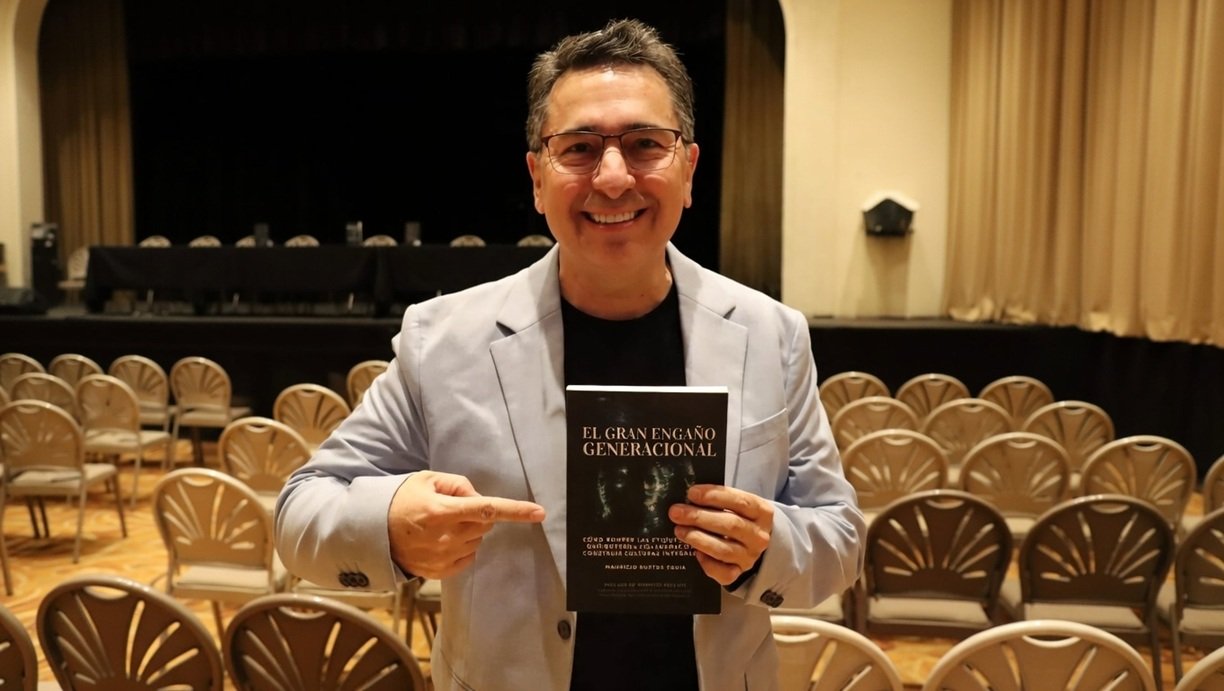
Organizational consultant and author Mauricio Bustos Eguía presented his latest book, The Generational Deception: How to Break the Labels That Destroy Collaboration and Build Integrated Cultures, during an event March 12 at Casa de la Cultura in Mexicali.
The book, which also launched internationally on Amazon, examines the challenges organizations face as multiple generations increasingly share the same workplaces amid rapid economic, technological and demographic change.
Bustos Eguía’s work explores how longer life expectancy, shifting labor markets and the need for continuous adaptation to new technologies are transforming the way people collaborate in professional environments.
According to global data cited in the book, average life expectancy worldwide is about 72 years, while in Mexico it ranges between 75 and 76 years. As people live longer and remain active in the workforce for extended periods, organizations increasingly include employees at widely different stages of their careers.
In Mexico, the legal retirement age typically ranges from 60 to 65 under public pension systems. However, estimates from the National Commission of the Retirement Savings System indicate that about 62% of workers may not have sufficient pension income to meet basic needs during retirement, a factor that may encourage longer participation in the labor force.
The author also points to demographic trends in the labor market. Data from Mexico’s National Survey of Occupation and Employment show overlapping age groups across the workforce, including young workers entering the labor market early, mid-career professionals occupying many leadership roles, and older workers continuing to participate through formal, flexible or informal employment arrangements.
At the same time, organizations worldwide report growing difficulty filling open positions. Approximately 75% of employers globally say they face challenges recruiting qualified workers, while about 68% of companies in Mexico report similar talent shortages, according to ManpowerGroup.
In addition, projections from the World Economic Forum indicate that roughly 44% of core workplace skills are expected to change in the near future, increasing pressure on organizations to promote continuous learning and knowledge transfer among employees.
Within this context, Bustos Eguía argues that collaboration between workers with different experiences, expectations and work styles has become an increasingly important factor in productivity and competitiveness.
The book also examines common workplace tensions that can arise between generations, including differing expectations regarding flexibility, career development, leadership styles and work-life balance. According to Bustos, such differences can affect communication, decision-making and the transfer of experience within organizations.
Beyond operational outcomes, the book also highlights potential human impacts. Rapid workplace change and evolving expectations can contribute to stress, communication conflicts, and feelings of professional stagnation among both younger and more experienced workers, which can influence workplace morale and productivity.
The book proposes a framework aimed at helping organizations address these challenges. The book outlines conceptual distinctions and practical tools designed to support more effective conversations, leadership approaches and workplace cultures that integrate diverse perspectives.
According to Bustos Eguía, the goal is to move beyond generational labels and toward collaboration based on shared purpose and mutual understanding within organizations.
Bustos Eguía is an organizational consultant, entrepreneur and author with more than 25 years of experience advising companies, executives and entrepreneurs on strategic transformation, leadership and organizational development.
His work focuses on helping business leaders create workplace environments that combine human development with business performance, emphasizing cultures where employee growth and organizational results reinforce one another.
Throughout his career, he has worked with organizations and executive teams to develop strategic clarity, execution systems and workplace cultures oriented toward results and the development of human potential.
Bustos Eguía is the creator of the “Conscious Execution” methodology, an approach that integrates strategy, leadership and human development to help leaders align purpose, action and results within organizations.