



Imperial County Approves Lithium Valley Workforce Ordinance
Share your love
 -Editorial
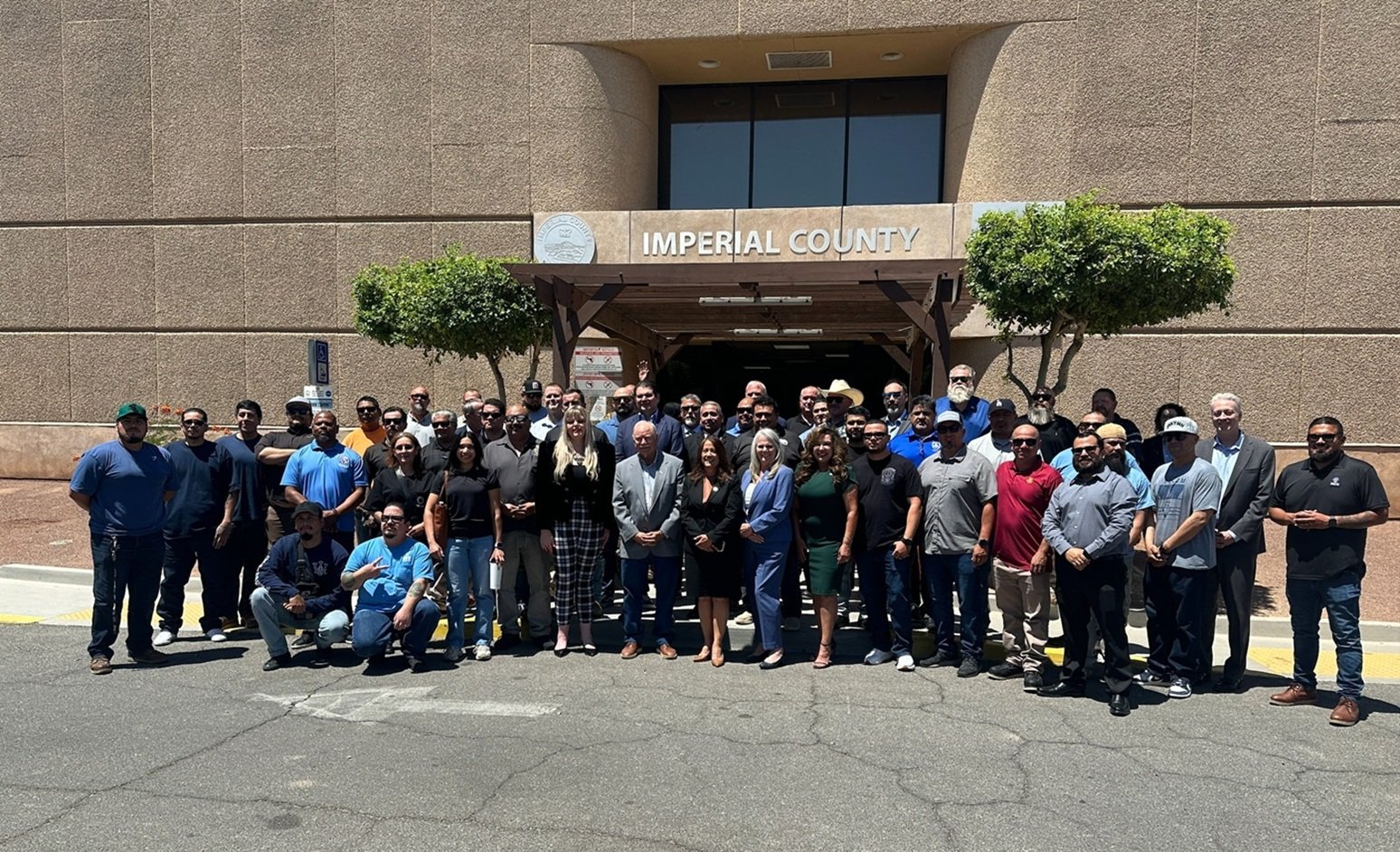
The Imperial County Board of Supervisors voted May 12 to approve a new workforce ordinance establishing labor, hiring, and training standards for certain private development projects proposed within the Lithium Valley Specific Plan area.
The action followed a first reading of the ordinance during the board’s May 5 meeting and included findings that the measure is exempt from additional environmental review under the California Environmental Quality Act, commonly known as CEQA.
Supervisors approved the ordinance titled “Adding Imperial County Codified Ordinance Title 9, Division 1, Chapter 9, Section 90109.00, Establishing the Lithium Valley Construction Workforce Ordinance.” The measure establishes workforce participation requirements for projects identified by the county as “covered projects” within the Lithium Valley Specific Plan Area.
During the meeting, Imperial County Deputy CEO Bari Bean presented the item to the board, explaining that the ordinance is intended to promote local hiring, apprenticeship opportunities, prevailing wage compliance, and the use of skilled and trained workers on major construction projects associated with anticipated lithium and renewable energy development in Imperial County.
Under the ordinance, applicants for covered projects will be required to submit a Workforce Plan at the time of entitlement application. The plan must outline strategies for local hiring, apprenticeship utilization, and compliance with prevailing wage and skilled workforce standards.
The ordinance also establishes additional reporting and compliance requirements for developers before and during construction activities. Covered projects will be required to submit workforce implementation plans prior to construction and provide monthly reports documenting workforce composition, wages, apprenticeship participation, and the utilization of skilled labor.
Enforcement measures may include permit conditions, administrative citations, and financial penalties for noncompliance. The ordinance authorizes escalating fines and the potential revocation of permits for projects that fail to meet the established requirements.
In addition, the ordinance provides an alternative compliance pathway for projects operating under qualifying Project Labor Agreements. The measure further clarifies that it does not preempt state or federal law.
The ordinance would only become effective if the Lithium Valley Specific Plan itself is adopted and becomes effective. If approved, the workforce ordinance would take effect 30 days after final adoption of the plan.
The board also approved findings stating the ordinance is not subject to CEQA because it establishes administrative and procedural workforce policies rather than authorizing physical development or land-use changes.
County officials further determined the ordinance qualifies for an exemption under State CEQA Guidelines Section 15061(b)(3), commonly referred to as the “common sense exemption,” because there is no possibility that the ordinance itself would have a significant effect on the environment.’
The ordinance focuses primarily on workforce participation standards and administrative requirements and does not directly authorize construction activities or physical environmental changes.
The measure was first released for public review through a Notice of Availability published Dec. 30, 2025. The public comment period was later extended through April 17, 2026.
According to Bean, several organizations and agencies submitted comments during the review period, including BHE Renewables, the City of Brawley, and Jobs to Move America. County staff reviewed and considered the comments, and revisions were subsequently made to the draft ordinance.
The revised ordinance included a clerical correction to the definitions section following the first reading. Specifically, the numbering of one subsection item was changed from “(9)” to “(7)” to maintain numerical order. The county stated the correction was clerical in nature and did not constitute a substantive alteration under California Government Code Section 25131.
Bean described the ordinance as part of a broader effort to strengthen the local workforce and expand economic opportunities connected to lithium-related development in Imperial County.
According to the staff report, the ordinance is intended to create career-path construction jobs for local residents while increasing demand for apprentices and apprenticeship graduates. County officials also noted that apprenticeship programs approved by the California Division of Apprenticeship Standards include safety training as well as instruction on energy and water-efficiency measures.
The ordinance is expected to encourage investment in the local construction industry and increase the use of local subcontractors and small businesses on future projects within the specific plan area.
Bean also highlighted workforce retention and recruitment benefits, stating that skilled and trained workforce requirements could help improve long-term employment opportunities for construction workers in Imperial County.
Many apprenticeship and construction workforce programs throughout California include affirmative action and equal opportunity recruitment standards intended to increase participation among women and minority workers.
Approval of the ordinance is administrative and policy-related in nature and does not involve a direct fiscal expenditure. Any future implementation activities would be managed using existing county staff resources unless additional actions are brought back to the board for consideration.
Support for the Project
Fabiola Moreno Ruelas, renewable energy and manufacturing organizer for IBEW 569, voiced support for the ordinance during public comments.
“We are proud to be here today in support of the Lithium Valley Construction Workforce Ordinance,” Moreno Ruelas said. “This ordinance is a critical step toward ensuring that the development of Lithium Valley creates real opportunities to diversify and strengthen the economy and workforce of Imperial County.”
Moreno Ruelas added that the ordinance’s labor standards — including local hire requirements, the use of skilled and trained workers, and investment in apprenticeship programs — would expand long-term opportunities for residents.
“That is what these jobs represent for so many people in our community: not just employment, but an opportunity to build a lifelong career and achieve financial stability and freedom,” she said, noting that apprenticeship programs have helped workers purchase homes, pay for education, and support their families.
Daniel Machain, business representative for the building trades, described the board’s action as “a very exciting day” and “a very exciting moment,” saying it reflected what can happen “when labor and government come together and build something meaningful for the community.”
Machain emphasized that union jobs provide benefits beyond wages, including family medical coverage.
“Our employers not only pay for medical coverage for me, but for my entire family,” he said. He added that workers also benefit from pension plans and prevailing wage protections, stating, “We make the prevailing wage no matter where we go.”
Jeremy Abrams, business manager for IBEW 569, also addressed the Board of Supervisors, saying the Lithium Valley workforce ordinance would help expand apprenticeship opportunities and create long-term careers for local workers.
Abrams said the union currently has 70 apprentices in Imperial Valley and noted that the ordinance could help reduce wait times for entry into apprenticeship programs. He described apprenticeship programs as “a real pathway to the middle class” through family-sustaining wages, health benefits, and retirement security.
Abrams also said the ordinance’s local hiring provisions would allow residents to remain in Imperial Valley for employment opportunities rather than seeking work outside the region.