



Growing Regional Opposition Clouds Future of Imperial Data Center Project
Share your love
 -Editorial
The future of the proposed data center project in Imperial County appears increasingly uncertain as a growing number of local governments across the Imperial Valley move toward restricting large-scale data center development through temporary moratoriums and tighter regulatory oversight.
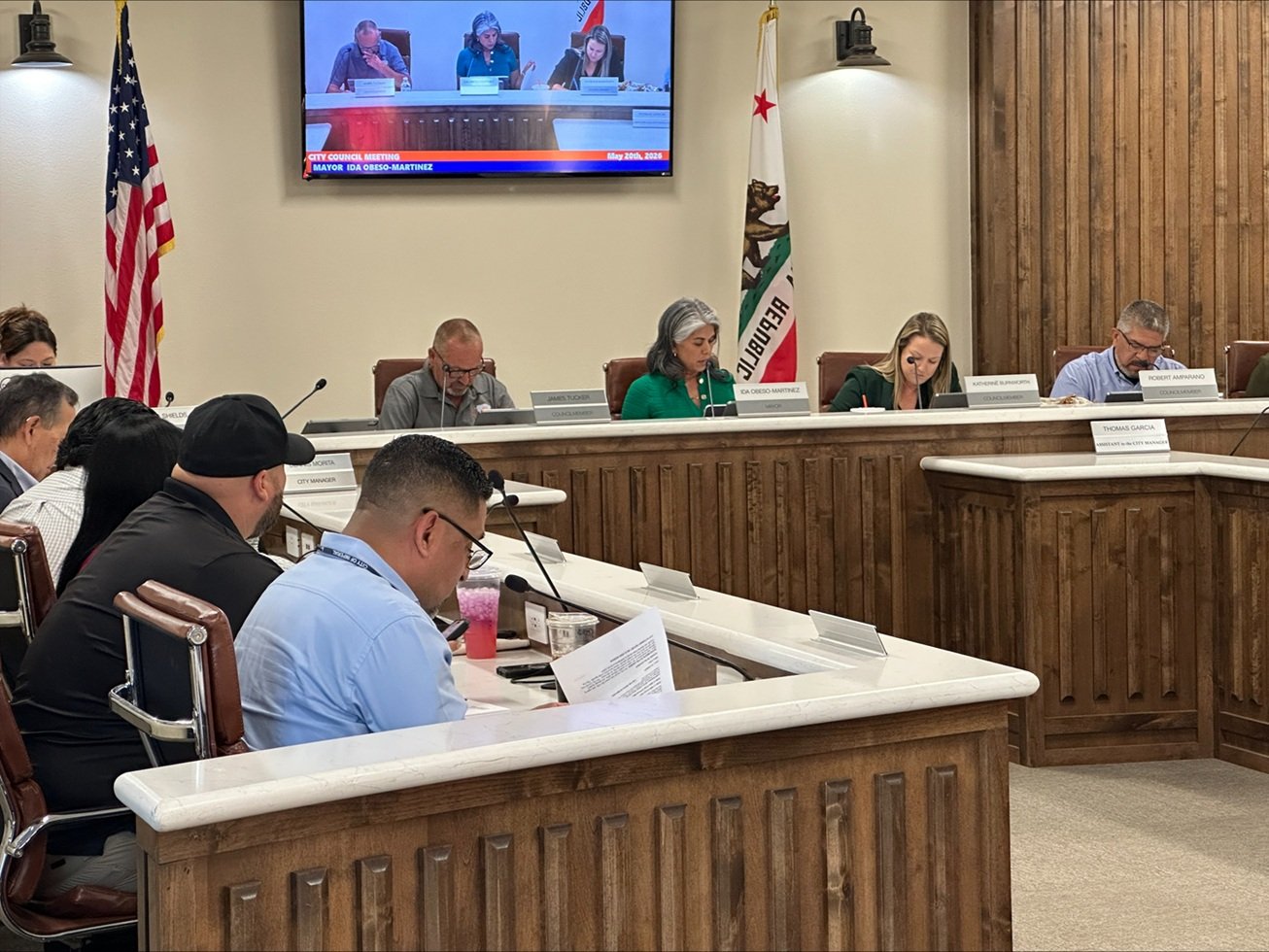
The cities of Calipatria, Brawley, and Imperial have directed staff to draft a moratorium measure aimed at pausing approvals for major data center projects while the city administration studies potential environmental, infrastructure, and economic impacts. The Imperial City Council gave direction to impose a moratorium that would tentatively be approved at their June 3rd meeting.
The actions represent another setback for the proposed Imperial project, which has become one of the most divisive development debates in recent Imperial Valley history. Public concern surrounding the project has intensified in recent months, with residents, environmental advocates, and community organizations organizing protests and speaking out during public meetings across the valley. Thrown into the cauldron of the upcoming election, the data center debate is also becoming a major issue in the primary election, where several key county positions are on the ballot.
Imperial City Manager Denis Morita said the developer disagreed with the review process the city maintained would apply to the project, which ultimately led the proposal to shift to its current location in unincorporated Imperial County. Morita said that once the project moved outside city limits, “the approval dynamic shifted,” resulting in ongoing litigation between the City of Imperial and the County of Imperial over the proposed data center complex. He added that the city believes it now has a clearer framework for handling similar projects within its jurisdiction, while noting that other local governments across the Imperial Valley are also considering additional regulatory actions related to large-scale data center development.
Calipatria Mayor Michael Luellen shared that the city’s recent moratorium on data centers was prompted by growing concerns over regional development proposals and a lack of transparency in negotiations, stating that he had “heard more than rumors” about planned facilities in nearby communities and potential pressure on small cities like Calipatria to accommodate large-scale projects.
Luellen said that as a member of the Local Agency Formation Commission (LAFCO) he had reviewed proposals tied to annexation requirements that could force cities to incorporate areas where they provide services, calling the implications “major” for future development, particularly data centers.
He added that some proposals would require non-disclosure agreements, preventing cities from discussing project details with the public, which he opposed.
“That was the completely wrong direction,” he said, noting the moratorium would lead to a public hearing in June where residents could weigh in before a possible vote on a permanent ban, adding, “I don’t believe one year or five years is enough for our community to actually understand the implications of data centers,” and arguing that corporate-driven studies often prioritize profit over community impacts.
At the May 19 Brawley City Council meeting, a spirited debate took center stage over the proposed moratorium, which ultimately was approved by a vote of 3-2, with John Grass and Tim Kelley voting against it.
Councilman Gil Rebollar, who introduced the discussion item alongside Mayor JJ Galvan, said the proposal was not intended as a ban on data centers but rather an effort to establish clearer rules and oversight before any major project is proposed within city limits.
“I don’t see this as being about data centers, and I don’t see it as being about a ban either,” Rebollar said during the meeting. “I see it as a governance matter and understanding our role as council members in setting policy and standards regarding zoning and development within our city limits.”
Rebollar said the city’s current ordinances do not specifically define data centers, hyperscale data centers, or cryptocurrency mining facilities, which he argued could create uncertainty for residents, city staff, and developers.
He warned that vague zoning language could eventually lead to disputes or litigation if future projects are proposed without clear regulations in place. Rebollar also emphasized concerns about transparency and public trust as debate over data centers continues to intensify throughout the region.
“The last thing any of us wants is residents feeling in the dark or that projects like this are being explored without them knowing,” Rebollar said.
The councilman said the city should first evaluate environmental protections, emergency planning requirements, infrastructure impacts, and potential community benefit agreements before considering such projects.
Rebollar also raised broader concerns about economic equity and whether local communities would receive enough long-term benefits from projects that could generate substantial profits for private companies.
“Someone’s profiting off the tradeoff of whether it’s our water or air or our infrastructure,” he said. “Is that fair to the people who are going to live with this?”
Mayor Galvan echoed support for additional safeguards and public review, saying the city has a responsibility to carefully evaluate large-scale projects before they move forward.
“It’s about protecting the people that we got elected to represent,” Galvan said.
However, Councilman John Grass opposed the proposed moratorium, arguing the city can update zoning regulations and development standards without pausing potential projects.
Grass emphasized that no formal data center applications have been submitted to the city and said any future proposal would still be subject to California Environmental Quality Act review and extensive public input.
“There are no data center projects on the drawing boards,” Grass said. “The city is quite capable of studying and evaluating appropriate standards and regulations without a moratorium.”
Grass cautioned that adopting a moratorium could send a negative message to future investors at a time when the city is facing financial pressures and seeking economic diversification beyond agriculture.
He cited an economic development report encouraging Imperial County to pursue industries tied to renewable energy, battery storage, lithium extraction, and related technologies.
“The economics of Imperial County are evolving and changing,” Grass said.
Mayor Pro Tem Tim Kelley, who also serves as president of the Imperial Valley Economic Development Corporation, also opposed the moratorium, warning it could reinforce perceptions that Brawley is resistant to economic growth.
“The reputation of Brawley is that we are a no-growth town,” Kelley said. “Putting a moratorium today is going to be headlines tomorrow, saying Brawley does not want growth.”
Kelley argued that California’s environmental review process already provides extensive oversight and protections for communities. He said future projects would still need to undergo studies involving traffic, air quality, noise, health, and infrastructure before receiving approval.
He also defended Imperial Valley’s economic assets, including access to water, available land, energy infrastructure, and lower electricity costs.
“We have land, we have water, we have electricity, and we have people willing to work,” Kelley said.
The next front of the data center battle will be in the courts. Imperial County Superior Court Judge Anderholt set a trial date of June 25, 2026, for the City of Imperial’s legal challenge to the proposed data center complex. The Court set the date after denying the County of Imperial’s motion for judgment on the pleadings. This was the County’s second such motion, alleging that the City’s complaint was legally insufficient.
The parties will complete an administrative record, submit legal briefing, and prepare for the upcoming trial on the merits.