


Canada-Europe Economic Alliance Raises Pressure on Mexico to Strengthen Domestic Industries
Share your love
 –Editorial
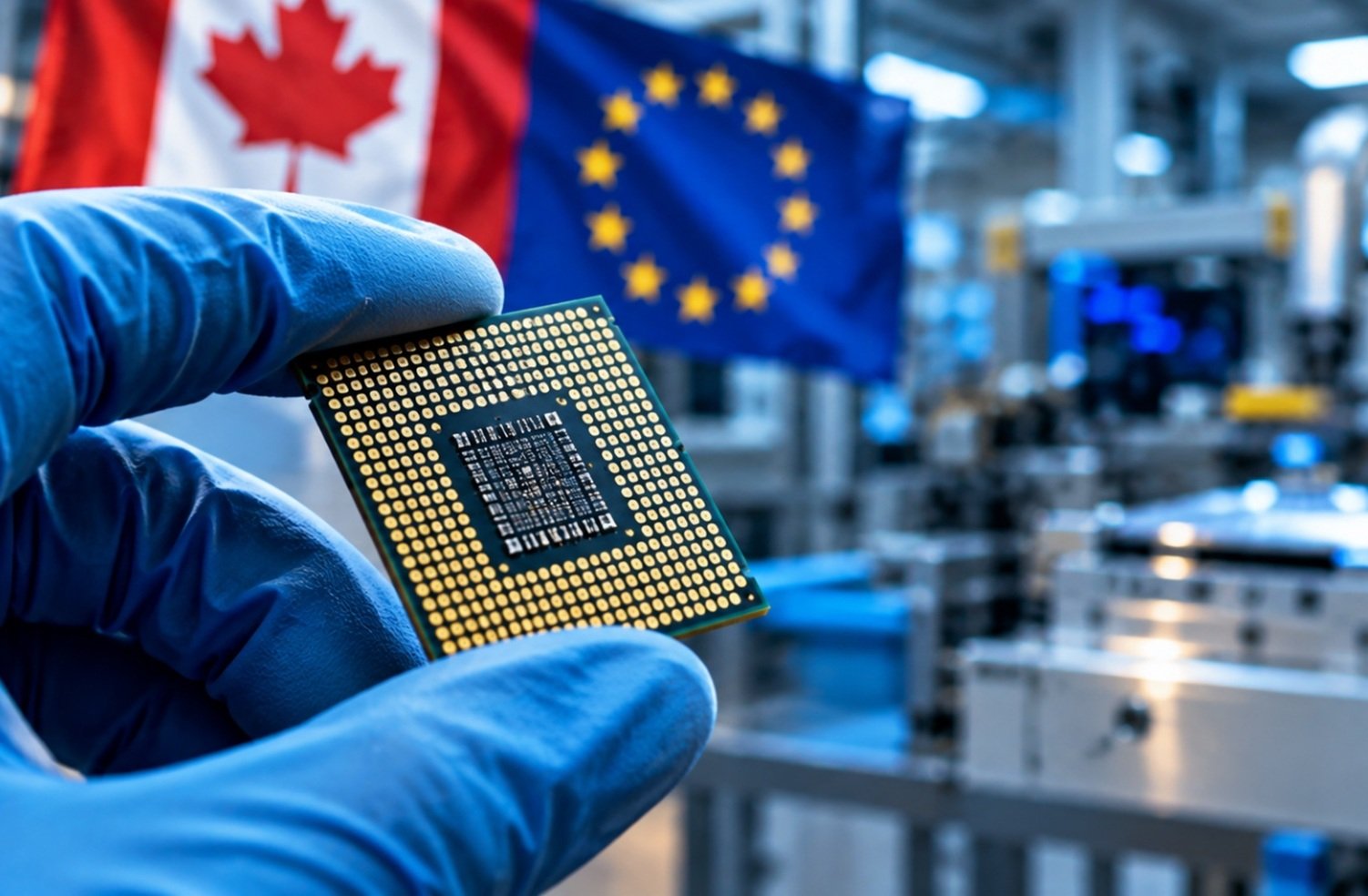
A new economic and technological alliance between Canada and the European Union could increase competition for Mexico in attracting investments in strategic industries, including semiconductors, artificial intelligence, critical minerals, and clean technologies.
Daniella Martínez Rodríguez, CEO of TLC Asociados, said the agreement highlights the need for Mexico to strengthen its domestic industries as it seeks to capitalize on nearshoring opportunities and expand its participation in North American supply chains.
“The USMCA represents an extraordinary advantage for Mexico, but we can no longer assume that proximity to the United States will be enough to automatically attract higher-value investments,” Martínez Rodríguez said. “Today, countries are also competing through technology, talent, financing, infrastructure and strategic supply chains.”
During a summit Oct. 29-30 in Montreal, Canada and the European Union announced the Alliance for the Future, an initiative aimed at expanding cooperation in critical raw materials, energy, digital technologies, essential medicines, artificial intelligence, advanced computing and semiconductors.
The two economies also concluded substantive negotiations on a digital trade agreement and are seeking greater collaboration in scientific research and technological infrastructure. Trade between Canada and the European Union reached approximately 130 billion euros in 2025.
Martínez Rodríguez said the partnership reflects a shift in global investment competition, with countries seeking not only manufacturing facilities but also research centers, specialized suppliers and technological innovation.
“International competition is no longer simply about attracting a factory,” she said. “It is about attracting research, specialized suppliers, intellectual property, technology centers and higher-value processes. Mexico must ask itself what percentage of these new supply chains it can actually develop domestically.”
Canada’s strategy seeks to diversify its economic relationships with Europe while maintaining its integration with the United States and North American markets.
For Mexico, the development presents challenges as the country works to convert nearshoring opportunities into long-term industrial growth.
Under Plan México, the country’s economic development strategy, the government aims to increase domestic content in global value chains by 15% and achieve 50% domestic sourcing and consumption in strategic sectors.
Martínez Rodríguez said meeting those objectives will require stronger local suppliers, improved infrastructure and greater technological capabilities, particularly in the automotive, aerospace, electronics, pharmaceutical, chemical and semiconductor industries.
She emphasized that preserving the benefits of the United States-Mexico-Canada Agreement remains essential, but Mexico must also invest in innovation and workforce development to compete for higher-value projects.
Martínez Rodríguez said Mexico’s long-term competitiveness will depend on its ability to attract investment while retaining a greater share of the technology, knowledge, and economic value generated within its borders.