


California Leads Fight Against Media Consolidation in Challenge to Paramount-Warner Bros. Deal
Share your love
 -Editorial
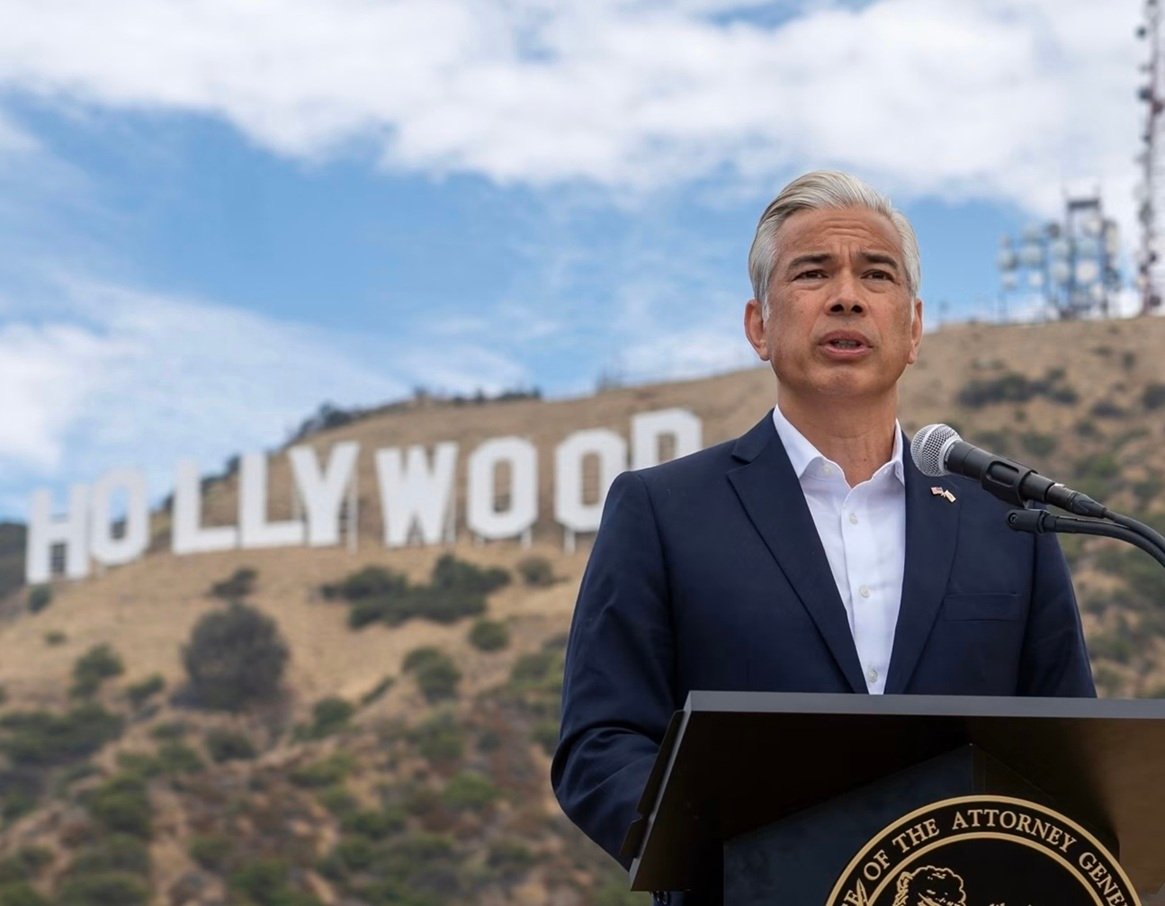
California Attorney General Rob Bonta and attorneys general from 11 other states filed a federal antitrust lawsuit Monday seeking to block Paramount Skydance Corp.’s proposed $110 billion acquisition of Warner Bros. Discovery Inc., arguing the transaction would substantially reduce competition in the U.S. film and television industry.
The lawsuit, filed in the U.S. District Court for the Northern District of California, alleges the merger would violate Section 7 of the Clayton Act, which prohibits acquisitions whose effect “may be substantially to lessen competition, or to tend to create a monopoly.” The coalition contends the transaction would combine two of Hollywood’s five major film distributors and two of the five largest owners of basic cable television channels, giving the merged company significant influence over theatrical film distribution and cable programming.
According to the complaint, the combined company would control nearly one-third of theatrical motion picture distribution and nearly one-third of basic cable programming in the United States. State officials argue that the merger would eliminate direct competition between Paramount and Warner Bros., ultimately resulting in higher prices, fewer choices and less content for movie theaters, cable distributors and consumers.
The attorneys general allege the merger would lessen competition in three principal markets.
In the market for wide-release theatrical film distribution, the lawsuit states that Paramount and Warner Bros. together would hold about a 27% market share. The coalition argues that, if the transaction proceeds, only three distributors would control approximately 75% of wide-release films, while four companies — the merged Paramount-Warner Bros., Disney, Universal and Sony — would account for about 86% of the market.
The lawsuit also identifies a submarket for anticipated top-grossing theatrical films, including large-budget blockbuster releases. According to the complaint, the merged company would control more than 30% of those films, while the four largest distributors collectively would account for more than 90% of the market.
In addition, the coalition challenges the merger’s effect on the licensing of basic cable television channels. The complaint states that Warner Bros. Discovery is the nation’s second-largest owner of basic cable channels and Paramount is the third-largest. Combined, the companies would hold approximately 27% of that market.
State officials argue that Paramount and Warner Bros. currently compete to produce, market, and distribute film and television content. The lawsuit contends that movie theaters rely on competition between the studios when negotiating for release dates, premium screens, and financial terms. Likewise, cable and satellite distributors negotiate separately with each company for the rights to carry their television networks, and the states argue that the availability of competing programming helps distributors secure more favorable licensing agreements.
The coalition alleges that eliminating that competition would reduce incentives to produce new programming, weaken the bargaining position of theaters and distributors, and ultimately diminish the variety, quality, and quantity of entertainment available to audiences.
Bonta said the coalition has requested that Paramount and Warner Bros. delay closing the transaction until the court proceedings are completed. If the companies decline, the attorneys general said they intend to seek a temporary restraining order to prevent the merger from closing while the litigation proceeds.
The lawsuit is being led by California and joined by the attorneys general of Arizona, Colorado, Connecticut, Massachusetts, Minnesota, Nevada, New Jersey, New Mexico, New York, Oregon and Washington.
Paramount Skydance stated in a press release the lawsuit mischaracterizes both the law and the current competitive landscape of the entertainment industry.
In a statement, the company said regulators around the world have already reviewed the transaction and concluded it would not substantially lessen competition. Paramount said competition authorities or foreign investment regulators in 24 jurisdictions have cleared the merger or allowed applicable waiting periods to expire. The company also noted that the U.S. Department of Justice previously concluded its merger review without seeking to block the transaction.
Paramount argued that the combined company would be better positioned to compete against dominant streaming services and technology companies, including Netflix, which it said have fundamentally reshaped the entertainment marketplace. According to the company, the merger would create a larger, better-capitalized media company capable of increasing investment in premium content, theatrical releases, and creative talent.
The company also disputed the states’ contention that the merger would reduce output. Paramount said it has committed to releasing at least 30 theatrical films annually with a minimum exclusive theatrical window of 45 days before streaming or home distribution. It also said the combined company would continue licensing content to third parties while expanding production to better compete with larger streaming platforms.
Paramount also argued that the transaction would create additional employment opportunities throughout the entertainment industry.
The company said increased production would generate more work for union employees and other workers involved in filmmaking, including transportation, construction, catering, and other production services. Paramount stated that expanding theatrical and television production is central to its strategy for competing with larger streaming companies and that organized labor would remain an essential partner in those efforts.