


California Declares State of Emergency Ahead of Potentially Historic El Niño
Share your love
 -Editorial
Gov. Gavin Newsom declared a statewide state of emergency as California prepares for a strengthening El Niño that state officials said could bring heavy rain, flooding, coastal erosion and other hazards during the coming fall and winter months.
The Sept. 21 proclamation directs state agencies to accelerate preparations, stage emergency supplies, protect vulnerable infrastructure and assist local governments ahead of potential severe weather. State officials stressed that El Niño increases the risk of certain weather extremes but does not guarantee that California will experience an unusually wet winter or any particular storm.
Brian Ferguson, senior adviser in Newsom’s office, said the state is taking action before severe weather develops.
“The action we’re talking about today is early. It’s focused and it’s about protecting Californians before severe weather arrives,” Ferguson said during a briefing Monday. “We’re reviewing this event like a pre-landfall hurricane, as you might see in other parts of our country, but really leaning forward on the state side.”
El Niño is a recurring climate pattern characterized by warmer-than-average sea surface temperatures in portions of the Pacific Ocean. Those conditions can alter atmospheric circulation and storm tracks, potentially increasing the likelihood of wetter conditions in parts of California.
Laura Hollender, deputy director of flood management and dam safety at the California Department of Water Resources, said El Niño should not be viewed as a prediction of a specific storm.
“El Niño is not one specific storm, and does not by itself guarantee any specific storm or outcome,” Hollender said. “A warmer temperature increases the amount of moisture available to atmospheric rivers, potentially increasing the amount of rain any one storm delivers.”
Hollender said sea surface temperatures in the region used to measure El Niño were about 2 degrees Celsius above normal, near the dividing line between strong and very strong conditions. Current forecasts indicate the event could continue strengthening, she said.
Federal forecasters estimate a greater than 90% chance of a very strong El Niño this fall and winter and a 75% chance that it could reach historic strength.
Hollender cautioned that even a record-setting El Niño measurement would not mean California would experience a record-setting storm.
“It means that the conditions exist in the Pacific to fuel storms that can impact our state,” Hollender said.
Historical El Niño events have produced varying outcomes across California. Strong events have sometimes been associated with wetter-than-average conditions in Southern California, while effects in Central and Northern California have been less consistent.
Hollender said flooding can occur even when total seasonal precipitation ultimately finishes below average because individual storms or short periods of heavy rainfall can produce significant impacts.
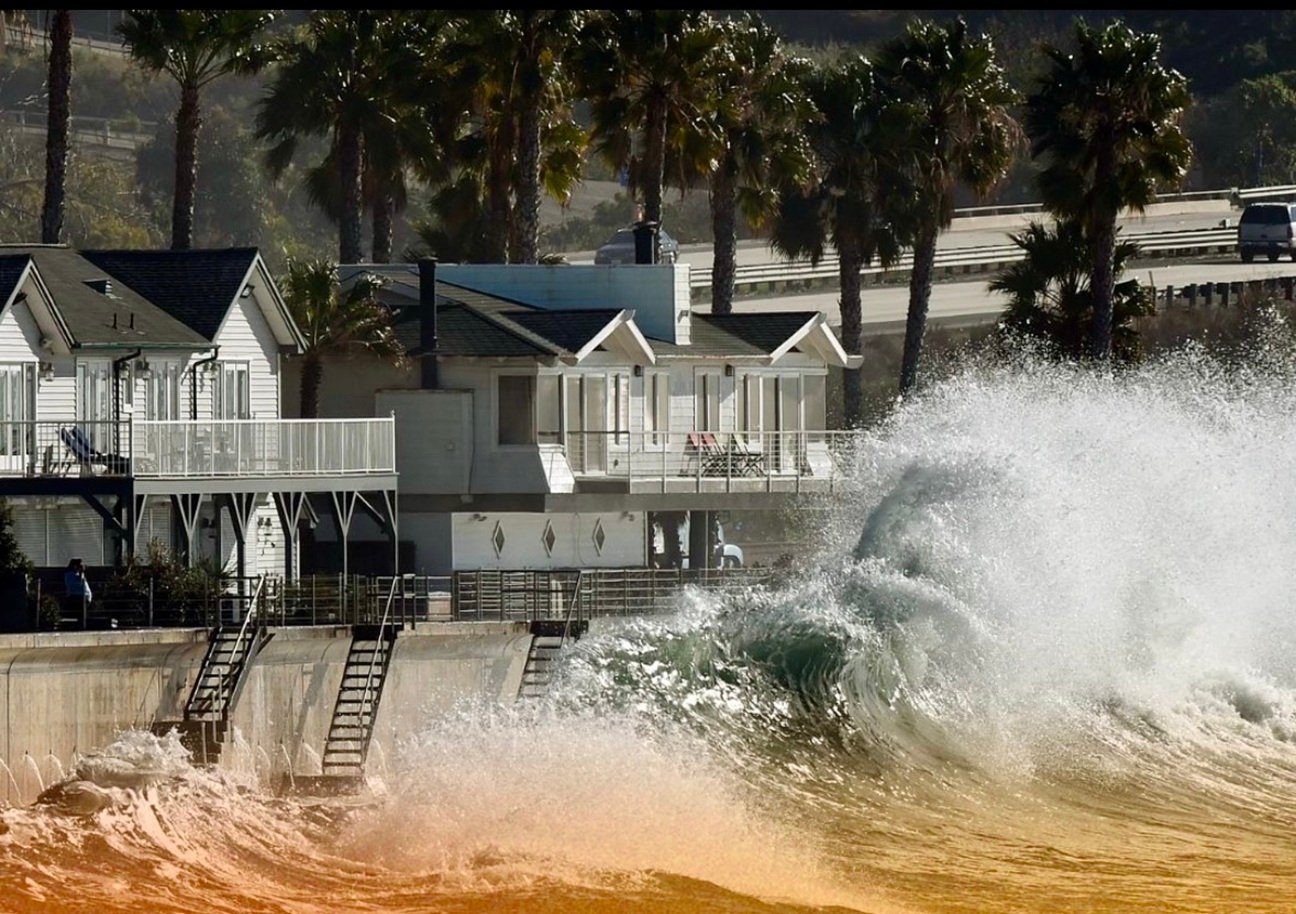
Coastal areas are another concern. Hollender said El Niño conditions can contribute to elevated sea levels, stronger wave action, and coastal erosion. High tides could compound those effects, particularly during king tide periods expected in November and December.
“As I mentioned, El Niño does not guarantee when or where a specific storm will hit, but it does set up the conditions for strong rainfall events,” Hollender said.
Areas downstream from recent wildfire burn scars could face additional risks from heavy rainfall, including flash flooding, mudslides and debris flows.
Caroline Thomas Jacobs, director of the California Governor’s Office of Emergency Services, said the emergency declaration allows agencies to begin positioning personnel and equipment before storms arrive. The proclamation directs agencies to prepare for flooding, landslides, debris flows, coastal flooding and other potential impacts.
“The state of emergency proclamation announced by Governor Newsom today gives the state the ability to move earlier, faster, and with more focus to protect lives and support communities,” Thomas Jacobs said.
State preparations include staging sandbags, pumps, rock and plastic sheeting; preparing highways and bridges; and placing emergency response personnel and equipment on standby.
The California National Guard is preparing high-water vehicles, helicopters, search-and-rescue resources, engineering support and logistics capabilities. Cal Fire, the California Conservation Corps and California Volunteers are also preparing personnel and equipment that could be used during storms and flooding.
Thomas Jacobs urged motorists not to attempt to cross flooded roads.
“It takes only a small amount of water to disable a car, and as little as 12 inches of moving water can carry many vehicles away,” she said. “If water covers the road, turn around. Don’t drown.”
The state is also urging residents to determine whether their homes are in flood-prone areas, identify evacuation routes, clear gutters and drains, sign up for emergency alerts and prepare emergency supplies, including medications, food, water, flashlights, chargers and important documents.
“This is not about fear. It is about readiness,” Thomas Jacobs said. “It is about giving people more time, more support, and more ways to stay safe.”
The Department of Water Resources is also expanding preparations with local emergency agencies.
DWR Director Thomas Gibson said the department will conduct 12 regional workshops covering coastal, Central Valley, Sacramento-San Joaquin Delta and Southern California counties. The sessions will include local emergency officials, state agencies, the California Conservation Corps, U.S. Army Corps of Engineers and National Weather Service.
“First and importantly, we coordinate closely with our local partners, who would be the first responders during any type of emergency,” Gibson said.
Gibson said DWR has pre-positioned about 4.4 million sandbags and other flood-fighting materials at 68 locations and eight major warehouses statewide. The department also has more than 400,000 tons of rock available for emergency levee repairs and has shifted some flood-fighting materials toward coastal counties.
DWR conducts annual inspections of about 1,600 miles of levees within the State Plan of Flood Control and maintains weirs, bypasses and other flood-control structures in the Central Valley, Gibson said. The department has trained more than 7,000 local first responders in flood fighting since 2015.
Newsom’s proclamation also directs state environmental and natural resources agencies to use emergency authorities to expedite work intended to reduce flood, landslide and debris-flow risks. State agencies were directed to identify additional authorities that might be needed as preparations continue.
Officials emphasized that seasonal forecasts cannot determine precisely when storms will occur, where they will make landfall or how severe individual events will be.
Hollender urged residents to monitor National Weather Service forecasts and warnings as storms enter shorter-term forecast windows.
Thomas Jacobs said the state’s approach is intended to position resources before communities face an emergency.
“California is not standing still,” she said. “California is getting ready.”