


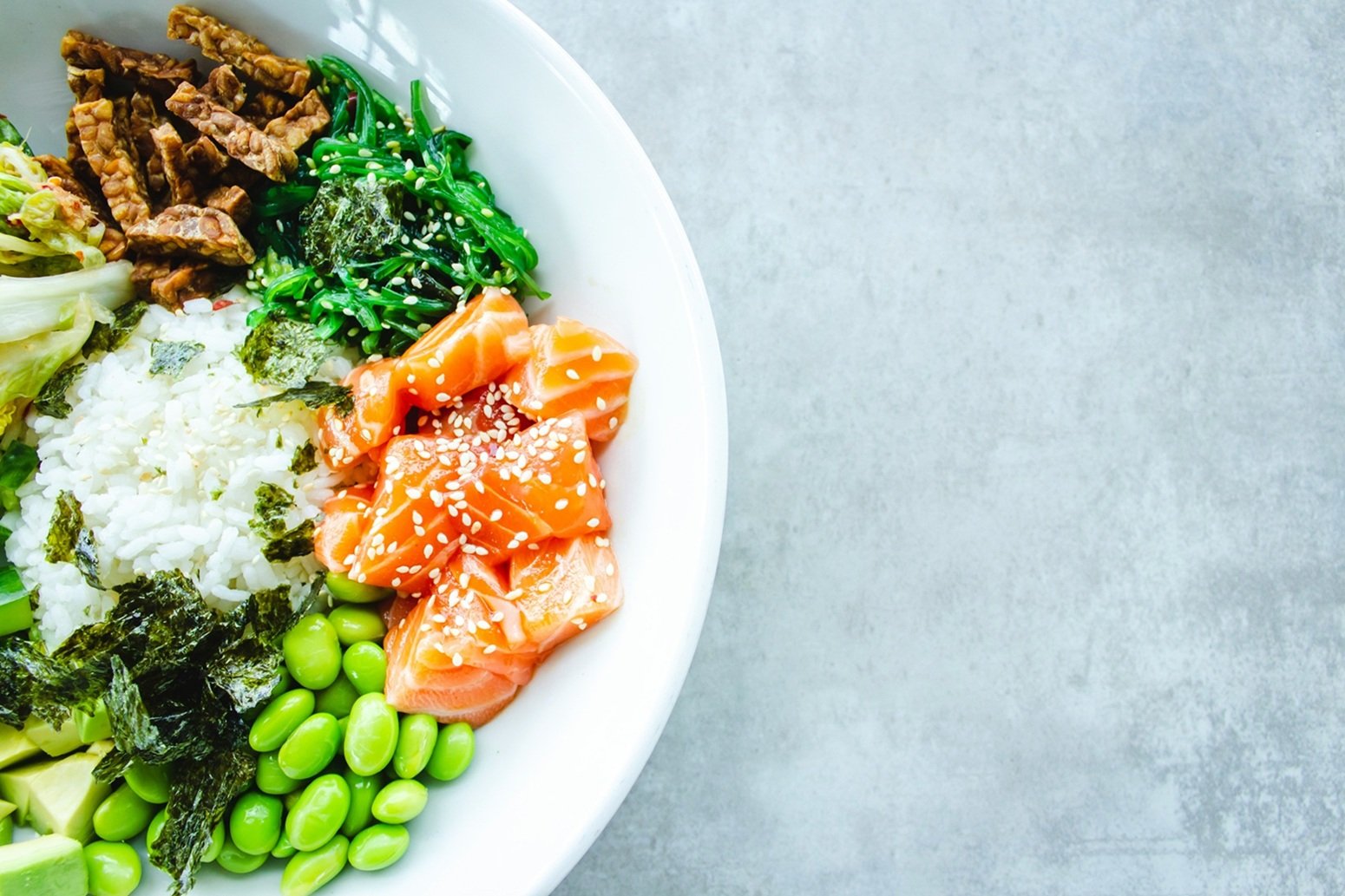

Build Your Plate Around Protein
Share your love
 A physician’s guide to eating well without giving up the food you love
By Alidad Zadeh, D.O., Board-Certified Internal Medicine
Our region knows how to eat: carne asada on Sunday, mariscos with friends, warm tortillas at every family table. Eating for better health does not mean giving that up. Usually what needs to change is not what is on the table, but how the plate is built.
After more than a decade practicing internal medicine in the Imperial Valley, my most useful rule is simple: build every plate around protein first.
Why protein comes first
Muscle is your metabolic engine. It uses blood sugar, protects joints and bones, and keeps you independent as you age. After about 30, adults slowly lose muscle unless they eat enough protein and use it. Protein is also the most filling nutrient, which helps prevent overeating.
The official minimum, about 0.36 grams per pound of body weight, prevents deficiency; it is not the target for optimal health. For most active adults, especially over 50, I aim for about 0.55 to 0.7 grams per pound daily (roughly 100 to 125 grams for a 180-pound adult), about 30 to 40 grams per meal. If you have kidney disease, ask your physician first.
How to build the plate
- A quarter to a third: protein. Chicken, fish, lean carne asada, eggs, Greek yogurt or beans.
- Half: non-starchy vegetables. Nopales, calabacitas, cabbage, salsa fresca, greens.
- A quarter: quality carbohydrates. Two corn tortillas, rice, fruit or sweet potato.
- A thumb of healthy fat. Avocado, olive oil, nuts or a little queso.
Eat the protein and vegetables first. The tortillas taste just as good at the end.
What about popular diets?
Each works by helping you eat less of something. The question is what it costs you.
- Mediterranean: the strongest evidence for heart health, but done as pasta and bread it falls short on protein.
- Keto and low-carb: fast results and better blood sugar, but hard to sustain, low in fiber, and in some people low-density lipoprotein (LDL) cholesterol rises sharply.
- Intermittent fasting: simple, but fewer meals make protein targets hard to reach, so muscle is lost with fat.
- Plant-based: great for fiber and cholesterol, but needs planning for enough protein and vitamin B12.
The common failure is too little protein. Any approach works better when protein anchors the plate.
 The scale does not tell the whole story
With rapid weight loss, including on GLP-1 (glucagon-like peptide-1) medications, a meaningful share can be muscle instead of fat. That is why we measure body composition with a DEXA (dual-energy X-ray absorptiometry) scan, not a bathroom scale.
Start this week
- Add a protein source to breakfast, the meal most people skip it.
- Fill half your plate with vegetables at lunch and dinner.
- Strength train two or three times a week.
What is really behind the number on your scale?
Zadeh Performance Medical Center — $149 consultation, credited toward any program.
1550 S. Imperial Ave., El Centro, CA 92243 | (760) 997-7990 | zadehperformance.com
Dr. Alidad Zadeh is a board-certified internal medicine physician and founder of Zadeh Performance Medical Center in El Centro. This article is for general education and is not individual medical advice.