



A Good Candidate Is a Good Leader: But Who Is Willing to Choose One?
Share your love
 By: Ellie Burgueño, Journalist and Writer.
With just 14 days remaining before California’s November 3 general election, I find myself reflecting on a question that reaches far beyond political parties, campaign slogans, and election-day promises: What does it truly mean to choose a leader, and what responsibility do we bear when we fail to do so?
Democracy depends on participation, but participation requires something increasingly difficult to sustain: hope, trust, and the willingness to believe that our decisions can make a difference.
Every election cycle, familiar arguments resurface. Some people question the integrity of the electoral process, believing the outcome is predetermined. Others insist their votes will not change anything, that the same problems will persist regardless of who wins. Still others have simply disengaged, convinced that politics has nothing meaningful to offer them.
Yet disengagement carries consequences. When people withdraw from the democratic process, decisions do not stop being made. They are made by those who remain engaged, and the consequences extend to everyone.
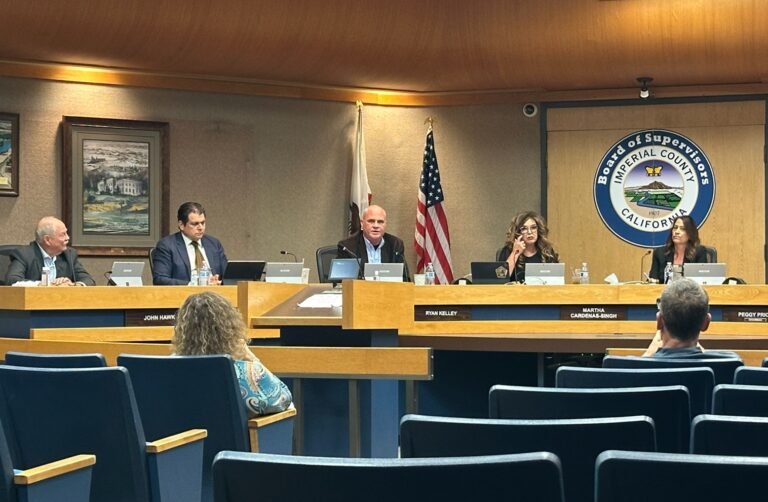
Consider Imperial County. According to the county’s preliminary report following California’s June 2, 2026, primary election, 12,330 of 94,917 registered voters cast ballots, representing approximately 12.99% turnout. That means roughly 87% of registered voters did not participate in that election. The county’s official election website provides access to certified results and historical participation records. https://elections.imperialcounty.org/ https://www.sos.ca.gov/elections/statistics
These numbers deserve more than a passing glance. They should prompt an uncomfortable but necessary question: How can a community expect its collective interests to be represented when such a small proportion of its registered electorate participates in choosing the people who will make consequential decisions?
Local government is not an abstract institution operating somewhere beyond our daily lives. Its decisions influence roads, public safety, schools, infrastructure, economic development, business assistance, housing, public services, and the allocation of limited public resources. Elected officials help determine priorities that can shape a community for years, sometimes decades.
And yet, many of the people most affected by those decisions may never take the time to examine the candidates, understand their proposals, or cast a ballot.
Imperial County is not alone in facing the challenge of voter participation. In California’s November 5, 2024, presidential election, 71.43% of registered voters cast ballots. When measured against the state’s eligible voting-age population, however, participation was 59.97%. Nationally, the U.S. Census Bureau estimated that 65.3% of the citizen voting-age population voted in the 2024 presidential election. These figures use different denominators, but together they illustrate an important distinction: even in a highly visible presidential election, a substantial share of eligible Americans does not vote. https://www.sos.ca.gov/administration/news-releases-and-advisories/2024-news-releases-and-advisories/secretary-state-shirley-n-weber-phd-has-certified-results-california-november-5-2024-general-election https://www.census.gov/newsroom/press-releases/2025/2024-presidential-election-voting-registration-tables.html
I find it disheartening to consider what happens when indifference, frustration, or misinformation replaces civic responsibility. We risk creating conditions in which the people elected to represent us may not reflect the broader community’s priorities, concerns, or aspirations.
The answer, however, is not to assume that every elected official is unqualified or that every election is compromised. Nor is it enough to blame voters who feel disillusioned. People face legitimate barriers, including limited time, insufficient information, and a lack of confidence in public institutions. Rebuilding trust requires transparency, accountability, and meaningful public engagement.
But it also requires us, as citizens, to reconsider what we expect from leadership.
A candidate should be evaluated on more than charisma, party affiliation, campaign spending, popularity, or the ability to deliver a compelling speech. We should examine experience, judgment, integrity, financial responsibility, relevant knowledge, and a realistic understanding of the office being sought. We should ask whether a candidate’s proposals are achievable, how they will be funded, what their record reveals, and whether they are prepared to explain their decisions publicly.
Education and professional experience can be valuable, but neither automatically guarantees good leadership. Wealth does not establish integrity, and an impressive résumé cannot substitute for accountability. What matters is the combination of competence, character, sound judgment, and a genuine commitment to serving the public.
I am a dreamer. Like Dr. Martin Luther King Jr., whose historic vision challenged a nation to confront the distance between its founding ideals and its lived reality, I believe we must dare to imagine something better. His legacy reminds us that progress begins when people refuse to accept injustice and commit themselves to a more equitable future.
My dream is of communities in which public office is understood not as a prize, a personal business opportunity, or a platform for recognition, but as a serious responsibility entrusted to individuals on behalf of others. I dream of leaders who listen before they speak, seek evidence before making promises, acknowledge mistakes, and place the public interest above personal ambition.
That vision demands more than hope. It demands action.
 When we participate, research the candidates, attend public meetings, ask difficult questions, and hold elected officials accountable, we strengthen the relationship between citizens and government. We also recognize that leadership is not reserved for those who hold office. It begins with each of us and the choices we make about the future we want to build.
My faith reinforces this conviction. In 1 Samuel 16:7, when the prophet Samuel is sent to anoint Israel’s next king, God reminds him not to judge by outward appearance: people look at what is visible, but God looks at the heart. David, the youngest of Jesse’s sons, was chosen despite not appearing to be the obvious candidate.
The lesson is not that qualifications are irrelevant. Rather, it is that appearances alone cannot reveal a person’s character. Integrity, humility, courage, and the willingness to do what is right matter profoundly. Those qualities must be considered alongside the practical skills and sound judgment public service requires.
As November 3 approaches, I invite every voter to look beyond party labels and campaign rhetoric. Read the candidates’ statements. Examine their records. Compare their proposals. Verify claims before sharing them, and distinguish documented facts from allegations and promises. Do not confuse popularity with competence or confidence with credibility.
A ballot is a small piece of paper, but the responsibility behind it is enormous. When we elect people without examining their qualifications, values, and intentions, we risk paying the price through decisions that affect our families, our businesses, our schools, and our communities.
We cannot demand better leadership while refusing to take part in choosing it. We cannot expect government to reflect our priorities if we never make those priorities known.
A good candidate is not simply someone who wants to lead. A good leader must be prepared to serve, to learn, to listen, and to answer to the people who entrusted them with power.
The question before us is not merely whom we will elect. It is whether we will take our responsibility seriously enough to choose with wisdom.
Because democracy is not strengthened by the people who complain the loudest, but by those who care enough to participate, think critically, and hold leadership accountable.