



Imperial Valley College to Train Farmworkers for a New Era of Agriculture
Share your love
 -Editorial
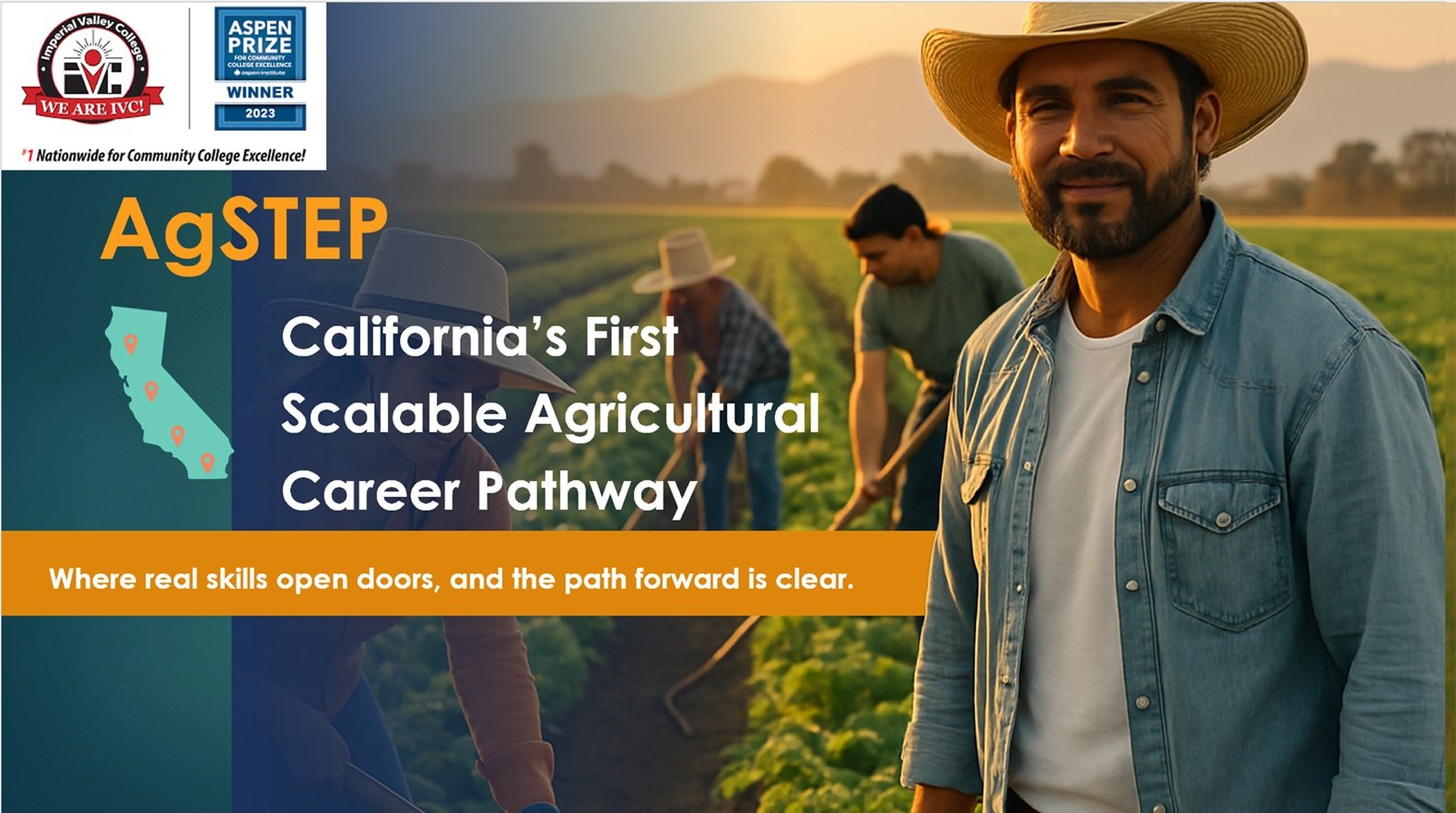
Imperial Valley College is preparing to launch a new agricultural workforce training program in February 2027 to help farmworkers develop the technical and digital skills needed to adapt to changing agricultural practices, including automation, drones, and emerging technologies.
The program will offer tuition-free, bilingual instruction through a series of 14 short-term courses designed to strengthen workers’ technical abilities while addressing the evolving workforce needs of Imperial Valley’s agricultural industry.
Efrain Silva, dean of Workforce and Economic Development at Imperial Valley College, said the initiative builds on a workforce development model originally established in California’s Central Valley, where agricultural employers identified a growing need for workers trained in modern farming technologies.
“The origin and the need to develop something like this came out of the Central Valley,” Silva said. “Central Valley farmers recognized some years ago, two, three years ago, that the trends in agriculture, in terms of technology, drones, automation, were something that would require farmworkers to have a totally different set of skills.”
According to Silva, agricultural employers worked with six Central Valley colleges to develop a training program that addresses technical skills, computer proficiency, communication, and digital literacy.
The program was designed to help existing agricultural employees adapt to technological changes rather than risk being displaced as farms introduce new equipment and production methods.
Following the initial implementation, a second phase of the initiative was awarded to three California community colleges: Shasta College, Hartnell College and IVC.
The institutions are developing their respective programs using the curriculum and instructional model established in the Central Valley, with adjustments reflecting the agricultural practices and workforce needs of their regions.
Silva said IVC recently received final approval for the program from the California Community Colleges Chancellor’s Office, clearing an important step toward its planned February 2027 launch.
“As a matter of fact, I’m very happy to tell you that the program just yesterday received final approval from the state chancellor’s office,” Silva said during the interview. “So we’re good. We’re good to go, and we’re very excited.”
A central component of the program is its bilingual instructional approach, intended to make technical education more accessible to agricultural workers who may have limited formal schooling or English-language proficiency.
Silva said the courses will be available in English and Spanish, with bilingual and bicultural instructors familiar with agriculture and the needs of the local workforce.
Unlike traditional college courses, the program will emphasize practical demonstrations of skills rather than written examinations.
“They’re all going to be hands-on assessments. There’s not going to be one single paper exam,” Silva said. “All of the competencies that are taught in the courses will be based on show me, show me that you know how to do this.”
The approach is intended to reduce educational barriers for farmworkers who may not have previously considered attending college.
Silva said the program will also provide flexibility for participants who must balance employment, family responsibilities and other commitments.
Workers who temporarily interrupt their studies because of illness, employment obligations, or personal circumstances will be able to return to complete their training.
The college will offer the courses through its noncredit education system, so participants will not be required to pay tuition.
Silva emphasized that the program differs from conventional academic instruction because it focuses on demonstrating workplace competencies rather than assigning traditional letter grades.
“This is a college program, but it’s not a typical college program,” Silva said.
The Ag Systems Certificate program will include 14 core competencies covering technical operations, agricultural fundamentals, safety procedures, and professional communication.
Training will address digital literacy, basic equipment operations, equipment configuration and troubleshooting, agricultural systems, crop production, animal production, food safety and workplace safety.
Students will also receive instruction in the use of hand and power tools, technical reading and writing, interpersonal skills and industry communication.
Digital literacy instruction will focus on identifying and using computer hardware and software employed in agricultural operations.
Equipment-related courses will teach participants to operate, configure, and troubleshoot basic electronic and mechanical systems while communicating technical problems effectively.
Agricultural systems instruction will cover plant science, crop production, and fundamental agricultural practices.
Additional coursework will address food safety and sanitation requirements, along with workplace safety protocols based on Occupational Safety and Health Administration standards.
The curriculum will also emphasize communication skills, including reading technical documents, preparing agricultural reports, and communicating effectively within workplace organizations.
Silva said the college is adapting the Central Valley curriculum to reflect differences in regional agricultural practices.
“In the Central Valley curriculum, there’s a piece that talks about groundwater because they use groundwater in the Central Valley, but we don’t use groundwater here,” Silva said. “It’s not totally copied; it’s replicated,” Silva said. “So we are changing things that don’t apply to the Imperial Valley.”
Before moving forward with the program, IVC consulted local agricultural employers and organizations to determine whether the workforce challenges identified in the Central Valley were also present in Imperial County.
Silva said college representatives met with local farmers, the Farm Bureau, the Vegetable Growers Association, and the agricultural advisory committee.
The discussions focused on whether the proposed training would address current and anticipated workforce needs.
According to Silva, local agricultural representatives supported implementing the program in Imperial Valley.
The consultations also provided an opportunity to identify regional differences that could influence course content and instruction.
Silva said the college intends to prepare workers for the increased use of automation, drones, digital systems, and other technologies that agricultural employers may adopt in the coming years.
The program’s workforce development materials identify several challenges facing agricultural labor, including potential job displacement from automation, shortages of emerging technical skills and barriers to additional training among workers with extensive practical agricultural knowledge.
The materials estimate that one in three agricultural workers could be at risk from increasing automation and anticipate significant changes in the industry over the next five to 10 years. The source and methodology for that estimate were not provided in the materials shared for this article.
Silva said the broader objective is to provide existing farmworkers with additional qualifications that could help them remain employed as agricultural operations become increasingly dependent on technology.
“Ultimately, we are going to be upskilling,” Silva said, referring to the process of helping employees acquire new workplace skills.
He said workers will receive training involving technology, data, drones, automation, communication, and digital literacy, with an emphasis on practical applications in agriculture.
The initiative is also intended to benefit employers by creating a workforce capable of operating and maintaining newer agricultural equipment.
Silva said that as local farms introduce advanced technologies, employees who understand those systems may be better positioned to continue working in the industry.
The college also hopes the additional training will help participants qualify for higher-paying positions and opportunities for advancement.
“Ultimately, we expect that this will lead to better wages because you have a better skilled workforce that should be compensated better than an unskilled workforce,” Silva said.
He added that employees who acquire additional technical knowledge may eventually be able to supervise operations, train other workers, or assume greater responsibilities.
Those outcomes remain goals of the initiative rather than guaranteed employment or wage increases.
Silva described the program as an opportunity to address the needs of both agricultural employers and workers.
“I think we’re looking for a win-win, a win for local farmers that can have a technologically advanced workforce and a win for the local farmworkers,” he said.