


Hispanic Heritage Month: Celebrating the Culture, History and People Building America
Share your love
 -Editorial
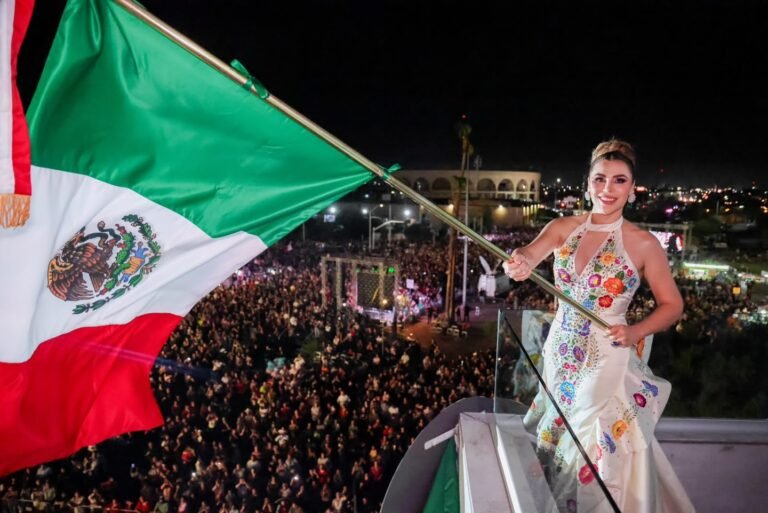
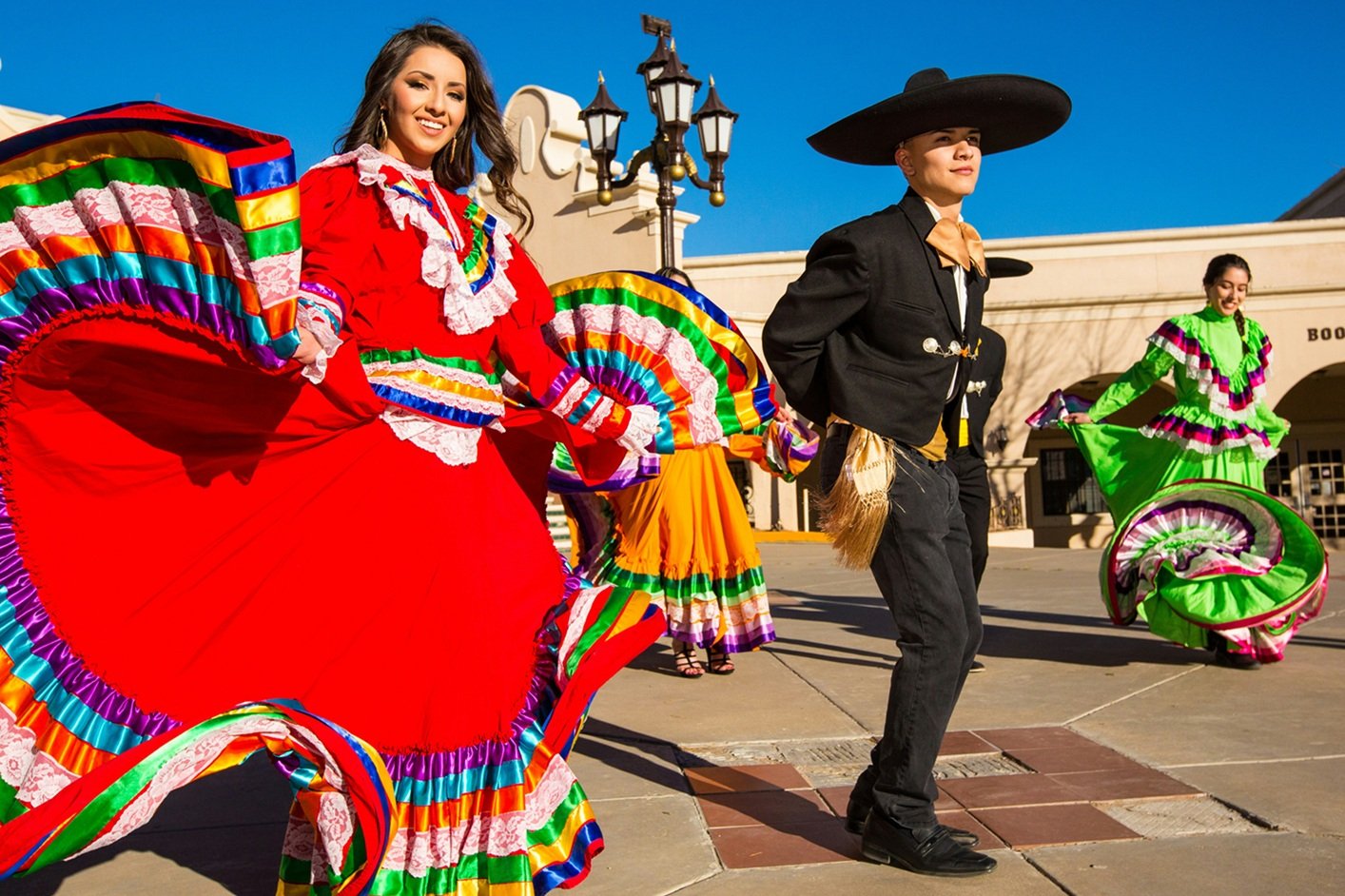
Every year from Sept. 15 through Oct. 15, communities across the United States come together to celebrate National Hispanic Heritage Month—a month dedicated to recognizing the history, culture, traditions and contributions of Americans whose roots trace to Spain, Mexico, the Caribbean and Central and South America.
It is a celebration filled with music, food, art, dance, history and family traditions. But it is also an opportunity to recognize something much larger: the people, ideas, businesses, discoveries and cultural traditions that Hispanic Americans bring to the story of the United States.
National Hispanic Heritage Month began in 1968, when Congress authorized President Lyndon B. Johnson to proclaim Hispanic Heritage Week. Twenty years later, Congress expanded the observance to a month, and in 1988 President Ronald Reagan signed the legislation establishing the 31-day period from Sept. 15 through Oct. 15. President George H.W. Bush issued the first presidential proclamation for Hispanic Heritage Month in 1989.
The dates themselves carry historical significance. Sept. 15 marks the independence anniversaries of Costa Rica, El Salvador, Guatemala, Honduras and Nicaragua. Mexico celebrates its independence on Sept. 16, while Chile celebrates its independence on Sept. 18. Mexico’s independence movement began in 1810 with the Grito de Dolores, associated with Miguel Hidalgo y Costilla, and culminated in independence in 1821.
Today, more than 70 million Hispanic Americans live in the United States, representing approximately one-fifth of the nation’s population. Their heritage is extraordinarily diverse, encompassing people with family histories connected to dozens of countries, cultures and communities throughout the Spanish-speaking world and beyond.
That diversity is reflected not only in America’s cultural life, but also in its economy.
According to the 2026 U.S. Latino Economic Impact Report, produced by the Latino Donor Collaborative with Arizona State University’s W. P. Carey School of Business, the U.S. Latino economy reached $4.4 trillion in 2024. If it were measured as a separate national economy, it would rank as the world’s fourth-largest. The report also found that Latinos accounted for 28.2% of total U.S. economic growth in 2024, despite representing approximately one-fifth of the population.
Those numbers tell only part of the story.
Hispanic Americans are also creating businesses at significant rates. U.S. Census Bureau data for 2023 show that Hispanic-owned businesses accounted for 8.4% of employer businesses, representing approximately 496,000 firms with $730.3 billion in receipts. Hispanic owners also accounted for approximately 5.3 million businesses without paid employees, representing 17.5% of all nonemployer businesses.
Entrepreneurship remains a particularly important part of the Hispanic economic story. The 2025 Kauffman Indicators of Entrepreneurship report found that the rate of new entrepreneurs among Latinos was 0.53%, compared with 0.36% across the overall population. The report also found that over much of the period it examined, Latinos recorded the highest rate of new entrepreneurship among the racial and ethnic groups studied.
Behind those statistics are people taking risks, creating jobs, opening restaurants and stores, building construction and professional-service companies, launching technology ventures, operating farms, establishing medical practices and developing organizations that serve their communities.
Their contributions extend far beyond business.
Hispanic Americans are helping advance education, science, technology, engineering, medicine and innovation. A growing number of young Hispanic Americans are pursuing higher education and entering fields that will shape the nation’s future. Their participation brings new experiences, perspectives and ideas into America’s classrooms, laboratories, corporations and research institutions.
And then there is culture—the part of Hispanic heritage that can often be seen, heard and felt most immediately.
From mariachi and salsa to literature, film, visual arts, architecture and cuisine, Hispanic traditions have become an important part of American cultural life. Spanish is spoken in homes, businesses and communities throughout the country, creating connections between generations and strengthening America’s relationship with the broader Spanish-speaking world.
Hispanic Americans have also served the nation in uniform for generations. From early conflicts through today’s armed forces, Hispanic service members have contributed to the defense of the United States, with numerous Hispanic Americans receiving the Medal of Honor, the nation’s highest military decoration for valor.
The significance of all these contributions can be captured in a simple idea expressed by former President Barack Obama in 2015:
“Our diversity is our strength.”
The statement speaks to a fundamental characteristic of the American experience. A nation made up of people with different histories, cultures, languages, experiences and perspectives has an extraordinary opportunity to draw strength from those differences.
A wise government—and a wise society—recognizes diversity not as something that divides Americans, but as a source of talent, creativity, entrepreneurship, cultural richness and innovation when people are given meaningful opportunities to participate and contribute.
That is ultimately what Hispanic Heritage Month invites Americans to celebrate.
It is not simply a month to display flags, enjoy traditional food or listen to music—although those traditions are important and meaningful. It is a time to learn the stories behind the traditions, recognize the generations who came before us and acknowledge the people who continue building the country today.
It is the entrepreneur opening a first business. The student becoming an engineer. The scientist pursuing a new discovery. The teacher inspiring a child. The artist preserving a tradition. The veteran serving the nation. The physician caring for a community. The parent teaching the next generation where they came from while encouraging them to dream about where they can go.
Hispanic Heritage Month is therefore both a celebration of the past and a recognition of the present—and the future.
It reminds us that heritage is not simply something inherited. It is something we carry forward, enrich and share.
And as millions of Hispanic Americans continue contributing their talent, ideas, businesses, traditions and determination to the United States, their story is becoming an increasingly important part of the American story.
This Hispanic Heritage Month, we celebrate not only where we come from, but everything we continue to build together.