


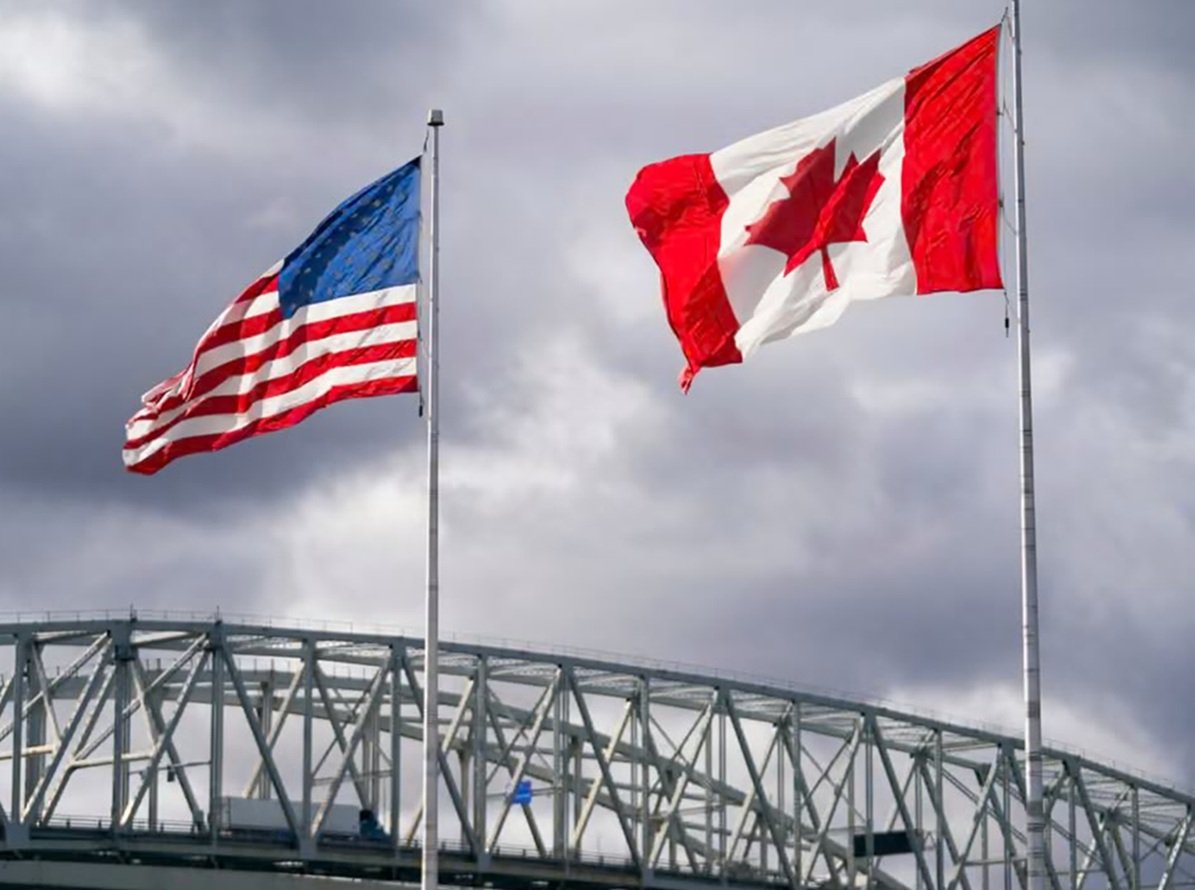

Trump Signs Proclamations Imposing New 50% Tariffs on Selected Canadian Imports
Share your love
 -Editorial
President Donald Trump has signed three presidential proclamations imposing an additional 50% tariff on selected Canadian imports under Section 338 of the Tariff Act of 1930, citing what the administration describes as discriminatory Canadian trade practices affecting U.S. exports of automobiles, alcoholic beverages and dairy products.
The new tariffs are scheduled to take effect at 12:01 a.m. EDT on Aug. 19, 2026, and will apply to a range of Canadian products identified in the proclamations, including wine, hockey sticks and cement. According to the White House, the duties will apply regardless of whether the affected goods qualify for preferential treatment under the United States-Mexico-Canada Agreement (USMCA).
The administration stated that several categories of products will remain exempt from the additional duties, including energy products, potash, fish, critical minerals, goods already subject to Section 232 national security tariffs, and certain other specified items.
Section 338 of the Tariff Act of 1930 authorizes the president to impose duties of up to 50% on imports from countries determined to have discriminated against U.S. commerce or imposed unreasonable or unequal trade restrictions. The White House said the latest measures are intended to counter what it considers unfair Canadian trade policies and to improve market access for American producers.
The three proclamations each address a separate area of trade concern.
The first focuses on Canada’s dairy import system. The administration argues that Canada’s tariff-rate quotas for cheese under the USMCA are more restrictive than those granted to European Union exporters under the Canada-European Union Comprehensive Economic and Trade Agreement (CETA). According to the White House, the differing treatment limits export opportunities for U.S. dairy producers and places them at a competitive disadvantage.
The second proclamation targets restrictions imposed by Canadian provinces and territories on U.S. alcoholic beverages. The administration said that beginning in March 2025, most Canadian provinces suspended the purchase, distribution or retail sale of American alcoholic products. As a result, imports of U.S. alcoholic beverages into Canada reportedly declined by approximately 81% over the following 12 months compared with the previous year.
The third proclamation addresses Canada’s tariff treatment of U.S.-manufactured motor vehicles. According to the administration, Canadian imports of American vehicles fell approximately 22%—representing an estimated $5.6 billion decline—between April 2025 and March 2026 compared with the previous 12-month period, while imports of vehicles from other countries increased during the same timeframe.
The White House said the new tariffs are designed to encourage Canada to eliminate what it characterizes as discriminatory trade practices and to expand market opportunities for American manufacturers, farmers and exporters.
The announcement marks another escalation in trade tensions between the two neighboring countries and raises new questions about the future implementation of the USMCA, which was negotiated to facilitate free trade across North America.
Canadian Prime Minister Mark Carney criticized the U.S. decision, describing the tariffs as the latest in a series of unilateral trade actions taken by Washington. In a statement released Monday, Carney argued that the measures undermine the Canada-United States-Mexico Agreement (CUSMA), the Canadian name for the USMCA, and maintained that previous U.S. tariffs, including those affecting Canada’s automotive sector, were imposed in violation of the trade agreement.
“Today, the United States administration announced its intention to impose a new 50% tariff on a significant number of Canadian goods,” Carney said.
He noted that Canada has responded to earlier U.S. trade measures by implementing reciprocal tariffs and coordinating with provinces, territories and local communities to support workers, farmers, businesses and families affected by the dispute.
Carney also said Canada has submitted proposals aimed at resolving the ongoing trade disagreements while modernizing the USMCA framework. He emphasized that the Canadian government remains prepared to intensify discussions with U.S. officials in pursuit of a negotiated solution.
Reaffirming Canada’s position, Carney said the country continues to support free and fair trade and will take whatever measures it considers necessary to strengthen its economy and protect Canadian workers, businesses and families as the dispute unfolds.
With the tariffs set to take effect next month, businesses on both sides of the border are expected to closely monitor negotiations and assess the potential impact on cross-border supply chains, trade flows and North America’s integrated manufacturing sectors.