


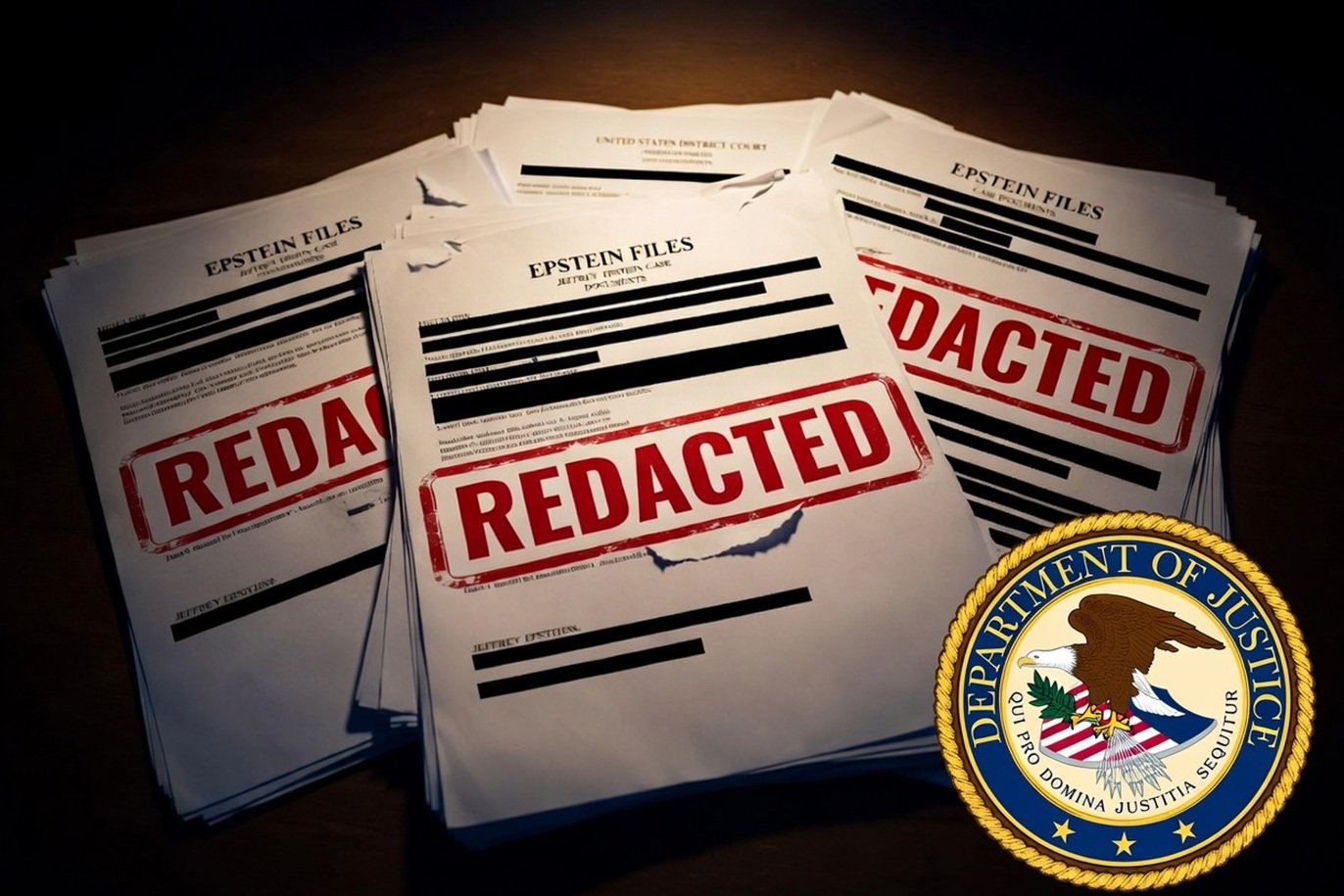

A Federal Judge Orders DOJ to Unredact Key Epstein-Related Records by July 2
Share your love
 -Editorial
A federal judge has ordered the U.S. Department of Justice to either release previously redacted information from records connected to convicted sex offender Jeffrey Epstein or provide a detailed legal explanation for why the material should remain concealed.
U.S. District Judge Emmet Sullivan issued the order following a lawsuit brought by independent journalist Katie Phang, who sought access to documents that remain partially redacted despite federal transparency requirements governing the release of Epstein-related records. The ruling sets up a July 2 deadline for the Justice Department to comply with the court’s directive or prove cause for supporting the redactions.
The Justice Department has announced its intention to appeal the decision.
The lawsuit centers on records that were released with significant portions blacked out, including references to individuals identified as alleged co-conspirators, internal communications, and investigative materials generated during federal inquiries into Epstein’s activities. Phang argued that the continued withholding of information undermines public transparency and prevents a full understanding of the scope of the investigation and the individuals who may have been involved.
Among the documents found in court filings are eight email exchanges that reference a so-called “torture video” and discussions related to the recruitment of minors. The records also include names that were removed from a draft formal accusation prepared during the federal government’s prosecution of Epstein, as well as identities concealed within a 2019 email chain connected to the case.
Another category of records subject to the court’s order involves FBI interview materials concerning allegations made by a woman who claimed she was assaulted by Donald Trump when she was a minor. The allegations have not been independently corroborated, and Trump has repeatedly denied any wrongdoing. The documents include interview notes, transcripts, and supporting materials generated during the federal investigation.
Judge Sullivan’s ruling is based on provisions of the Epstein Files Transparency Act, a law that requires the release of unclassified records related to Epstein and associated investigations. The legislation was enacted amid ongoing public interest in the financier’s criminal activities, his network of associates, and questions surrounding the handling of federal investigations before and after his 2019 death while in federal custody.
In court filings, attorneys for the Justice Department argued that certain redactions remain necessary to protect privacy interests and follow legal obligations concerning victims and witnesses.
Since the first batch of Epstein-related court documents and investigative records was released, public attention has focused on finding individuals mentioned in the files and examining the extent of Jeffrey Epstein’s network of associates. Multiple rounds of document disclosures have included flight logs, contact information, deposition transcripts, court filings, and other records connected to civil lawsuits and criminal investigations. While many names of public figures, business leaders, and politicians appeared in the documents, legal experts and law enforcement officials have repeatedly cautioned that being named in the records does not imply criminal wrongdoing.
Donald Trump and Jeffrey Epstein were social acquaintances in New York and Florida during the 1980s and 1990s and were seen together at various events. Trump has said the two had a falling out and ended their relationship years before Epstein’s 2019 arrest. While Trump’s name has appeared in some Epstein-related records, he has not been charged with any crimes related to Epstein, and he has denied any wrongdoing.