


Brawley Council Directs Staff to Draft Data Center Zoning Regulations
Share your love
-Editorial
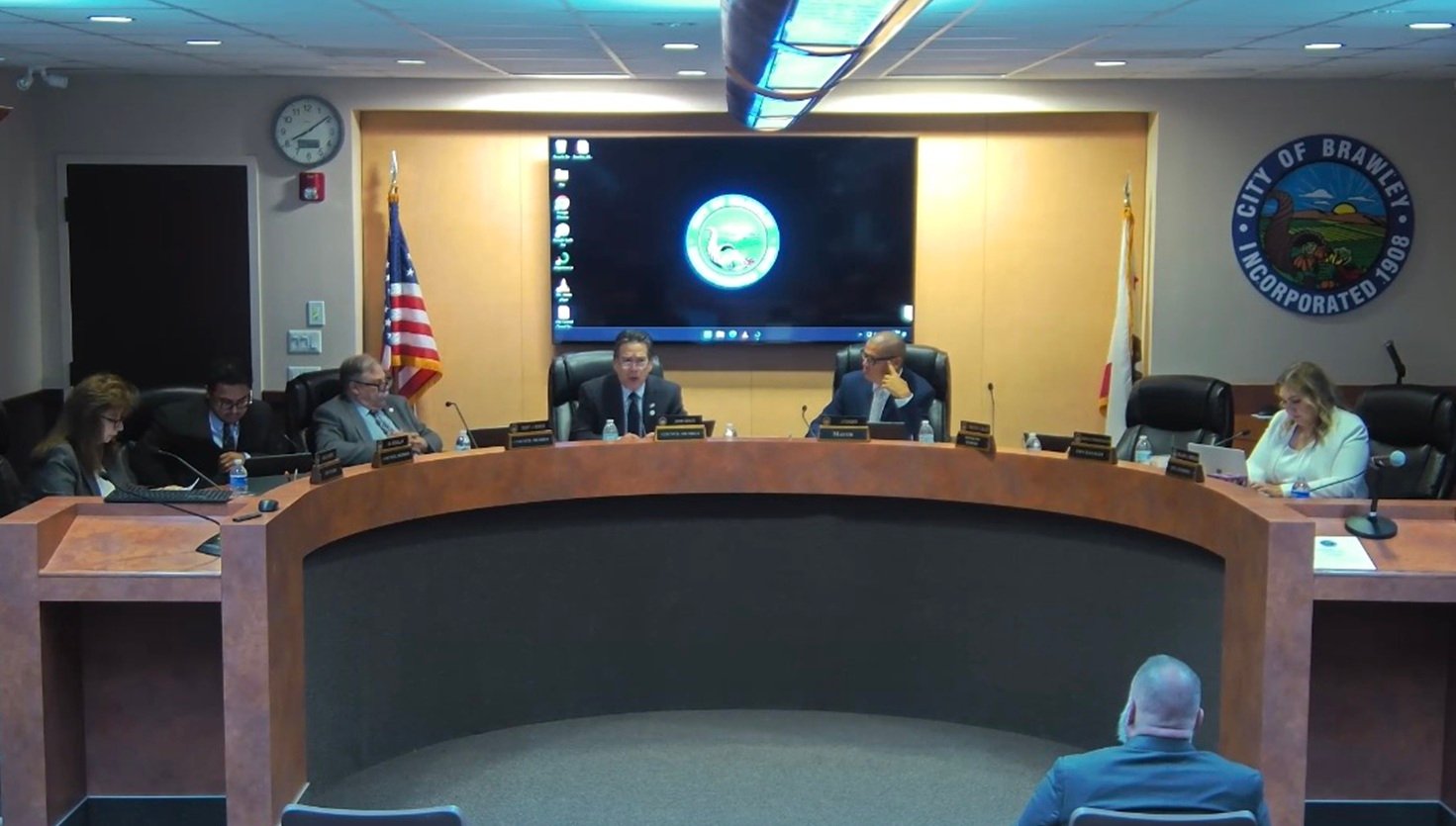
The Brawley City Council unanimously approved a resolution on June 16, directing city staff to begin preparing amendments to the city’s zoning ordinance to regulate large-scale data centers and related supporting infrastructure.
The action follows a June 2 council discussion of a proposed temporary moratorium on large-scale data center development. In a 3-2 vote at that meeting, the council directed staff to remove the moratorium language and instead focus on developing permanent zoning regulations that would provide a framework for evaluating future proposals.
City Attorney William S. Smerdon told the council that the resolution formalizes direction for staff to begin updating the zoning ordinance and allows work to proceed immediately. He said the city’s existing regulations were written before large-scale data centers became common and do not contain provisions tailored to those types of facilities.
Smerdon said the city’s zoning ordinance does not currently address large-scale data centers, making it necessary to update local regulations before any proposals are considered. Smerdon said the proposed amendments would help determine where such facilities could be located, whether they would require conditional use permits, and what review process would apply.
He noted that the council’s direction is to ensure projects undergo a public process that includes notices, hearings and opportunities for community input. Smerdon emphasized that the effort is not tied to any specific project but is intended to establish clear rules for how the city would evaluate future data center proposals. He added that any zoning changes would require review by the Planning Commission and City Council through multiple public hearings before adoption.
Brawley resident Irma Gutierrez urged the City Council to carefully consider public concerns regarding potential large-scale data center development.
“We really ask, as citizens, who are concerned, to please reconsider the proposal, or anything that you have in mind to build one here in our city, or even here in the valley,” Gutierrez said. She asked city leaders to ensure residents have opportunities to participate in the decision-making process, including public hearings and potentially a public vote. “Allow us to come forward and voice our concerns,” she said. Gutierrez cited worries about potential impacts on “our health, water, electricity” and future generations, adding, “I may not know a lot, but I know that my voice matters, not just myself, but everybody else.”
Councilman Gil Rebollar said updating the city’s zoning ordinance would help prevent uncertainty and potential legal disputes regarding future data center proposals.
“There could be some vagueness and misinterpretation that could put us in some legal conflict or litigation,” Rebollar said. “Someone might see, ‘Well, technically, since we don’t have anything, it would fall under this.’” He said establishing clear regulations would provide certainty for both the city and potential developers as officials evaluate how large-scale data centers should be addressed in Brawley’s zoning code.
Speaking during public comment, farmer and commercial property owner Steve Benson voiced support for the Brawley City Council’s efforts to establish data center zoning regulations while urging officials to continue coordinating with regional agencies as they evaluate future development opportunities.
“As the owner of some commercial property in the area and potential annexation property, we’re just trying to understand what the council’s progress is, and we appreciate and applaud your moving forward,” Benson said. He emphasized that his primary interest has been understanding how the city intends to regulate data centers, adding, “The only request we’ve ever made was to understand what the data center zoning was for Brawley. There’s no actual movement of a data center, so just wanted to make that clear.”
Benson also addressed concerns that have been raised regarding infrastructure capacity. He noted that, based on information available to him, the city currently has significant unused water and wastewater treatment capacity. “Currently you guys are only using 50% of your water capacity at your water plant, and I think less than a third of your sewer plant, so I don’t think a data center would have much impact there,” he said.
Regarding potential requirements for renewable energy, Benson suggested such provisions could be difficult to incorporate into a zoning ordinance. “I think the renewable energy would be very difficult, since you guys aren’t an energy provider, to put that in a zoning ordinance,” he said. He also noted that large-scale data centers often require substantial acreage and electrical capacity, which can present challenges for prospective projects.
Benson said he owns property within the city where there has been some interest in developing a smaller-scale data center. However, he believes electrical service capacity remains one of the most significant considerations. “We had some interest in small-scale data centers, but I think the capacity of IID is the biggest issue for any development,” he said.
He encouraged city officials to work closely with the Imperial Irrigation District and monitor discussions taking place at the county level. “Try to work with them. I know they’re working with a lot of cities right now,” Benson said, noting that Imperial County had recently initiated a review of its own data center-related processes. He concluded by encouraging local and county leaders to collaborate on a unified strategy. “Maybe just confer with the county and what they’re doing, and try to have a cohesive look at the whole valley.”
Representatives of the International Brotherhood of Electrical Workers Local 569 also addressed the council, encouraging consideration of workforce safety standards, training requirements, and local hiring provisions as part of future regulations.