


Nine Figures Enter Morena’s Internal Race for Baja California Governorship Ahead of 2027 Election
Share your love
 -Editorial
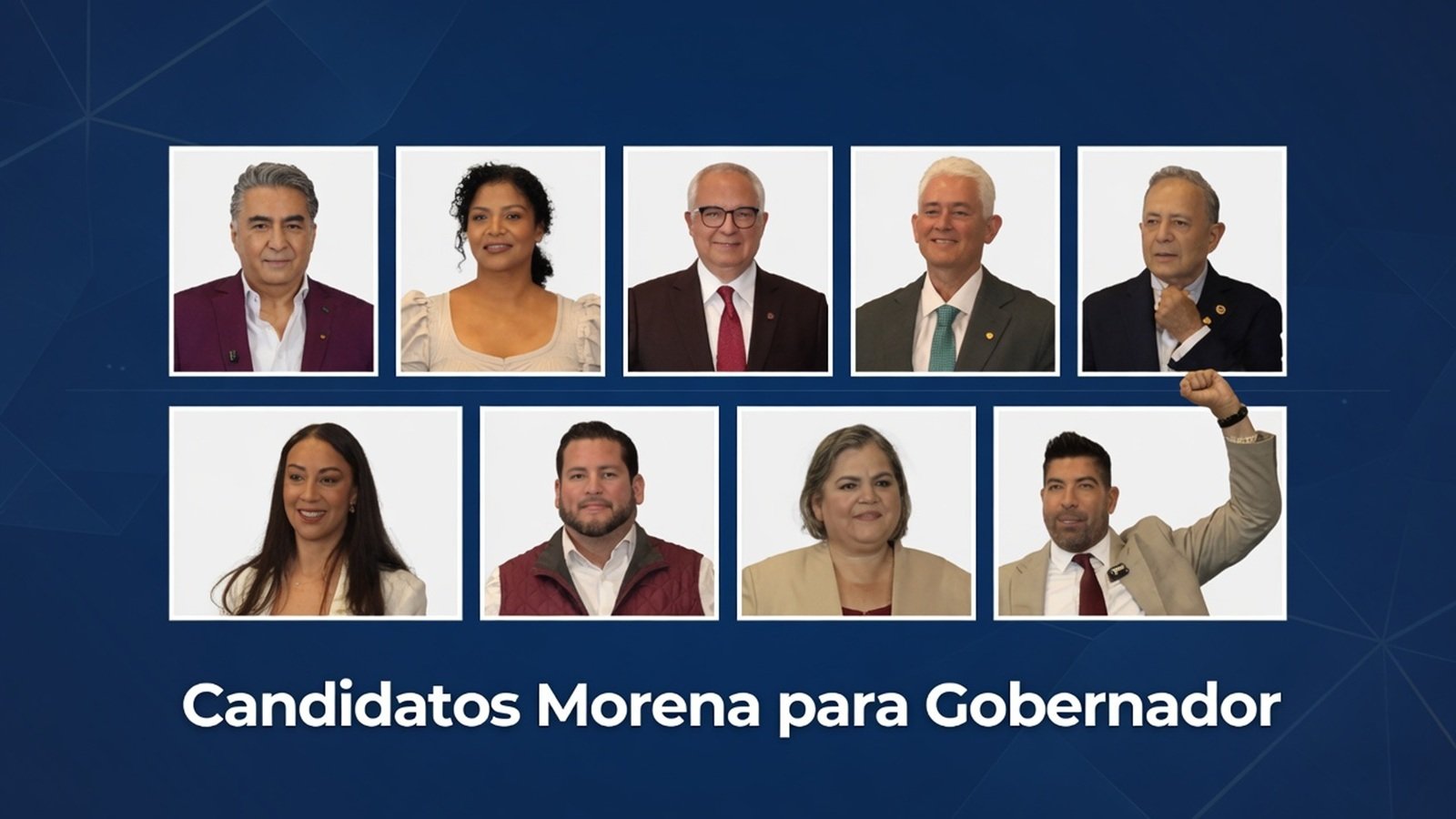
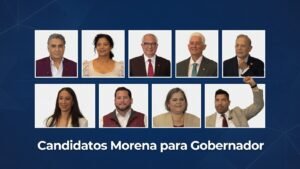
Nine political figures have formally registered in Morena’s internal selection process to determine the party’s candidate for governor of Baja California in the 2027 election, marking the opening stage of what is expected to be a highly competitive and strategically significant contest within Mexico’s ruling political movement.
The registration process began this week before Morena’s National Elections Commission in Mexico City, as part of the party’s national procedure to select what it calls “coordinators for the defense of transformation and sovereignty,” a designation that effectively defines the political standard-bearers who will later transition into official candidates once electoral timelines are established.
Among those who completed their registration are Senator Armando Ayala Robles, Senator Julieta Ramírez Padilla, Tijuana Mayor Ismael Burgueño Ruiz, former Tijuana Mayor Montserrat Caballero Ramírez, federal legislator Evangelina Moreno Guerra, former federal delegate Jesús Ruiz Uribe, former Ensenada Mayor and current Senator Alfredo Álvarez Cárdenas, former mayoral candidate Jorge Ramos Hernández, and Fernando Jorge Castro Trenti, a long-time political figure in the region with prior party and electoral experience.
The field reflects a broad cross-section of Morena’s internal structure in Baja California, bringing together sitting senators, municipal leadership, former local executives, and federal representatives. It also underscores the growing internal competition within the party as it seeks to maintain political dominance in one of Mexico’s most strategically important border states.
Baja California, governed by Morena since 2019, remains a key political and economic hub due to its proximity to California, its industrial base, and its role in cross-border trade and migration. The 2027 gubernatorial race will test the party’s cohesion after years of electoral success in the region, while also revealing the balance of power among its internal factions.
The internal process is unfolding under a new set of party rules designed to standardize candidate selection nationwide. Morena’s leadership has emphasized stricter eligibility requirements, including declarations of good standing, verification of legal records, and commitments to avoid the use of public resources or external advertising to influence internal outcomes. Party officials have also reinforced that the final decision will be based on internal evaluation mechanisms, including surveys and opinion studies, rather than traditional primary elections.
This method, while consistent with Morena’s recent electoral strategy, has also generated internal tension in several states, as aspirants compete in a system where public visibility, political alliances, and internal party positioning often play a decisive role. In Baja California, where multiple prominent figures already hold or have held elected office, the competition is expected to be particularly intense.
Former Governor Jaime Bonilla Valdez publicly accompanied Montserrat Caballero Ramírez during her registration in Mexico City, expressing support for her political trajectory. His involvement highlights the continued influence of former regional leaders in shaping internal party dynamics, even as Morena’s current state leadership, headed by Governor Marina del Pilar Ávila Olmeda, maintains its own political network and institutional influence.
These overlapping political alignments reflect one of the central challenges in Morena’s internal process: managing competing leadership blocs while preserving party unity. In Baja California, analysts have noted that internal differences among key political actors have at times surfaced publicly, creating an environment where candidacies are not only evaluated on popularity or governance experience but also on their ability to navigate intra-party relationships.
Another challenge facing the process is the absence of a clearly defined timeline for the final selection. While the registration window remains open through June 27, the party has not yet announced when it will finalize eligibility lists or how it will formally conduct its internal assessment. This uncertainty adds a layer of strategic calculation for participants, many of whom must balance their public responsibilities with ongoing political positioning.
The race also reflects broader national dynamics within Morena as the party prepares for simultaneous gubernatorial contests across multiple states in 2027. Internal competition has intensified in recent months, with political figures across the country stepping forward early to secure visibility and organizational support within the party structure.
Despite the competitive environment, Morena leaders have consistently framed the process as an effort to preserve internal unity while expanding political participation. However, the growing number of aspirants and the prominence of the candidates involved underscore the difficulty of maintaining cohesion in a rapidly expanding political movement with multiple power centers.
As Baja California approaches another critical electoral cycle, the internal selection process will serve as an early indicator of how Morena manages succession politics in one of its strongest regional strongholds. The outcome will not only determine the party’s gubernatorial candidate but also shape the internal balance of power heading into the 2027 elections, when voters in the state will decide the next chapter of its political leadership.