


MIT and Tec De Monterrey Expand Hub to Digitize Small Retailers in Latin America
Share your love
 -Editorial
The Massachusetts Institute of Technology and Tecnológico de Monterrey announced the formal expansion of a research initiative aimed at digitizing and strengthening millions of small retailers across Latin America, a sector widely known as “nanostores.”
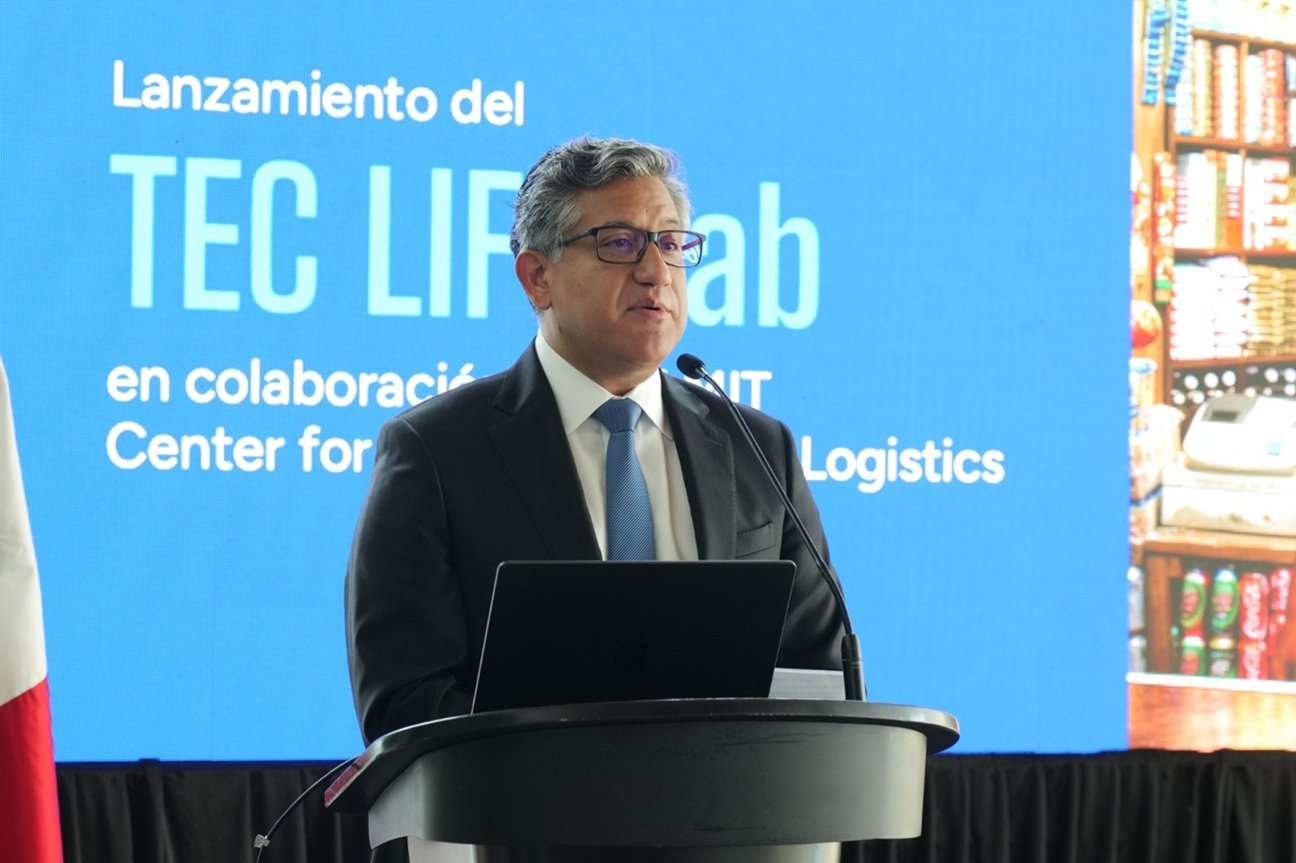
The announcement establishes the TEC LIFT Lab at Tec de Monterrey’s Monterrey campus as a permanent regional base for the MIT Low-Income Firms Transformation (LIFT) Lab, originally developed at MIT’s Center for Transportation & Logistics. The expanded partnership is designed to bring artificial intelligence, advanced logistics research and applied business tools to micro-retailers and small neighborhood food businesses that form a critical part of the region’s informal and semi-formal economy.
Researchers estimate there are nearly 50 million nanostores worldwide, with approximately 5 million located in Latin America. These small businesses—often operating as corner shops, family-run groceries, or informal food vendors—play a central role in daily commerce across the region and serve as key distribution points for fast-moving consumer goods.
Within Latin America, the distribution of nanostores includes an estimated 1.4 million in Mexico, 1.2 million in Brazil, 600,000 in Colombia, 500,000 in Peru, and 400,000 in Argentina, with the remainder spread across Central America and other South American countries. While regions such as Asia account for larger global totals, researchers say Latin America stands out for the economic importance of these stores within consumer markets.
According to project estimates, nanostores account for roughly 50% to 70% of fast-moving consumer goods sales in Latin America, making them a dominant retail channel that in many cases surpasses modern supermarket chains in market share.
Despite their importance to local economies and employment, researchers say the sector faces persistent structural challenges. Many nanostores operate with limited access to technology, rely heavily on cash-based transactions, and lack formal systems for inventory tracking or pricing optimization. These constraints contribute to high vulnerability, with an estimated 30% of such businesses closing within their first five years of operation.
The new TEC LIFT Lab seeks to address those challenges through applied research and technology deployment. Planned work includes the development of inventory management systems tailored to small-scale operations, pricing algorithms adapted to volatile local markets, and logistics tools designed to improve supply chain efficiency at the neighborhood level.
“This project was born when, while researching the configuration of developing countries and given the fact that micro-businesses represent more than 70% of economic activity, and by contrasting the types of companies where most of the knowledge acquired in educational institutions is applied—which are natural to the environment of large corporations—we realized that this did not correspond to the reality of Mexico and other Latin American countries,” said Josué C. Velázquez Martínez, director of the TEC LIFT Lab.
He added that the lab’s mission is to directly address that gap by producing tools designed specifically for micro-retailers. “Our research confronts that gap head-on,” he said. “Through this laboratory, we are developing inventory management tools, pricing algorithms, and last-mile logistics solutions specifically designed for nanostores: the mission that drives us is to elevate the lives of the base of the pyramid.”
The initiative builds on a collaboration between MIT and Tec de Monterrey that has expanded over several years. According to the institutions, more than 1,000 students and 20 faculty members from the School of Engineering and Sciences have participated in LIFT Lab-related projects across 13 campuses. These projects have involved fieldwork and applied research designed to test and implement operational improvements in small retail environments.
In 2023 alone, the collaboration reportedly reached nearly 15,000 nanostores through research and pilot programs. Students from 12 Tec campuses contributed 19 projects selected from more than 2,000 participants, reflecting what both institutions describe as growing engagement in applied logistics and development research.
“This initiative and all those who will participate represent a change in society by supporting micro-businesses and entrepreneurs to specifically strengthen those companies that are currently vulnerable,” said Javier Guzmán, vice president of research at Tec de Monterrey. “We believe this project has enormous relevance for Mexico and Latin America.”
The launch event, held in a hybrid format and streamed through Tec de Monterrey’s LIVE.TEC platform, included participation from academics, students, and institutional partners across the Americas. The program also featured remarks from MIT researchers involved in the LIFT initiative.
Matthias Winkenbach, a senior research scientist and director of research at MIT’s Center for Transportation & Logistics, described the expansion of the lab in Monterrey as a significant step in scaling the initiative across the region. He said the work being developed through LIFT has the potential to transform how small retailers operate in low-income markets.
“This initiative essentially has the potential to change the world,” Winkenbach said. He added that the program could reshape operational systems within a key segment of the economy while improving outcomes for business owners and workers in vulnerable sectors.
Researchers involved in the initiative say the broader goal is to improve the resilience and productivity of micro-retailers, which they describe as a foundational component of supply chains across Latin America. By introducing digital tools and logistics systems traditionally used by larger corporations, the program aims to reduce inefficiencies and improve survival rates among small businesses.
The institutions said the TEC LIFT Lab will serve as a long-term regional platform for research, training, and technology deployment focused on small-scale commerce. The expansion reflects a broader effort to connect academic research with practical applications in emerging markets, particularly in sectors that have historically lacked access to advanced operational tools.