


Trump and Xi Meet in Beijing Amid Global Tensions, Trade Disputes and Iran Conflict
Share your love
-Editorial
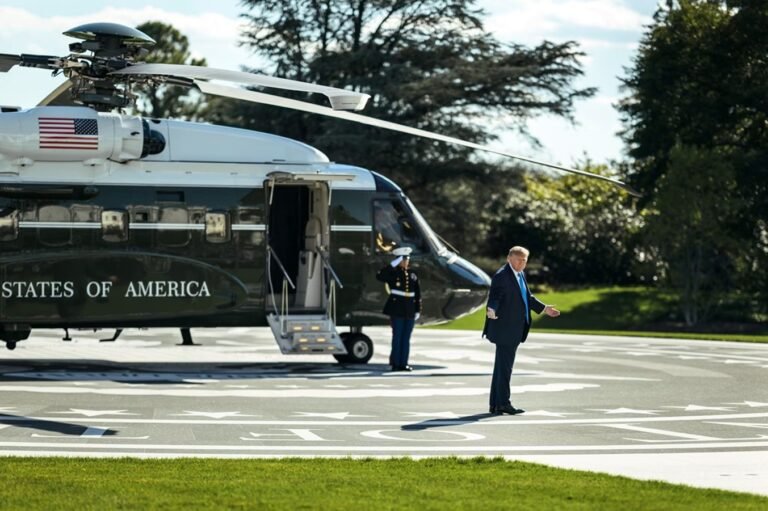
President Donald Trump arrived in China this week for a four-day state visit that has drawn international attention amid ongoing geopolitical tensions, trade disputes, and conflicts in the Middle East and Eastern Europe.
The visit, taking place from May 13 to May 15, marks Trump’s second official state visit to China and the first during his second presidency. His previous visit occurred in November 2017, when he was hosted by Chinese President and Communist Party General Secretary Xi Jinping during Trump’s first term in office. It is also the first time a sitting U.S. president has visited China in nearly nine years.
The summit is being closely watched by governments and financial markets worldwide as Washington and Beijing attempt to manage a relationship shaped by economic competition, military tensions in the Indo-Pacific region, disputes over Taiwan, and broader concerns surrounding global security and trade stability.
Trump and Xi first met during Trump’s second presidency at the Busan Summit on Oct. 30, 2025. During that meeting, Trump announced plans to visit China in 2026 and extended an invitation for Xi to visit the United States at a later date.
The state visit was initially expected to occur during the first week of April, but it was postponed until May amid the ongoing 2026 Iran war and growing regional instability. The White House formally announced the revised dates on March 25.
In the months leading up to the summit, several high-level diplomatic meetings were held between U.S. and Chinese officials. Secretary of State Marco Rubio met with Chinese Foreign Minister Wang Yi in February to discuss bilateral relations and preparations for the visit. Wang and Rubio later held a phone call on April 30 to continue discussions regarding the summit agenda and future diplomacy between the two governments.
A bipartisan delegation of U.S. senators led by Sen. Steve Daines also traveled to Beijing and Shanghai earlier this month. The delegation met with Chinese Premier Li Qiang and senior Chinese officials while visiting technology companies and discussing economic cooperation.
As preparations for the summit continued, security concerns related to the Iran conflict became a major focus for both governments.
Defense Secretary Pete Hegseth stated in April that China had provided assurances to the United States that it would not supply weapons to Iran during the conflict, including surface-to-air missile systems. Hegseth described the communication between Trump and Xi as direct and important to maintaining regional stability ahead of the Beijing summit.
Analysts have noted that the war in Iran has shifted U.S. military attention and resources toward the Middle East, raising questions about the balance of American military commitments in Asia and the Pacific. Some foreign policy experts have argued that the situation could increase China’s leverage in negotiations with Washington, particularly regarding Taiwan and regional security.
Trump traveled to Beijing with a large delegation of administration officials, advisers, and business executives.
The official delegation included Rubio, Hegseth, Treasury Secretary Scott Bessent, U.S. Trade Representative Jamieson Greer, and several White House aides and national security advisers.
The visit also drew attention because Rubio, who has previously been sanctioned by China, joined the delegation. Chinese media reports suggested logistical accommodations may have been made regarding the transliteration of Rubio’s name for diplomatic purposes.
Hegseth’s participation was also notable, as he became the first U.S. defense secretary to accompany a president on a state visit to China since President Richard Nixon visited the country in 1972.
Trump’s son Eric Trump and daughter-in-law Lara Trump also joined the visit in what representatives for the Trump Organization described as a personal capacity.
Several prominent U.S. business leaders accompanied the delegation, including Elon Musk, Tim Cook, Jensen Huang, Larry Fink, Stephen Schwarzman, and David Solomon.
Musk and Huang reportedly traveled aboard Air Force One with Trump.
Trump arrived at Beijing Capital International Airport on Tuesday evening and was welcomed by Chinese Vice President Han Zheng, Chinese Ambassador to the United States Xie Feng, senior Foreign Ministry officials, and U.S. Ambassador to China David Perdue.
The arrival ceremony included a military honor guard, a military band, and approximately 300 Chinese students waving American and Chinese flags.
Following the ceremony, Trump’s motorcade traveled to the Four Seasons Beijing Hotel, while other members of the delegation stayed at the Kempinski Hotel Beijing Yansha Center.
Days before Trump’s arrival, observers noted increased signs of security preparations in Beijing, including the arrival of U.S. Air Force C-17 aircraft carrying presidential support equipment and sightings of U.S. government vehicles on Beijing highways.
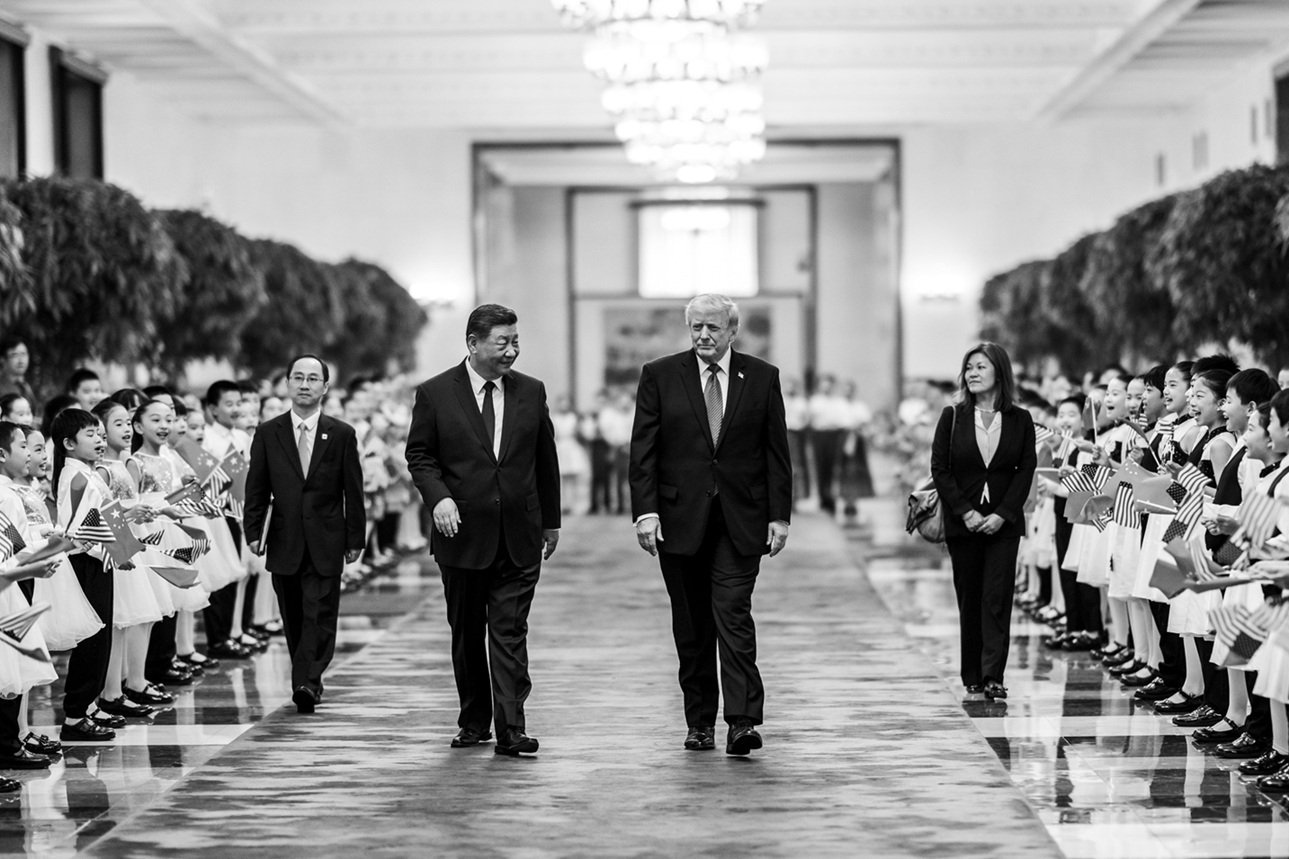
On Wednesday morning, Trump arrived at the Great Hall of the People, where Xi formally welcomed him with a ceremony that included the national anthems of both countries, a review of troops from the People’s Liberation Army, and greetings from children waving Chinese and American flags.
The two leaders then entered the Great Hall for formal talks attended by senior officials from both governments.
The Chinese delegation included Wang Yi, Vice Premier He Lifeng, and senior Communist Party official Cai Qi. The U.S. delegation included Rubio, Hegseth, Greer, and Bessent.
During his opening remarks, Xi described the current international environment as unstable and undergoing a major transformation. He said the world was closely watching the summit and emphasized the importance of avoiding conflict between the two powers.
Xi said China and the United States should pursue what he described as a “constructive relationship of strategic stability,” characterized by manageable competition and long-term peace. He also stated that the Taiwan issue remains the most important and sensitive issue in bilateral relations.
“The Taiwan question is the most important issue in China-U.S. relations,” Xi said during the meeting, according to Chinese state media. He warned that mishandling the issue could lead to broader instability between the two nations.
Trump praised Xi during his remarks and described the summit as one of the most significant meetings in the world. He expressed hope that relations between Washington and Beijing could improve further during his second term.
“You’re a great leader,” Trump told Xi during the opening session.
The leaders then met privately behind closed doors for approximately two hours, twice the length originally scheduled.
According to statements released after the meeting, the discussions focused on economic cooperation, regional security, fentanyl trafficking, and ongoing global conflicts.
The White House said both countries agreed that Iran should not obtain a nuclear weapon and emphasized the importance of keeping the Strait of Hormuz open to international shipping and energy markets.
Chinese officials reportedly expressed opposition to efforts to militarize the strait or impose tolls on international shipping routes.
The White House also said the two sides discussed expanding opportunities for U.S. companies operating in China and increasing Chinese investment in American industries.
Trump stated before the visit that he planned to discuss U.S. arms sales to Taiwan with Xi, a topic that remains one of the most contentious issues between the two governments.
On the day Trump arrived in Beijing, the Chinese Embassy in Washington posted a statement on social media emphasizing what it described as “four red lines” in U.S.-China relations, including Taiwan, democracy and human rights issues, political systems, and China’s development interests.
Following the talks, Xi met separately with U.S. business executives accompanying the delegation and told them China would continue opening its economy to foreign investment.
Trump and Xi later visited the Temple of Heaven, one of Beijing’s most historic landmarks. Trump described the site as “beautiful” and “incredible” during remarks to reporters.
The visit made Trump the second U.S. president to tour the Temple of Heaven after President Gerald Ford visited the location in 1975.
Later Wednesday evening, Xi hosted Trump at a state banquet in the Golden Room of the Great Hall of the People.
During the dinner, Xi said China’s national rejuvenation goals and Trump’s “Make America Great Again” slogan could coexist and contribute to cooperation between the two nations.
Xi described the China-U.S. relationship as one of the most important bilateral relationships in the world, saying its outcome would affect both countries and the broader international community.
Trump thanked Xi for what he called a “magnificent welcome like no other” and formally invited Xi and the Chinese first lady Peng Liyuan to visit the White House on Sept. 24, 2026.
The summit took place as the United States and China continue to navigate disputes involving tariffs, technology restrictions, military activity in the South China Sea, and China’s relationships with Russia, Iran, and North Korea.
On Thursday, Reuters reported that the U.S. Department of Commerce had approved several Chinese companies, including Alibaba Group, Tencent, ByteDance, and JD.com, to purchase NVIDIA H200 chips through approved distributors.
An analysis published before the summit by the Council on Foreign Relations said major disputes remain over trade practices, Taiwan, freedom of navigation in the South China Sea, and China’s economic and strategic ties with Russia, Iran, and North Korea.