



Supreme Court Tightens Standards in Louisiana Redistricting Case, Raising New Questions for Voting Rights and 2026 Elections
Share your love
 -Editorial
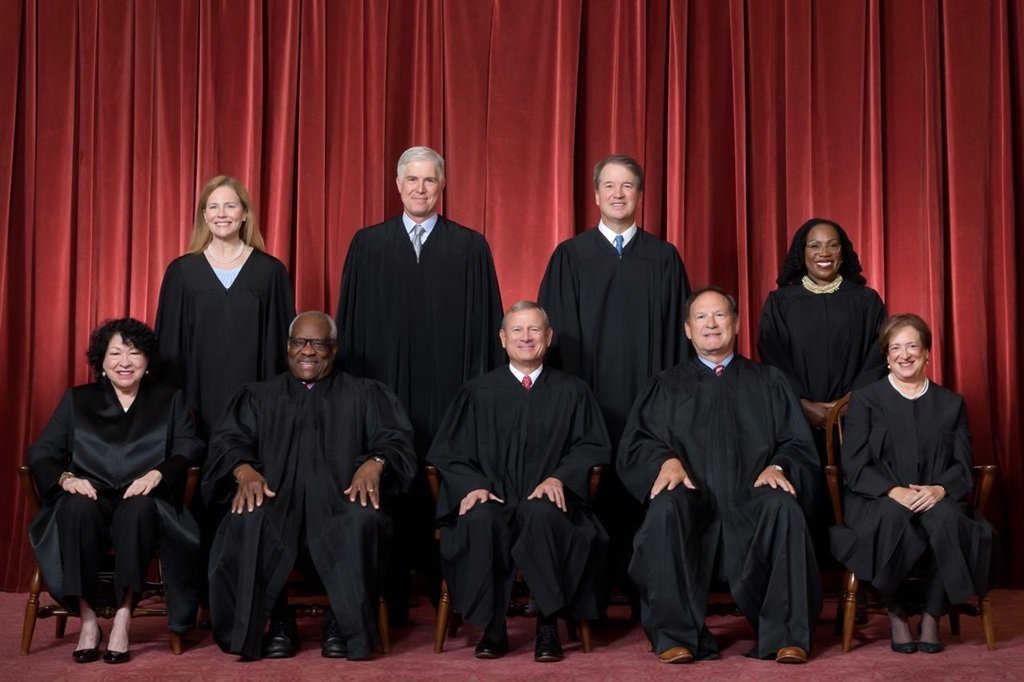
The U.S. Supreme Court has issued a consequential ruling that reshapes how voting rights claims can be brought under federal law, striking down Louisiana’s most recent congressional map while raising the bar for future challenges. In a 6–3 decision in Louisiana v. Callais, consolidated with Robinson v. Callais, the Court ruled that the state’s creation of a second majority-Black congressional district constituted an unconstitutional racial gerrymander, even as it reaffirmed the continued validity of Section 2 of the Voting Rights Act of 1965.
Writing for the majority, Justice Samuel Alito concluded that while compliance with the Voting Rights Act remains a legitimate goal, race cannot be the predominant factor in redistricting decisions unless strict constitutional standards are met. Crucially, the ruling introduces a more demanding requirement for plaintiffs: those challenging electoral maps must now demonstrate that lawmakers intentionally discriminated against minority voters because of race, not merely that the outcome diluted minority voting strength.
This shift carries profound implications. For decades, courts relied on the framework established in Thornburg v. Gingles (1986), which allowed plaintiffs to prevail by showing that minority voters were sufficiently large and cohesive, and that voting patterns enabled the majority to usually defeat their preferred candidates. The new ruling does not discard that framework but narrows its practical application by requiring stronger evidence of discriminatory intent. In doing so, the Court draws a sharper line between racial gerrymandering, which is unconstitutional, and partisan gerrymandering, which it declared nonjusticiable in Rucho v. Common Cause (2019).
The distinction matters because race and political affiliation are often closely aligned, particularly in Southern states like Louisiana. Under the Court’s reasoning, maps that disadvantage minority voters may now be defended as partisan rather than racial decisions, placing them beyond the reach of federal courts. Critics argue this creates a legal gray area where practices that disproportionately affect minority communities may evade scrutiny if framed as a political strategy
In dissent, Justice Elena Kagan, joined by Justices Sonia Sotomayor and Ketanji Brown Jackson, warned that the decision significantly weakens one of the federal government’s most important tools for combating racial discrimination in voting. She argued that requiring proof of intent imposes an almost insurmountable burden, as direct evidence of discriminatory motives is rarely explicit in legislative processes. The dissent cautioned that the ruling risks allowing states to sidestep accountability for maps that effectively dilute minority voting power.
The Louisiana case itself reflects years of legal and political conflict. Following the 2020 census, which showed that Black residents comprise roughly one-third of the state’s population, lawmakers initially approved a congressional map with only one majority-Black district out of six. Civil rights groups successfully challenged that map under Section 2, leading a federal court to order the creation of a second such district. After further litigation—and in the wake of the Court’s 2023 decision in Allen v. Milligan, which upheld a similar Section 2 claim in Alabama—Louisiana adopted a revised map in 2024.
That revised map, however, became the subject of a new challenge, this time from voters who argued it relied too heavily on race. A federal panel agreed, and the Supreme Court ultimately affirmed that view. Although the map was temporarily used in the 2024 elections due to timing constraints, the Court’s final ruling now sets a precedent that will influence redistricting nationwide.
The broader concern emerging from this decision is its potential impact on democratic representation. By tightening the legal standard for proving violations, the Court may reduce the number of successful challenges to district maps, even in cases where minority communities experience diminished electoral influence. This could lead to fewer majority-minority districts in states where such configurations were previously required to ensure fair representation.
Looking ahead to the 2026 election cycle, the immediate effects may be uneven but significant. Many states have already finalized their district maps, limiting short-term disruption. However, the ruling is likely to shape ongoing and future litigation, particularly in regions with histories of voting rights disputes. States currently considering redistricting adjustments—or facing pending lawsuits—may now feel emboldened to adopt maps that prioritize partisan advantage while avoiding explicit racial considerations.
This dynamic introduces potential risks to electoral fairness. If minority voters find it more difficult to challenge maps that dilute their influence, their ability to elect preferred candidates could be reduced, altering the composition of congressional delegations. Over time, such shifts may affect policy priorities, resource allocation, and public trust in electoral systems.
The decision also raises questions about the evolving role of the Voting Rights Act. Once considered a cornerstone of civil rights protections, the law has been incrementally narrowed by a series of Supreme Court rulings over the past decade. Each decision has refined and, in some cases, restricted the mechanisms available to enforce protections against racial discrimination in voting. This latest ruling continues that trajectory, emphasizing constitutional limits on the use of race while complicating the enforcement of statutory safeguards.
Political reactions underscore the stakes. Supporters of the ruling argue it reinforces constitutional principles by preventing race from dominating redistricting decisions. Critics contend it undermines decades of progress by making it harder to address structural inequities in electoral systems. Both perspectives point to a central tension: how to balance the prohibition on racial classifications with the need to remedy the enduring effects of discrimination.
As the nation approaches the 2026 elections, the practical consequences of this decision will become clearer. What is already evident is that the legal landscape governing voting rights has shifted once again—placing greater emphasis on intent, narrowing avenues for legal challenges, and leaving unresolved questions about how best to ensure equal representation in an increasingly polarized political environment.