



Music Educator Gerson Ramirez Participates in International Teachers Band at Rose Parade
Share your love
 -Editorial
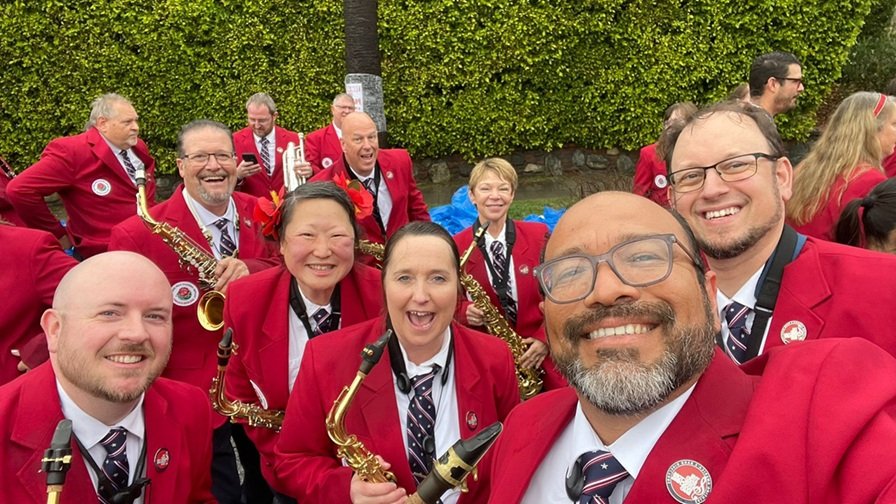
When the internationally televised Rose Parade marched down Colorado Boulevard on New Year’s Day, one ensemble drew attention not only for its musical precision but for who was playing the instruments.
Among the musicians was Gerson Ramirez, a dedicated music educator from Mexicali, selected to participate in an international band formed to honor band directors and music teachers. This unique ensemble brought together educators from across the United States and abroad to perform at official Tournament of Roses events surrounding the iconic parade.
Ramirez’s invitation came as part of a project that began several years ago as an informal collaboration among U.S. educators connected through mobile messaging and social media. The initiative aimed to create a pathway for teachers—not students or professional musicians—to participate in one of the nation’s most prominent cultural events.
Early versions of the project were modest, organizers said, with roughly 200 educators initially expressing interest. After a successful early appearance, the effort went dormant for a period before being revived and formalized into a structured program with clear selection criteria and leadership.
This year, organizers expanded the call for participants, focusing on educators with notable experience in music instruction, leadership roles, and community-based or international projects. Ramirez submitted a proposal detailing his work with young musicians and his leadership of music education programs abroad, including initiatives in Europe.
He was selected as one of five Mexican educators to join the band, representing northern Mexico alongside colleagues from Puebla and Xalapa, Veracruz. Together, they joined teachers from all 50 U.S. states—including Alaska and Hawaii—making the ensemble one of the most geographically diverse teacher groups ever assembled for the Rose Parade.
In the days leading up to the parade, the educators participated in multiple official events, rehearsals, and public presentations. The band was consistently introduced as an ensemble composed of music teachers from across the United States and Mexico—a distinction highlighted during televised coverage.
Ramirez said the acknowledgment of international participation marked a meaningful shift. “It reflected a broader effort to emphasize cultural exchange and the shared role of music education across borders,” he said.
The project was framed as a tribute to music educators and their long-standing contributions to schools, youth development, and cultural preservation. Organizers emphasized the role of music teachers in fostering discipline, teamwork, and creativity—skills that extend far beyond the classroom or performance hall.
Unlike competitive or professional music programs, the teachers’ band focused less on technical perfection or career advancement and more on collective representation and respect for the profession. Participants rehearsed and performed as peers, many of whom spend their careers in classrooms, community centers, and school bands rather than on public stages.
“The experience was extraordinary in its organization, professionalism, and respect for music educators,” Ramirez said. “Everything was meticulously planned, from schedules to support at every turn. Even though we came from different countries, music was our common language, and everyone shared the same mission.”
He added that teachers were treated “like stars,” an experience that moved him deeply. “As school music teachers, we’re used to loading buses, moving instruments, and working quietly behind the scenes. But there, we were recognized for shaping generations through culture and music. We don’t teach for awards or Grammys—we teach music, teamwork, and life from the heart. The greatest recognition is always a student saying, ‘Thank you, professor. I loved your class.’”
For Ramirez, participating in the Rose Parade offered more than the thrill of performing on an internationally televised stage. It represented the acknowledgment of the global community of educators and the vital role music teachers play in inspiring creativity, cultural understanding, and lifelong skills.
“This is a celebration of teachers’ dedication and the cultural impact of music education,” Ramirez said. “It shows that what we do in classrooms every day resonates far beyond school walls and across borders.”
As the parade concluded and the television coverage aired worldwide, Ramirez reflected on the honor of representing Mexico and the music education community. “Being part of this band reminded me why we dedicate our lives to teaching. It’s not about recognition; it’s about shaping hearts, minds, and communities. Music connects us, and education empowers us. This experience reinforced that truth.”
Through his participation in the international teachers’ band at the Rose Parade, Gerson Ramirez not only celebrated his own achievements but also elevated the role of educators everywhere—showing that behind every note played is a teacher nurturing talent, fostering discipline, and inspiring the next generation of musicians.