


Making America Safe Again: U.S. Citizenship and Immigration Services End-of-Year Review Demonstrates Impact of Rigorous Immigration Crackdown
Share your love
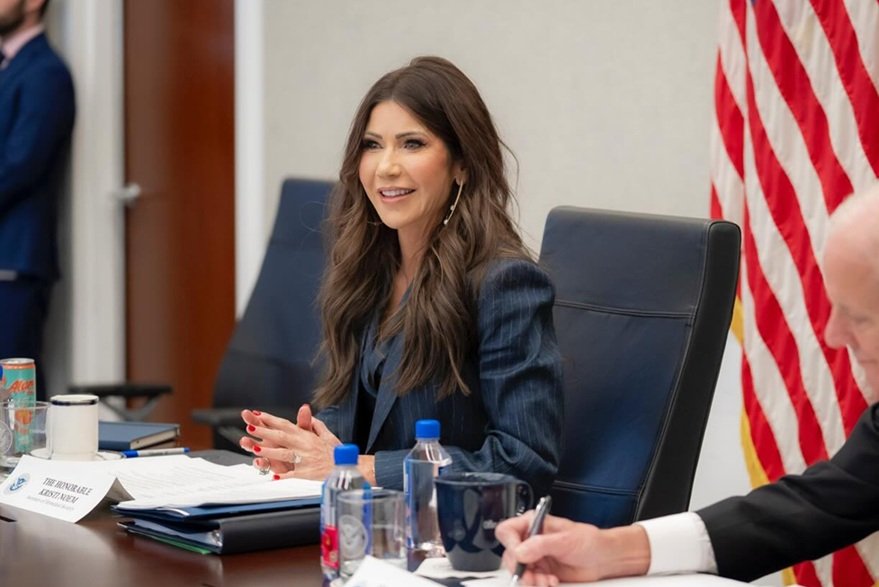
 Under the leadership of Secretary of Homeland Security Kristi Noem and USCIS Director Joseph Edlow, the agency has enhanced immigration screening and vetting protocols to protect communities and national security and has advanced immigration policies that put the national interest first.
WASHINGTON— As the end of 2025 approaches, U.S. Citizenship and Immigration Services would like to highlight key accomplishments for the year, including enhanced screening and vetting of aliens, increased coordination with our Department of Homeland Security immigration enforcement partners, and common-sense regulatory and policy changes that restore integrity to America’s immigration system. Explore the highlights in this infographic.
“With Secretary Noem in charge of homeland security, USCIS has taken an ‘America First’ approach, restoring order, security, integrity, and accountability to America’s immigration system, ensuring that it serves the nation’s interests and protects and prioritizes Americans over foreign nationals,” said USCIS Director Joseph B. Edlow. “The Biden administration spent four years dismantling, exploiting, and undermining America’s immigration system, flooding our country with criminal aliens. Under President Trump and Secretary Noem’s leadership, our border is secure, integrity has been restored to our immigration system, and the safety of our homeland comes first.”
Protecting American Communities from Threats to Public Safety and National Security
“Protecting Americans is at the center of everything we do at USCIS. We are committed to safeguarding public safety and national security by making sure every alien undergoes the most rigorous vetting and screening processes possible,” said Edlow.
Within hours of the Nov. 26 attack where an Afghan national murdered one National Guard member and severely wounded another, Secretary Noem directed USCIS to put asylum processing on hold for aliens from every country, implemented a full-scale reexamination of every Green Card for aliens from every presidentially designated high-risk country, and placed a hold on the processing of immigration applications and petitions for all Afghan nationals and aliens from those countries of concern. The agency also implemented critical national security measures requiring USCIS officers to consider negative country-specific factors when vetting aliens from those 19 high-risk countries, ensuring that USCIS can more meaningfully assess whether an alien is a threat to public safety or national security.
With the support of Secretary Noem, USCIS announced the creation of a new vetting center on Dec. 5 to enhance screening and vetting of immigration applications, with a focus on identifying terrorists, criminal aliens, and other threats to public safety. The center will leverage advanced technologies and work closely with law enforcement and intelligence partners to strengthen national security and uphold the integrity of the U.S. immigration system.
USCIS has referred over 14,400 aliens to U.S. Immigration and Customs Enforcement since Jan. 20 for public safety, national security, and fraud concerns, including 182 aliens who were confirmed or suspected to be national security risks. With guidance from Secretary Noem, the agency has been actively collaborating with other agencies on immigration enforcement and public safety efforts, resulting in over 2,400 arrests at USCIS field offices since Jan. 20.
USCIS has begun recruiting Homeland Defenders, who will better support the agency’s mission and bolster efforts to combat fraud and other threats. Since launching the hiring campaign on Sept. 30, USCIS has received more than 50,000 applications — the highest in agency history. The first Homeland Defenders began reporting for duty in early December 2025.
USCIS is exercising new law enforcement authorities delegated by Secretary Noem and is hiring a new team of special agents who will investigate and refer immigration law violators for prosecution.
Under an updated policy confirming USCIS’ role as an immigration enforcement agency, the agency’s officers are once again empowered to enforce immigration law by issuing Notices to Appear. And, they have done so in historic numbers.Since Jan. 20, USCIS officers have issued approximately 196,600 Notices to Appear to place aliens in removal proceedings.
USCIS has also aligned immigration policy with American values, issuing policy guidance emphasizing that there is no room in America for aliens who espouse anti-American ideologies or support terrorist organizations.
USCIS launched an online process for aliens to finally comply with a longstanding alien registration requirement that helps the government track and manage their presence to more effectively enforce immigration law, supporting national security and public safety efforts.
Declaring War on Fraud, Addressing Vulnerabilities, and Closing Loopholes
Director Edlow, with backing from Secretary Noem, has declared war on immigration fraud. Under his leadership, USCIS is committed to pursuing those who exploit, abuse, and undermine the integrity of the immigration system. There were more fraud referrals to law enforcement in the past year than under the entirety of the Biden administration. Since Jan. 20, USCIS officers have made over 29,000 fraud referrals to the USCIS Fraud Detection and National Security (FDNS) Directorate. FDNS has completed investigations on more than 19,300 fraud cases and identified fraud in 65% of them. FDNS also completed more than 6,500 site visits and conducted over 19,500 social media checks of aliens’ online posts, looking for national security, fraud, and anti-American concerns.
These enhanced measures, along with other policies implemented by Secretary Noem across the Department of Homeland Security, were instituted to protect American communities from potential threats, reinforce the integrity of the U.S. immigration system, and ensure USCIS only approves immigration applications and petitions for qualified aliens.
USCIS made history with its fraud investigation Operation Twin Shield, the agency’s largest enforcement operation to date. Launched in the Minneapolis-St. Paul area, this targeted operation uncovered everything from marriage fraud to misuse of H-1B work visas and student visas, and even identified an alien with ties to terrorism who was later detained by ICE. USCIS focused on more than 1,000 cases that had fraud or ineligibility indicators, attempted over 2,000 site visits to homes and workplaces, and completed nearly 1,500 in-person interviews with aliens during the operation. USCIS found evidence of fraud, noncompliance with immigration law, or public safety or national security concerns in hundreds of cases. Operation Twin Shield has so far led to the denial of immigration benefits, the issuance of numerous Notices to Appear, and nearly a dozen arrests by ICE. USCIS also gained significant intelligence and evidence that can be used to ensure greater accountability and justice in the ensuing months. This is just one of the many successful operations conducted across DHS under Secretary Noem’s leadership.
USCIS also acted quickly to close policy loopholes and address program vulnerabilities.
The agency strengthened policy guidance to ensure there is no legal defense for a false claim of U.S. citizenship, with USCIS officers only considering age or mental capacity to assess if a claim was made intentionally to gain a government benefit. Falsely claiming U.S. citizenship allows aliens unlawful access to services and privileges reserved only for American citizens.
The agency enhanced screening measures to vet marriages and family relationships to ensure they are genuine, verifiable, and compliant with all applicable laws. Aliens seeking legal immigration status through family relationships or marriage must prove their relationship is genuine and not a scheme for immigration fraud.
USCIS changed its regulation to ensure that aliens will no longer receive an automatic extension of their employment authorization when seeking renewal in certain employment authorization categories. This ensures that the government is not automatically allowing aliens to work in the U.S. without further screening and vetting.
The agency reduced the maximum validity period for certain employment authorization documents from 5 years to 18 months to ensure more frequent vetting and screening of aliens. This change strengthens our ability to deter fraud and identify individuals with potentially harmful intent and addresses the security risks posed by the previous lengthy validity period.
Ending Exploitation of Immigration Programs
USCIS is advancing the administration’s and Secretary Noem’s goal of ending the abuse and exploitation in certain immigration programs. This includes stopping broad abuse of humanitarian parole authority and terminating the family reunification and the Cuban, Haitian, Nicaraguan, and Venezuelan (CHNV) parole programs. Parole was never intended to be used in this way, and DHS is returning parole to a case-by-case basis as intended by Congress.
Temporary Protected Status (TPS) was always meant to be temporary, and the agency is ending the exploitation and abuse of TPS by ensuring that it is only granted as intended by Congress. Secretary Noem ended TPS for Afghanistan, Burma, Cameroon, Ethiopia, Haiti, Honduras, Nepal, Nicaragua, South Sudan, Syria, and Venezuela.
USCIS continues to encourage aliens whose parole or TPS was terminated to use the U.S. Customs and Border Protection CBP Home app to report their departure from the United States.
Upholding the Integrity of the Naturalization Process
On Sept. 17, USCIS announced a revised version of the naturalization test that expanded the question bank from 100 to 128 questions, increased the number of questions on each test from 10 to 20, raised the passing score from 6 to 12 correct responses, and revised the questions to ensure the test provides a more meaningful assessment of the alien’s knowledge and understanding of U.S. history and government. Naturalization is a privilege, and the new test reinforces the integrity of the naturalization process by ensuring that new citizens understand the rights and responsibilities that come with this privilege.
Pursuant to long-neglected statutory authority, USCIS also restored the practice of conducting neighborhood investigations of potential new citizens. The purpose of a neighborhood investigation is to verify aliens’ eligibility for naturalization by reviewing their residency, moral character, loyalty to the U.S. Constitution, and commitment to the nation’s well-being. These investigations are vital to maintaining the integrity of the naturalization process, assuring assimilation, and safeguarding the value of American citizenship. The agency began conducting neighborhood investigations in November 2025.
USCIS is also holding aliens accountable when they falsely claim U.S. citizenship for any reason during the naturalization process. This reinforces the fundamental principle that lying about being a U.S. citizen, including in an attempt to vote in elections, is a clear violation of good moral character that will not be tolerated and will lead to the denial of a naturalization application.
Putting American Communities and Workers First
USCIS is ensuring the integrity of America’s electoral process by combating voter fraud and preventing aliens from voting. The agency launched enhancements to the Systematic Alien Verification for Entitlements (SAVE) service that allow states to verify citizenship using the last four digits of Social Security numbers, run queries in bulk, and use SAVE at no charge. And by allowing states to review and verify their voter rolls, this administration is doing more to ensure the integrity of elections than any previous administration. Since these changes, SAVE has processed over 48 million voter verification queries, with 24 states signing memorandums of agreement for voter verification with USCIS.
USCIS is also ensuring that voter registration services at administrative naturalization ceremonies remain strictly nonpartisan and are conducted only by state and local election officials. This practice reinforces the integrity of the naturalization process and safeguards the impartiality of voter registration for America’s newest citizens.
USCIS is cracking down on public benefits abuse. On Sept. 4, the agency reaffirmed long-standing policy that aliens in the United States should be self-reliant and government benefits should not incentivize immigration. On Sept. 25, USCIS also reminded individuals who contractually agree to financially sponsor an alien that they can be sued to recover the cost of any benefits an alien they sponsor accesses.
Additionally, DHS proposed a rule on Nov. 19 to rescind the 2022 Public Charge final rule and restore USCIS’ discretion when making a determination whether an alien seeking legal status in the United States would become reliant on government assistance. To further preserve public benefits and support the identification of potential fraud, federal agencies responsible for providing oversight to benefit-granting agencies ran nearly 206 million SAVE queries during calendar year 2025.
Since July 2025, USCIS has been implementing the new fees established under President Trump’s One Big Beautiful Bill Act, enacted by Congress as H.R. 1, collecting millions of dollars to pay down the national debt and fund additional immigration enforcement resources.
DHS proposed a new rule to prioritize allocation of H-1B visas to higher-skilled and higher-paid aliens, which will better protect wages, working conditions, and job opportunities for American workers.
DHS published a critical final rule enabling USCIS to streamline the process for agricultural work visas that supports America’s vital agricultural industry.
Getting Results for America
“USCIS’ end-of-year review demonstrates enforcement actions and policy changes that crack down on immigration fraud, strengthen vetting, and protect American communities. These efforts underscore President Trump and Secretary Noem’s commitment to restoring integrity and putting national security and the interests of Americans first,” said Edlow.
For more information on USCIS and its programs, please visit uscis.gov or follow us on X, Instagram, YouTube, Facebook and LinkedIn.