


Baja California Advances $681 Million Project to Improve Tijuana River Sanitation
Share your love
 -Editorial
Baja California officials are advancing a major wastewater infrastructure project intended to improve sanitation in the Tijuana River and environmental conditions in the binational border region.
The Tijuana River Separation System is designed to remove up to 1,100 liters per second of treated water from the river channel and transport it to a designated site for final disposal, according to the Baja California state government.
The project is part of sanitation measures included under Minute 328, an agreement between Mexico and the United States addressing wastewater infrastructure and pollution concerns in the Tijuana River watershed. The river flows from Mexico into the United States, making wastewater management a longstanding binational issue.
The state government said the project is intended to strengthen infrastructure for treating, transporting and disposing of wastewater while reducing the amount of treated water entering the Tijuana River channel.
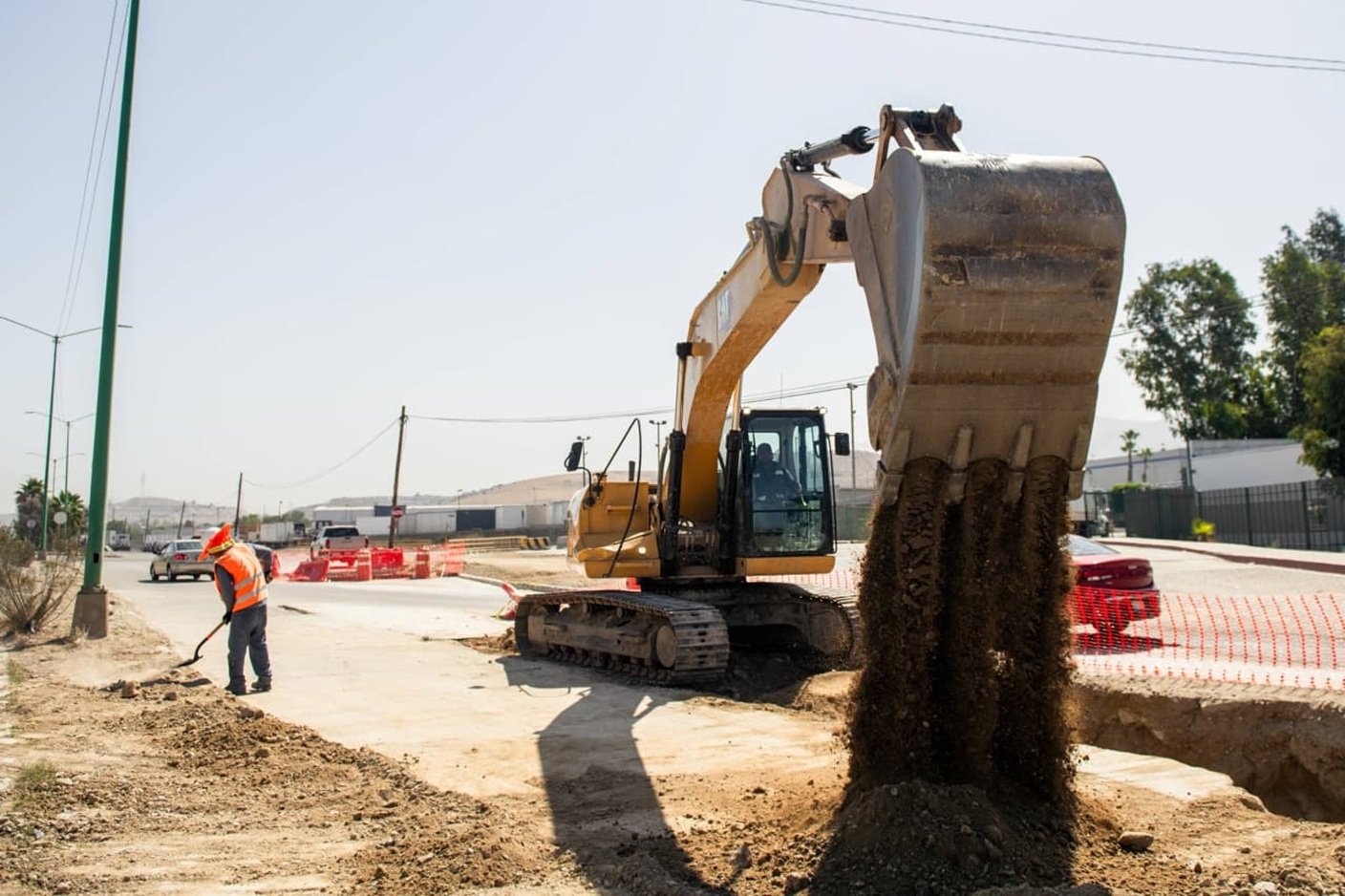
During a recent inspection of the project, Mónica Vega Aguirre, director general of the Comisión Estatal de Servicios Públicos de Tijuana, or CESPT, reviewed construction of a pipeline that will connect the La Morita Wastewater Treatment Plant with the Fideicomiso Florido Pumping Station.
The project has reached 31% overall completion, state officials said.
The Separation System represents a total investment of 681 million pesos and consists of seven construction projects divided into two phases. The work is being financed through a Green Bond, according to the state government.
The first phase includes construction of a pumping system at the Arturo Herrera Wastewater Treatment Plant, a force main leading to a change-of-regime facility, a structure with a capacity of 2,000 cubic meters and a pipeline connecting the La Morita treatment plant with the Fideicomiso Florido Pumping Station.
The second phase will include construction of a pumping system at the Fideicomiso Florido station, a force main leading to the change-of-regime facility and a pipeline extending from that point to the project’s final disposal site.
Together, the seven projects are intended to create a system capable of moving treated wastewater away from the Tijuana River channel and toward a location designated for final disposal.
State officials said improving the ability to treat, transport and dispose of wastewater is expected to contribute to better sanitation conditions throughout the watershed and help protect the surrounding environment.
The project is being developed as part of broader efforts by Mexican and U.S. authorities to address wastewater infrastructure and recurring pollution concerns affecting the Tijuana River and communities in the border region.
Baja California Gov. Marina del Pilar Avila Olmeda has identified sanitation infrastructure as part of the state’s efforts to address environmental and public infrastructure needs in Tijuana and the surrounding region.
“We are advancing infrastructure that improves sanitation, protects our environment and generates better conditions for families,” Avila Olmeda said in a statement. She described the work as part of efforts to promote what her administration calls “shared well-being” in Baja California.
The Tijuana River has been the focus of sustained attention from officials and residents on both sides of the U.S.-Mexico border because wastewater and stormwater flows can cross the international boundary and affect communities in Southern California and Baja California.