



After 85 Years of Service, IID Invests in the Future of Drop No. 3 on the All-American Canal
Share your love
 -Editorial
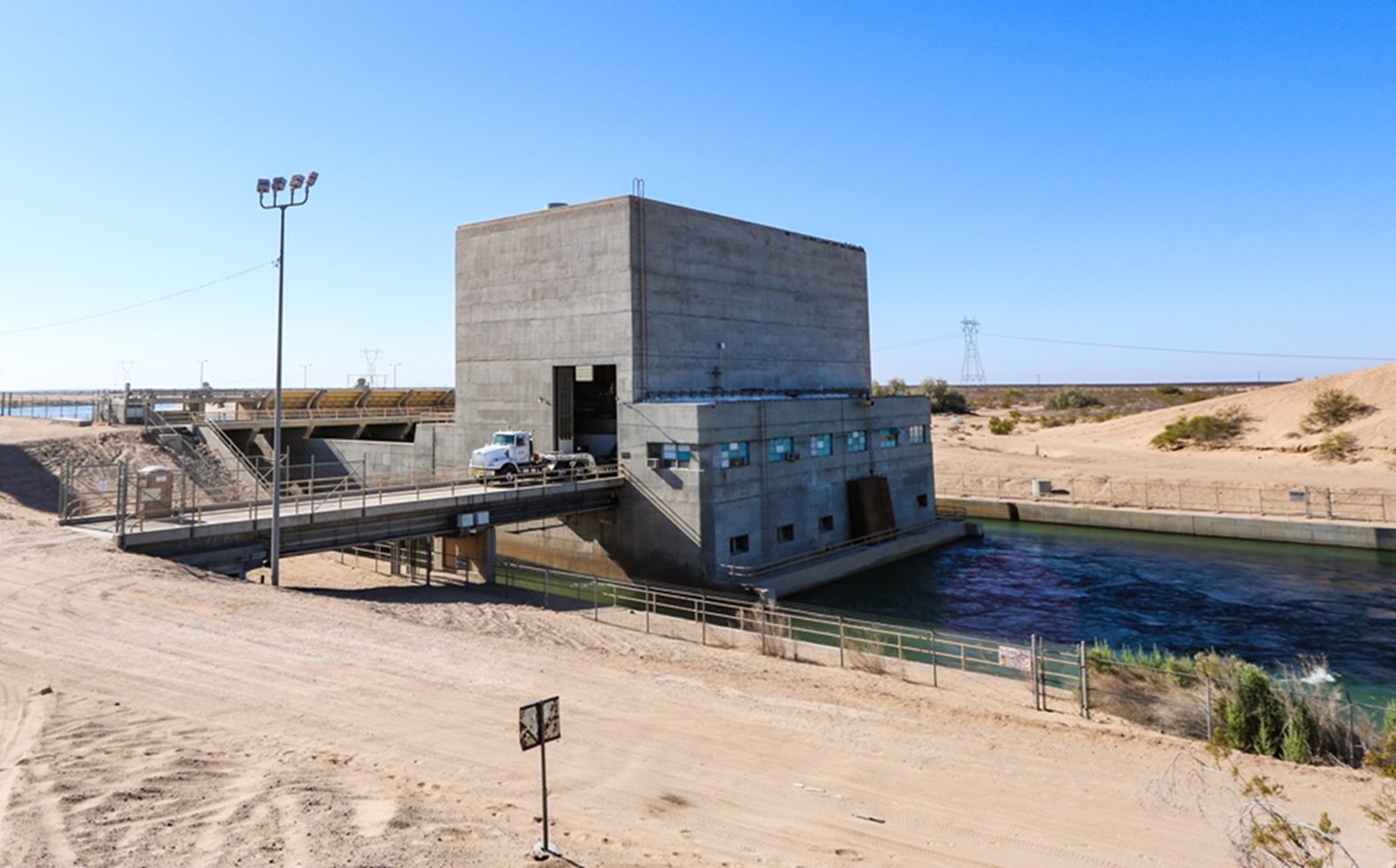
The Imperial Irrigation District Board of Directors approved a $19.3 million overhaul of Unit 2 at the Drop 3 Hydroelectric Plant on the All-American Canal.
The 5-megawatt unit has remained in service since it was installed in 1966. The project will replace and rehabilitate major turbine and generator components that have operated for decades, restoring the unit’s generation capability and extending its service life for decades to come.
“Drop 3 represents the historic connection between IID’s water and power services,” said IID Board Chairwoman Karin Eugenio. “Modernizing this essential infrastructure will strengthen reliability, preserve an important source of renewable energy and prepare the unit to continue serving our communities well into the future.”
Drop 3 is part of IID’s hydroelectric system along the All-American Canal, where the District’s water and power operations come together. As water travels through the canal for agricultural and community use, IID harnesses the force of falling water at a series of drops to generate electricity before the water continues down the canal.
That relationship is also reflected in IID’s emblem, which features an All-American Canal hydroelectric drop as a symbol of the connection between the District’s water and power service.
The overhaul will include a comprehensive mechanical refurbishment of the turbine and generator. It will also modernize the turbine runner assembly to improve turbine efficiency and reliability, reduce future maintenance needs, and return the unit to service as a dependable source of local renewable generation.
The project is part of IID’s Powering Our Community Together initiative, which focuses on maintaining, replacing, and modernizing critical power infrastructure.
The total estimated project cost is $19,268,234, including a 10 percent contingency. IID expects to spend approximately $3.6 million in 2026, with the remaining costs anticipated between 2027 and 2029.