


California Ramps Up Emergency Preparations as Powerful El Niño Threatens 2026-27 Winter Season
Share your love
 -Editorial
California is expanding emergency preparations for a potentially powerful El Niño weather pattern that could bring heavy rainfall, coastal flooding, mudslides, and other hazardous conditions during the 2026-27 winter storm season.
During a statewide media briefing organized by American Community Media and California Black Media, in partnership with Ready California, an initiative of the California Governor’s Office of Emergency Services (Cal OES), climate scientists, emergency management representatives, and community organizations discussed potential weather impacts and disaster preparedness efforts.
Although El Niño increases the likelihood of above-average precipitation in parts of California, its effects vary by region, making early preparation and continued monitoring essential.
Dr. Michael Anderson, California state climatologist with the Department of Water Resources (DWR), said current Pacific Ocean temperature anomalies indicate that the developing El Niño ranks among the strongest historically observed events.
“What we see here coming off the coast of South America along the equator, extending out to the date line, is our current El Niño event,” Anderson said. “This puts it amongst the largest in history.”
Anderson explained that warmer ocean temperatures influence atmospheric circulation patterns, particularly the jet stream, which helps determine the direction and intensity of winter storms.
During El Niño conditions, the jet stream can shift farther south, increasing the likelihood of storms reaching California. However, the strength of an El Niño does not necessarily determine how much rainfall individual communities will receive.
The El Niño events of 1982-83 and 1997-98 brought widespread precipitation and significant storm damage, particularly along portions of the California coast between Orange and Monterey counties. By contrast, the strong 2015-16 El Niño failed to produce sufficient precipitation to end the state’s prolonged drought.
“Timing, pace and scale of the storms drive the impacts,” Anderson said. “Storm size and time between the storms are really important.”
Atmospheric rivers, which transport large amounts of moisture from the Pacific Ocean, contribute significantly to California’s water supply but also present flooding risks.
Anderson said these storms may be shorter during El Niño conditions, frequently lasting two to three days, while warmer temperatures can raise snow levels and increase runoff into rivers and streams.
Coastal communities face additional concerns because ocean levels are running approximately 1 to 1.5 feet above normal in some areas.
Those conditions could intensify flooding during upcoming king tides, the highest tides of the year, expected around Thanksgiving, Christmas and the third week of January.
“Coastal impacts have already started. They will amplify as the season evolves,” Anderson said.
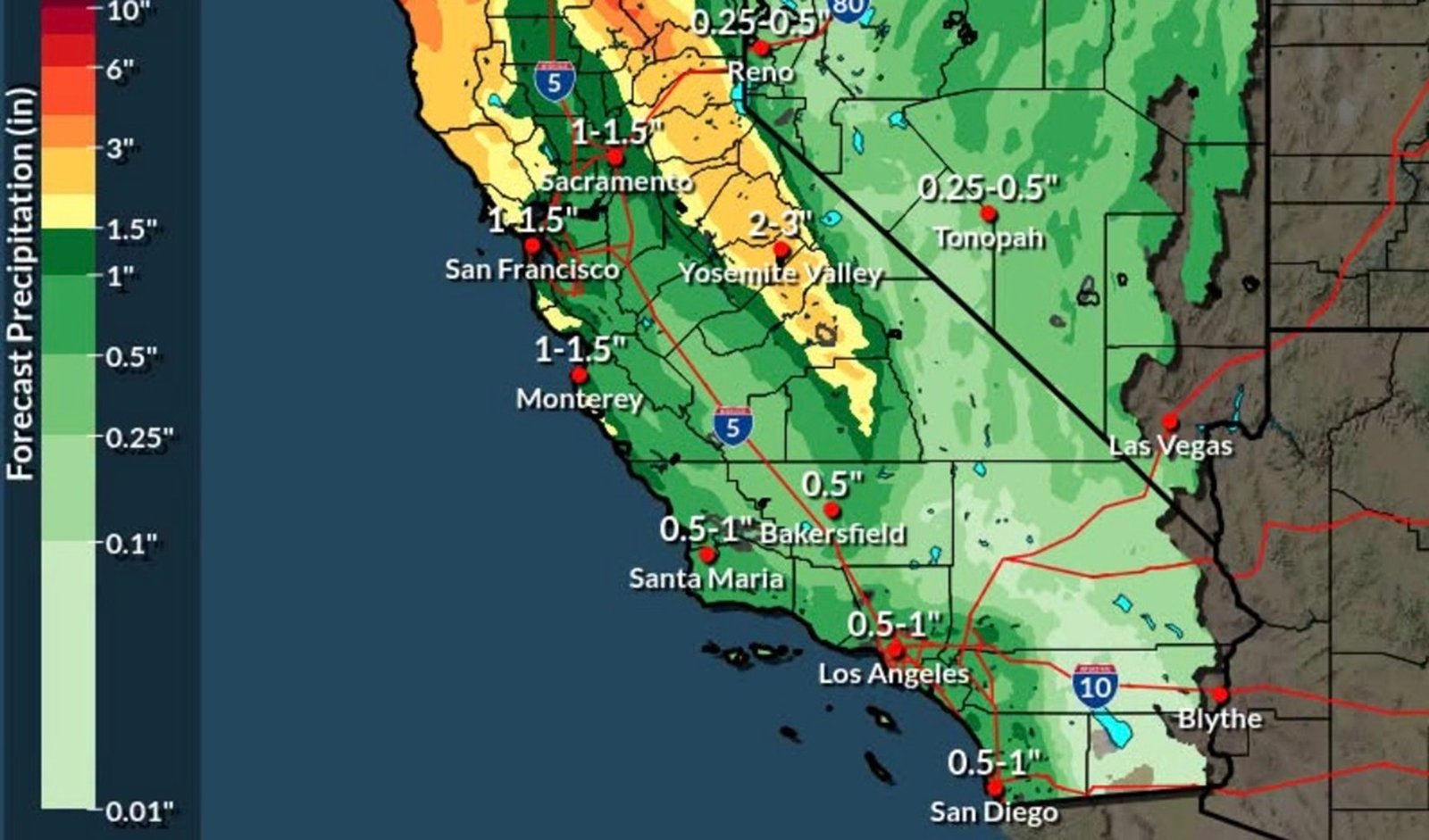
He also described an approaching series of storms expected to affect Northern California, with some mountain and coastal locations potentially receiving several inches of rainfall.
Brian Ferguson, chief deputy director of Cal OES, said California is taking an unusually proactive approach to the anticipated weather conditions.
Gov. Gavin Newsom has directed state agencies to coordinate emergency preparedness efforts before major storms arrive rather than waiting until significant damage occurs.
“We’re treating El Niño like a pre-landfall hurricane, which is pretty unprecedented for the state,” Ferguson said.
The administration has issued emergency directives intended to accelerate contracting, procurement and coordination among state agencies, local governments, tribal communities and emergency responders.
Preparations include identifying vulnerable communities, monitoring flood-prone areas, evaluating transportation infrastructure and positioning emergency equipment where needed.
California’s Military Department has been placed on alert to identify personnel and equipment that could be deployed under the governor’s authority during emergencies.
Other agencies are working to expedite permits and technical assistance for clearing waterways, maintaining drainage systems, and addressing infrastructure vulnerabilities.
Ferguson emphasized the importance of reaching populations that may face additional challenges during disasters, including older adults, people with disabilities, individuals experiencing homelessness, and residents with limited English proficiency.
“We’re really trying to start early by talking to folks, getting the word out, and also how do we support communities on the front end so we can ultimately keep as many folks safe as possible,” Ferguson said.
Cal OES is encouraging residents to develop family emergency plans, prepare emergency supply kits, register for local emergency alerts, and evaluate potential hazards around their homes.
The agency also recommends preparing for power outages, reviewing insurance coverage and understanding local flood risks and evacuation procedures.
Laura Hollander, deputy director for flood management and dam safety at DWR, outlined preparations involving flood control infrastructure, emergency personnel and equipment.
The department operates a State-Federal Flood Operations Center that coordinates with Cal OES, the U.S. Army Corps of Engineers and other agencies during major flooding emergencies.
DWR maintains three emergency response teams totaling approximately 250 personnel and seven incident management teams available for deployment throughout California.
The department is also conducting regional preparedness workshops with county emergency management agencies, first responders and the National Weather Service.
These sessions include exercises designed to identify flood risks, improve coordination and strengthen access to resources for underserved communities.
Hollander said DWR has scheduled 25 flood-fighting training sessions during 2026, with a goal of training an additional 1,000 first responders.
Emergency supplies, including sandbags and plastic sheeting, are stored at strategic locations statewide and can be relocated based on changing weather forecasts.
“We do have flood-fight materials pre-positioned statewide,” Hollander said. “These materials can be moved if we see more storms coming where we need to relocate some of these materials.”
In the Central Valley, DWR oversees inspection and maintenance responsibilities involving approximately 1,600 miles of levees, weirs, and other flood-control structures.
The department is also accelerating infrastructure repairs under an Oct. 27 executive order intended to facilitate flood preparedness activities.
Community-based organizations are expanding outreach efforts to ensure emergency information reaches residents facing language, transportation, or economic barriers.
Laura Jaramillo, environmental health manager for Visión y Compromiso, described how the organization uses community health workers, known as promotoras, to distribute preparedness information directly to families.
The organization has collaborated with California’s disaster preparedness initiative for three years and currently conducts outreach across 14 counties and 22 regions.
Its activities include door-to-door visits, community workshops, telephone outreach, social media campaigns, and educational events.
“We are committed to community well-being by supporting the promotoras and community health workers,” Jaramillo said.
Visión y Compromiso expects to reach approximately 1 million community members through its preparedness campaign this year, supported by a statewide network of more than 4,000 promotoras.
Jaramillo emphasized that culturally appropriate communication is particularly important when discussing El Niño because residents may understand the weather phenomenon differently based on experiences in other countries.
Some Spanish-speaking families associate El Niño with drought and unusually warm weather rather than the increased rainfall and flooding risks California may experience.
The organization’s outreach focuses on explaining weather hazards, encouraging residents to prepare emergency evacuation bags, and promoting practical steps to protect families.
Jaramillo said trusted community relationships are essential to reaching residents who may not regularly receive information through traditional government communication channels.
Find more information at: https://www.listoscalifornia.org/disaster-readiness/