


California Secretary of State Addresses Election Security and Voter Concerns Ahead Nov. 3
Share your love
 -Editorial
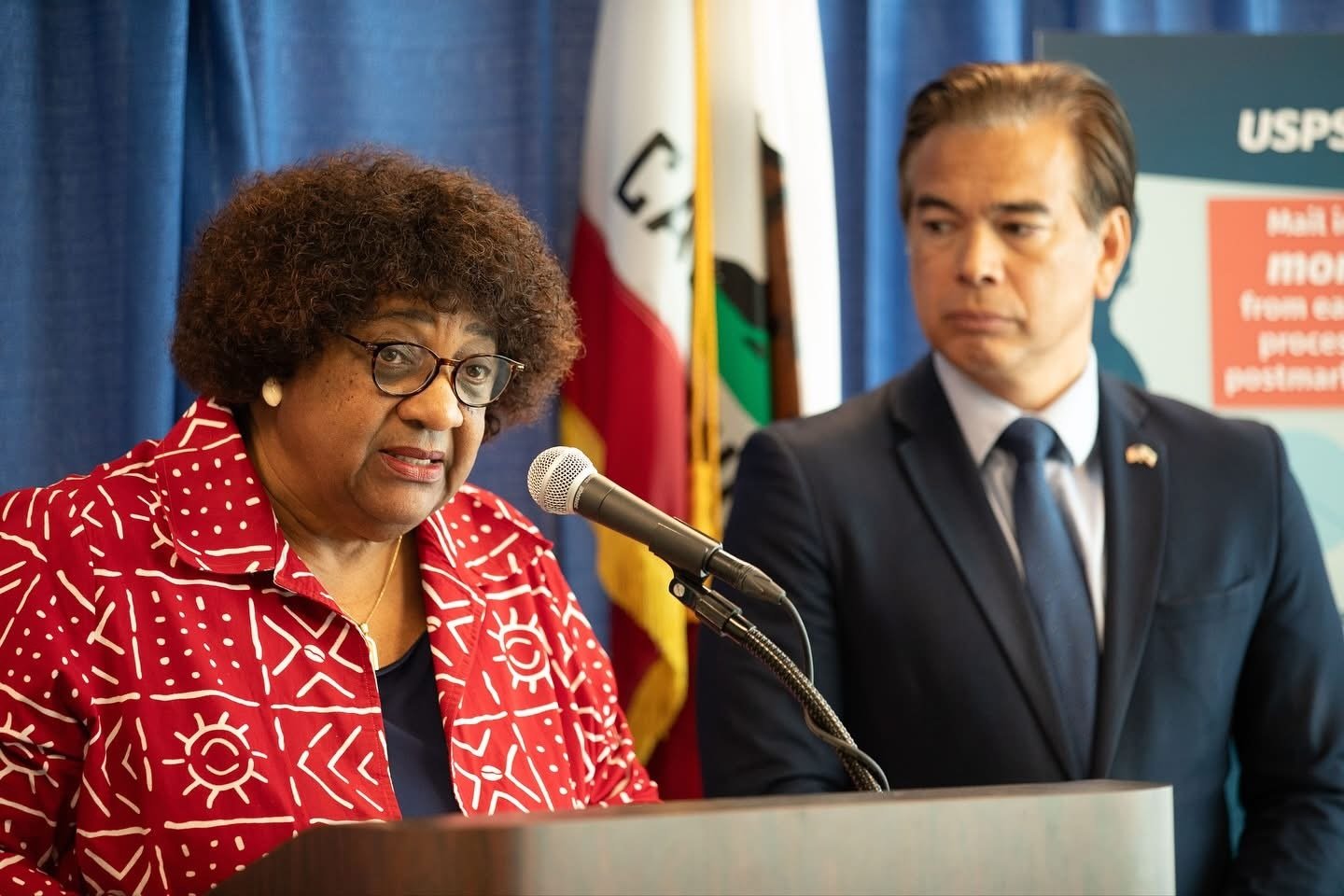
California Secretary of State Shirley N. Weber outlined voter registration deadlines, mail-in voting procedures and election security measures during a virtual media briefing hosted by American Community Media ahead of the Nov. 3, statewide general election, addressing questions about voter eligibility, federal election policies, and concerns over possible immigration enforcement at polling locations.
Weber said the Secretary of State’s Office is working with county election officials to ensure voters understand their options and have access to accurate information before Election Day.
“We want to make sure that this election, like all of our elections, runs smoothly,” Weber said. “There’s always some change. There’s always some difference that’s there, and so we want to make sure that you know exactly what to expect.”
The secretary emphasized that California automatically mails a ballot to every active registered voter, allowing residents to vote without visiting a polling location.
Voters may return their completed ballots through the U.S. Postal Service, official ballot drop boxes or designated voting locations. Weber encouraged voters to return their ballots early to avoid potential delays and last-minute complications.
“Fortunately, in California, we don’t make you stand in long hot lines because we have vote by mail, and every registered voter in California gets a ballot in the mail,” Weber said.
She also highlighted the availability of early voting, although voting schedules and locations may vary by county.
Weber said Oct. 19 is the deadline for Californians to register through the regular voter registration process before the November election.
However, residents who miss that deadline may still register and vote through California’s conditional voter registration process, which remains available through Election Day at designated election offices and voting locations.
“Tell them they are not too late. They can still register the day of the election on November the 3rd,” Weber said.
Under conditional registration, election officials verify a voter’s eligibility and confirm that the individual has not already voted before counting the ballot.
To vote in California, individuals generally must be U.S. citizens, California residents and at least 18 years old on Election Day. They also must not be currently serving a state or federal prison sentence for a felony conviction or be found mentally incompetent to vote by a court.
Weber clarified that individuals with previous felony convictions may vote once they are no longer serving a state or federal prison sentence for a felony.
“Once you have served your time, you are eligible to vote in California,” Weber said.
The secretary encouraged journalists and community organizations to share registration information with first-time voters, newly naturalized citizens and residents who may be unfamiliar with California’s election procedures.
During the question-and-answer portion of the briefing, Weber addressed allegations of widespread voter fraud and questions about legal challenges involving federal oversight of elections.
Asked about claims made by President Donald Trump and others concerning election fraud in California, Weber disputed allegations that widespread fraudulent voting has affected the state’s elections.
“There is no data, no evidence that says there’s massive fraud, not only in California but across the nation,” Weber said.
She said election officials investigate allegations of improper voting and emphasized that election administration includes procedures intended to verify voter eligibility and prevent duplicate voting.
Weber also discussed legal disputes involving the Trump administration’s efforts to change election procedures, saying California had maintained its existing vote-by-mail system following court proceedings.
According to Weber, California voters will follow substantially the same procedures used during the June 2026 primary election.
“We have not had to change any of our process or procedures that are there,” Weber said.
She emphasized that states retain primary responsibility for administering elections and said California would continue defending its election procedures through the courts when necessary.
Weber also acknowledged concerns about public confidence in elections, saying repeated allegations of fraud without supporting evidence can contribute to confusion among voters.
Weber also responded to questions about concerns among naturalized citizens regarding the possible presence of U.S. Immigration and Customs Enforcement agents at voting locations.
She said state election officials have been working with county registrars and law enforcement agencies to maintain safe voting environments.
“We hope that there will not be any,” Weber said when asked whether federal immigration agents might be present at polling places.
Weber said officials had received assurances regarding immigration enforcement activities during previous elections but acknowledged that concerns remained among some voters.
For individuals uncomfortable visiting polling locations, Weber suggested using official ballot drop boxes as an alternative.
“If you have any concerns, go to our ballot boxes,” Weber said. “Those things are huge. They’re secure.”
She described the drop boxes as a secure method for returning ballots without entering a polling location.
The secretary also addressed election worker safety, saying California has strengthened protections against threats, harassment and intimidation.
Weber said her office has worked with the California attorney general’s office and lawmakers to establish safeguards for election personnel.
“We want to make sure that our poll workers are safe, that our places where they work is safe, and that no one has a right to come in and to disrupt things,” Weber said.
She warned that threats against election workers could discourage participation in administering elections and undermine public confidence.
“One of the things we realize is that if we ever get to the point where we allow poll workers to be intimidated, then we have lost our system because this system is run by the people,” Weber said.
She said individuals who threaten or assault election workers could face criminal prosecution.