


Supervisors Divided as Imperial County Approves Lithium Incentive Program
Share your love
 -Editorial
The Imperial County Board of Supervisors approved a resolution adopting the Lithium Innovation and Competitiveness, or LiNC, Program, committing future county-generated tax revenue to incentives intended to attract commercial-scale lithium extraction, processing, and conversion projects to the county.
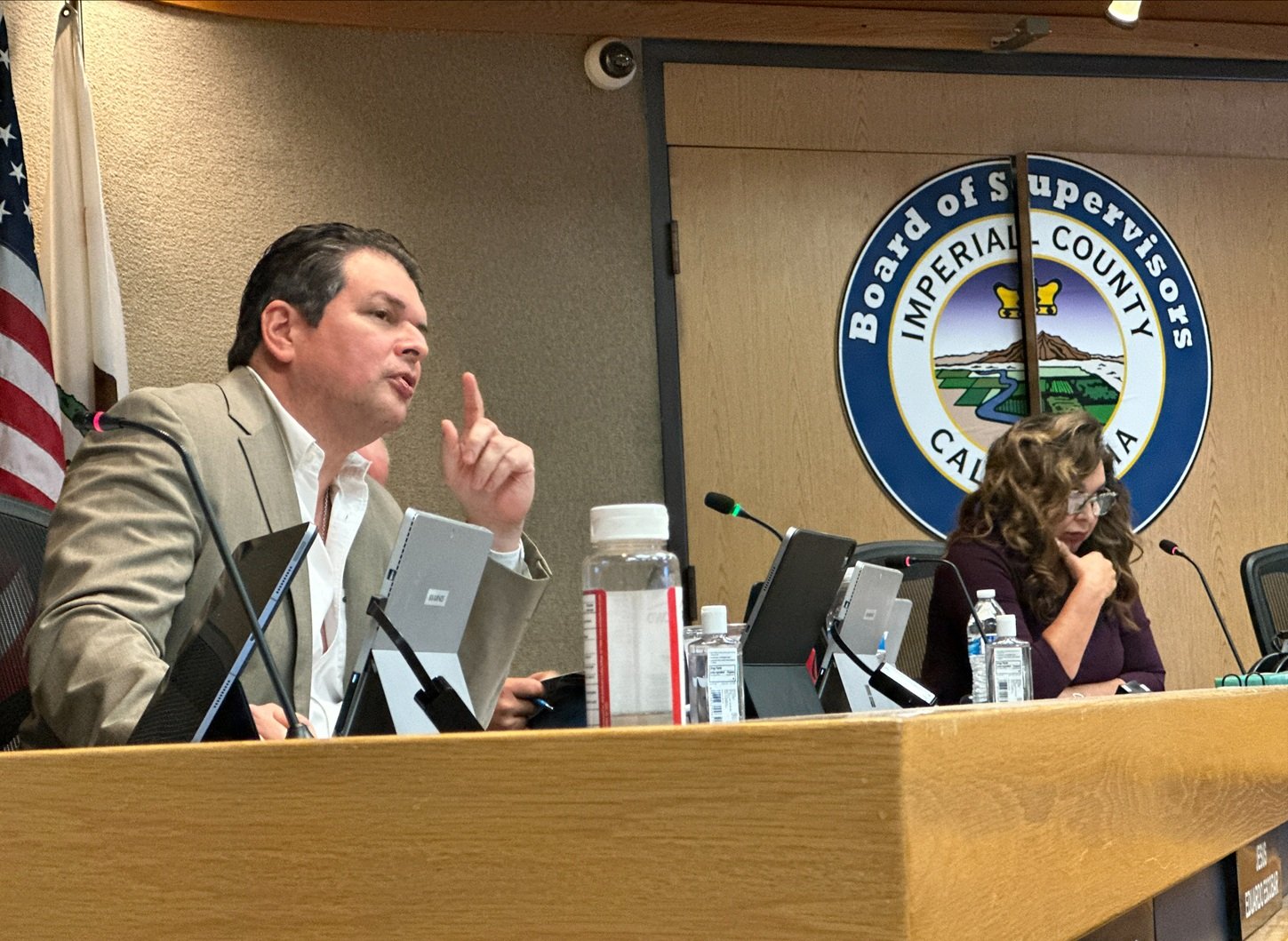
The resolution passed on a 3-2 vote, with Supervisors Jesus Eduardo Escobar and Martha Cardenas-Singh voting against it.
The performance-based program establishes financial incentives for qualifying projects as Imperial County seeks to develop its lithium resources and attract private investment in what supporters describe as an emerging domestic critical minerals supply chain.
Bari Bean, Imperial County deputy CEO, said the program is intended to improve the county’s competitiveness by reinvesting a limited portion of new revenue generated by participating projects.
“This is not revenue that’s being proposed from any other account within the county,” Bean said during the presentation. “This is revenue that would be generated by a proposed project.”
Under the program, companies must invest in their projects and meet specified performance requirements before receiving reimbursements. Each participating project would require an independent fiscal and economic impact analysis, a public hearing, and approval by the Board of Supervisors.
Approved agreements and reimbursements also would be publicly reported.
Bean said the program does not reduce the state’s lithium extraction excise tax established under Senate Bill 125, alter allocations for directly or indirectly affected communities or tribal governments, reduce funding for the county’s Lithium Community Benefits Program, or reduce sales and use tax allocations for public safety, transportation or public health.
The program also does not waive environmental reviews or permitting requirements, provide upfront grants or cash payments, or reimburse projects that fail to reach commercial operations or generate tax revenue, Bean said.
The LiNC program contains two incentive categories: an Early Investment Incentive and a Standard Investment Incentive.
The early incentive is intended for projects that reach a final investment decision and obtain an approved grading permit by Dec. 31, 2026, and submit full construction plans by March 31, 2027. Bean said the deadlines do not change existing environmental review or permitting requirements.
The standard incentive would apply to qualifying projects that do not meet the early-investment timeline.
For sales and use taxes, the program would reimburse a portion of eligible taxes generated by construction-related purchases. The proposed reimbursement would come from the county’s 1% Bradley-Burns share of sales and use tax, rather than portions allocated to public safety, transportation or other designated purposes.
The program also provides a potential reimbursement tied to the county’s share of the lithium extraction excise tax under SB 125. The early investment category could reimburse up to 50% of the eligible county portion, while the standard category could reimburse up to 25%.
Under examples presented to the board, the maximum SB 125 reimbursement would be $5 million annually for up to 20 years, or $100 million, for an early-investment project. The standard incentive would allow up to $2.5 million annually for 20 years, or $50 million.
Bean said reimbursements would occur only after qualifying projects become operational and generate the applicable tax revenue.
Bean cited incentives available in states including Arkansas and Nevada. She said Arkansas has exempted qualifying lithium projects from sales and use taxes, while some Nevada developments have received substantial tax abatements.
Bean said the goal is to attract not only lithium extraction but also processing, battery manufacturing, logistics and other downstream businesses to create a vertically integrated supply chain.
A workforce presentation cited a June 2026 unemployment rate of 17.6% in Imperial County, compared with 5.2% statewide. Imperial County Workforce Development Director Priscilla Lopez said the county has approximately 13,000 unemployed residents based on the latest labor-market data.
Lopez also cited a workforce and economic needs assessment commissioned by the county that estimates proposed lithium projects could collectively create approximately 1,000 construction jobs and 700 permanent operational jobs. Additional employment could result if downstream industries such as battery-material processing, recycling, logistics and suppliers locate in the county, she said.
Imperial County has adopted a Lithium Valley Construction Workforce Ordinance establishing requirements related to local hiring and apprenticeship utilization.
Viridiana Rosales-Trujillo, representing Energy Source Minerals, told the board the company supports the program. She said Energy Source Minerals would be a new taxpayer and that its proposed investment would generate revenue that the county does not currently receive.
Rosales-Trujillo said the company expects to pay nearly $200 million in property taxes and about $250 million in lithium production taxes over the life of its proposed project, while continuing to hire locally and support workforce development.
Representatives of Imperial Valley College also told supervisors that the college has developed workforce programs in response to anticipated industry needs, including plant operator, instrumentation technician and chemical technician programs.
Opponents questioned whether the county should commit future tax revenue to private development before commercial lithium production has been established locally.
El Centro resident Peter Rodriguez criticized the program during public comment, arguing that the county should be cautious about offering financial incentives for an industry that has yet to reach commercial-scale production in Imperial County.
Representatives of the Comite Civico del Valle and the POWER Coalition urged supervisors to delay the vote and provide additional time for public review.
Jose Luis Olmedo of Comite Civico del Valle asked the board to continue the item for at least 30 days. He said the organization supports responsible lithium development but wants stronger transparency, accountability, and performance requirements.
Ashley Contreras of the POWER Coalition similarly called for additional public review and said incentives should be tied to measurable commitments involving local hiring, workforce training, small businesses, infrastructure and public health.
Escobar said he supports economic development but questioned whether Imperial County should be comparing its incentives with those offered by states such as Arkansas and Nevada, noting that counties have fewer resources and broader responsibilities.
Escobar also said the county has not yet received lithium-related revenue despite years of planning and investment.
“I don’t think this is a bad plan,” Escobar said, adding that he believed it could be improved. He suggested the county consider delaying some tax obligations during the initial years of development and collecting more revenue after projects begin generating cash flow.
Cardenas-Singh also questioned the structure and timing of the incentives.
She said the program could result in the county receiving substantially less of its share of lithium-related tax revenue during the incentive period. She also expressed concern about the deadlines for qualifying projects and whether they could place pressure on county planning and engineering staff.
Cardenas-Singh said she had only received the presentation several days before the vote and argued that the public and supervisors needed additional time to review the complex proposal.
Board Chairwoman Peggy Price supported the program, saying the county has spent years developing plans, environmental studies and workforce programs for Lithium Valley and now needs to move toward actual projects and private investment.
Price pointed to the county’s unemployment rate and said commercial development could provide new revenue for infrastructure, public safety and other county services.
“The time is of the essence,” Price said. “We’ve been working on this for years. It is very competitive. This is a window of time that we need to take advantage of.”
Supervisors Ryan Kelly and John Hawk supported the resolution, arguing that the county needs to act rather than continue waiting for commercial lithium development to materialize.
Hawk said the county should not be afraid to take action and warned that delaying decisions could cause Imperial County to lose the opportunity to establish Lithium Valley.