


California Announces Instant ZEV Rebates as Battery Storage Tops 21,000 MW
Share your love
 -Editorial
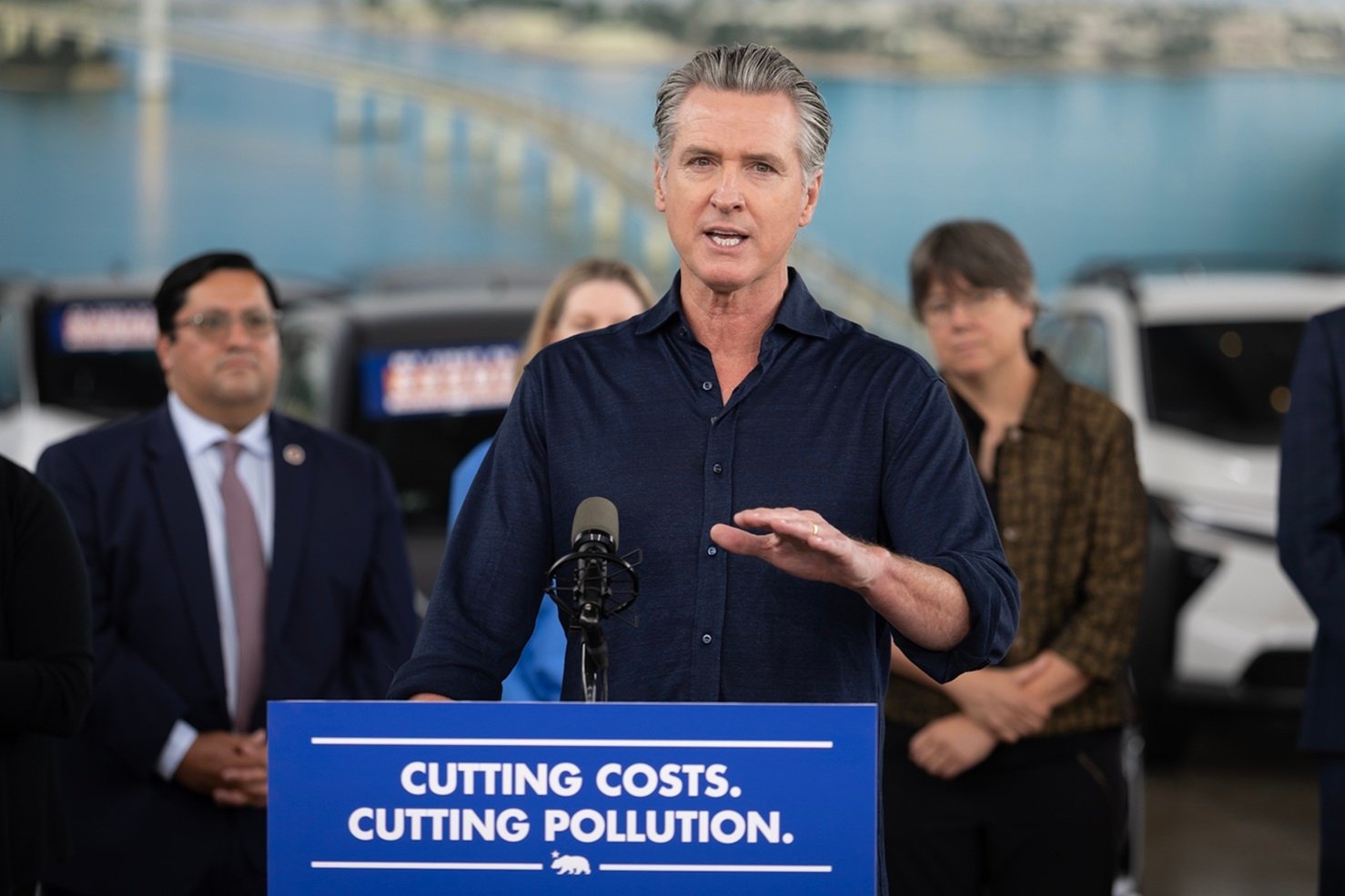
California Gov. Gavin Newsom announced new incentives for residents purchasing their first zero-emission vehicle, while state officials highlighted the continued expansion of battery storage capacity on the state’s electric grid.
The state’s MyFirstEV program offers instant rebates of up to $3,500 on qualifying new zero-emission vehicles. Unlike programs that require consumers to apply for a rebate after a purchase, the discount is applied at the dealership at the time of purchase or lease.
Three automakers, Hyundai, Lucid and Tesla, are participating in the program at launch. Additional manufacturers are expected to join in the coming months, including Ford, Rivian, Chevrolet and Kia in August; Toyota/Lexus, Honda and Subaru in September; and Mitsubishi in November. Nissan and Volvo have not announced launch dates.
The program is backed by a $135.5 million state investment, which is being matched by participating automakers for a combined $271 million in incentives.
Under the program, eligible buyers can receive up to $3,500 toward a new zero-emission vehicle with a manufacturer’s suggested retail price of $50,000 or less, or up to $1,750 toward a qualifying used zero-emission vehicle priced at $25,000 or less through participating manufacturers’ pre-owned vehicle programs. The program also provides incentives specifically for Californians purchasing their first zero-emission vehicle.
Yana Garcia, California’s secretary for environmental protection, said the program is intended to expand access to zero-emission vehicles while improving air quality and reducing transportation costs.
California Air Resources Board Chair Lauren Sanchez said the program could provide families with lower fuel and maintenance costs while contributing to reductions in vehicle emissions.
Transportation accounts for about 60% of California’s smog-forming pollution and 40% of its greenhouse gas emissions, according to state officials. Nearly 18 million Californians live in areas with unhealthy air, the state said.
Newsom also announced that California’s battery storage capacity has surpassed 21,000 megawatts, making it the largest battery storage fleet in the nation.
The state currently has about 21,112 megawatts of battery storage capacity, including roughly 18,000 megawatts of grid-scale storage and about 3,000 megawatts from smaller systems serving homes, schools, farms and businesses, according to state officials.
When Newsom took office in 2019, California had fewer than 700 megawatts of battery storage capacity connected to the grid.
Battery systems can store electricity generated during periods of high solar production and release it later, including during the evening when electricity demand typically rises.
State officials say the growth in battery storage has helped California reduce its reliance on natural gas-fired power plants and integrate more solar energy into the electric grid.
David Hochschild, chair of the California Energy Commission, said the growth of renewable energy and battery storage demonstrates the increasing role of those technologies in the state’s electricity system.
The California Public Utilities Commission has required utilities and other electricity providers to procure energy storage as part of efforts to maintain grid reliability and integrate renewable energy.
California’s energy system also reached another milestone during the first half of 2026, when solar power surpassed natural gas as the state’s largest source of electricity, according to a California Energy Commission analysis of state grid data.
Between January and June 2024 and the same period in 2026, solar power generation increased by 22%, while natural gas generation declined by 51%, according to the analysis. Battery storage capacity connected to the grid increased by 80% during the same period.
California’s solar energy capacity exceeded 23,000 megawatts in June 2026, according to state officials.
The state has also expanded longer-duration battery storage projects. Officials recently highlighted the Tumbleweed Energy Storage facility in Kern County, described as California’s first eight-hour battery project.
California has added more than 37,000 megawatts of utility-scale clean and renewable energy capacity since 2019, according to the governor’s office.
State representatives said 67% of retail electricity sales came from clean energy sources at the end of 2024. In 2025, clean energy supplied 100% of the state’s electricity demand for at least part of the day on 279 days. During the first half of 2026, that occurred on more than nine out of 10 days, according to state data.
California has set a goal of obtaining all of its electricity from clean energy resources by 2045.
The state also has expanded safety regulations for battery storage facilities. Newsom launched a State Battery Storage Safety Collaborative in 2024 that resulted in updated fire codes, additional state oversight and new safety standards, according to the governor’s office.
California had about 552,300 clean energy workers in 2024, nearly twice the number reported in Texas, according to a 2025 report by the nonprofit E2. The state’s clean energy workforce grew by nearly 7,300 workers in 2024, according to the report.
The Newsom administration has described the expansion of electric vehicles, renewable energy and battery storage as part of California’s broader effort to reduce greenhouse gas emissions and transition toward a carbon-neutral economy.